


Kirupa Chinnathambi has been teaching programming since 1998: about 1,000 tutorials, nine published books, and product roles at Google, Microsoft, and Salesforce along the way. In this piece he takes a classic two-week Tic-Tac-Toe assignment, watches an AI agent finish it in minutes, and asks what is actually worth learning now. If you build with AI, or hire people who do, his answer applies to you too.
At a Glance
In this piece, you will learn:
Why a working app no longer proves that you understand how it was built
The three stages of building anything (What + Why, How, Launch + Scale) and why AI has taken over the How
The five durable skills worth learning now, and how to turn a two-week assignment into practice for them
This post is prepared with Guest Author — Kirupa Chinnathambi, writer of the KIRUPA newsletter. If you also want to write for Creators AI — send us email here
Let’s take a likely scenario that happens almost every day around the world. You’re a student getting started in a four-year Computer Science program, coding bootcamp, or an introductory programming class in school. You get a coding assignment that you need to do in the next few weeks. The assignment involves building a Tic-Tac-Toe game that runs in the browser:
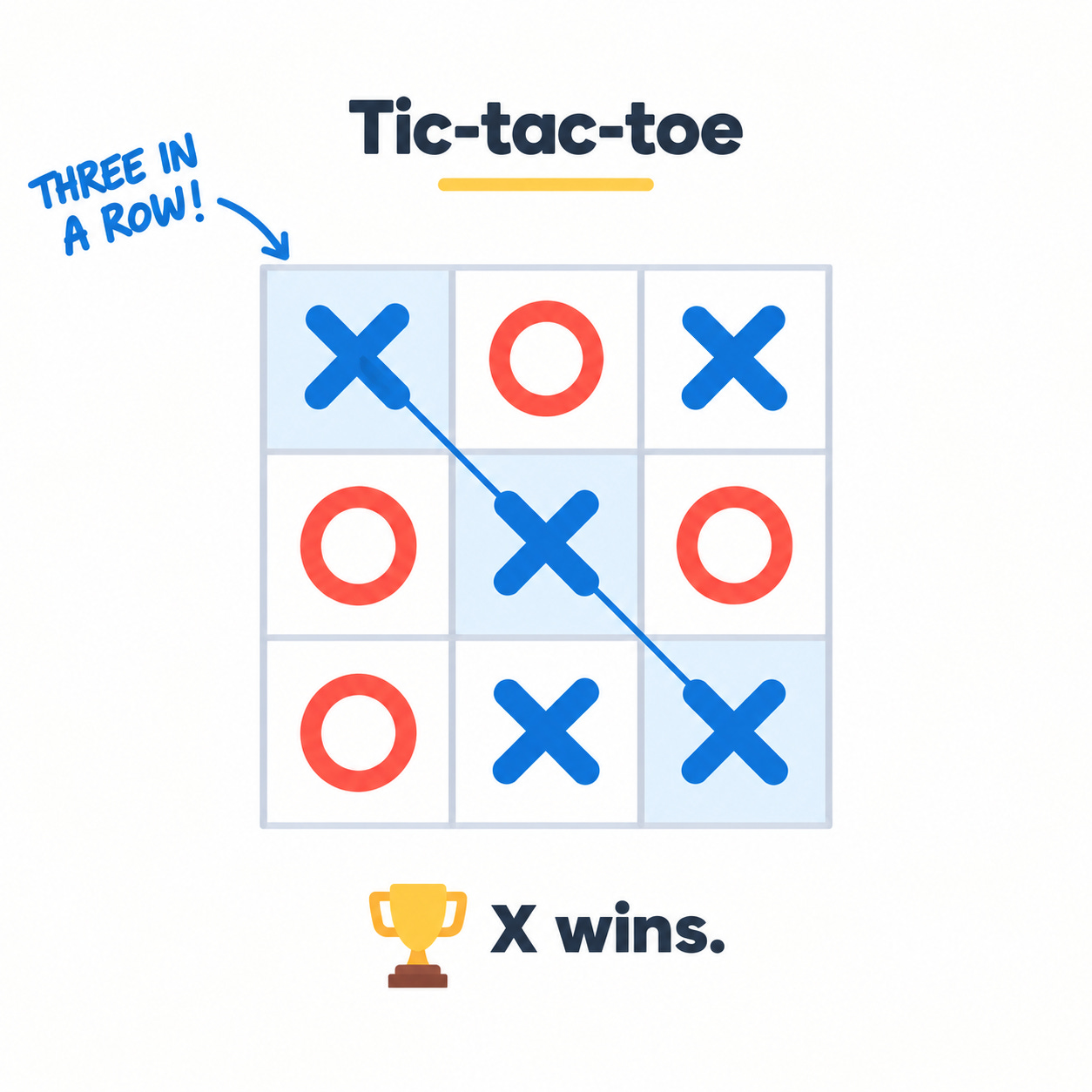
In a familiar version of this class, you first learn about coding environments like VS Code. You then delve into some HTML, CSS, and JavaScript basics. Maybe you add some React knowledge to abstract away some of the details. Once you have been taught the basics, it’s time to shift your focus towards building the Tic-Tac-Toe game. You build the board, handle clicks, figure out whose turn it is, and check whether someone has won. In classic development fashion, you will spend time debugging why something that worked five minutes ago has stopped working.
Two weeks have gone by:
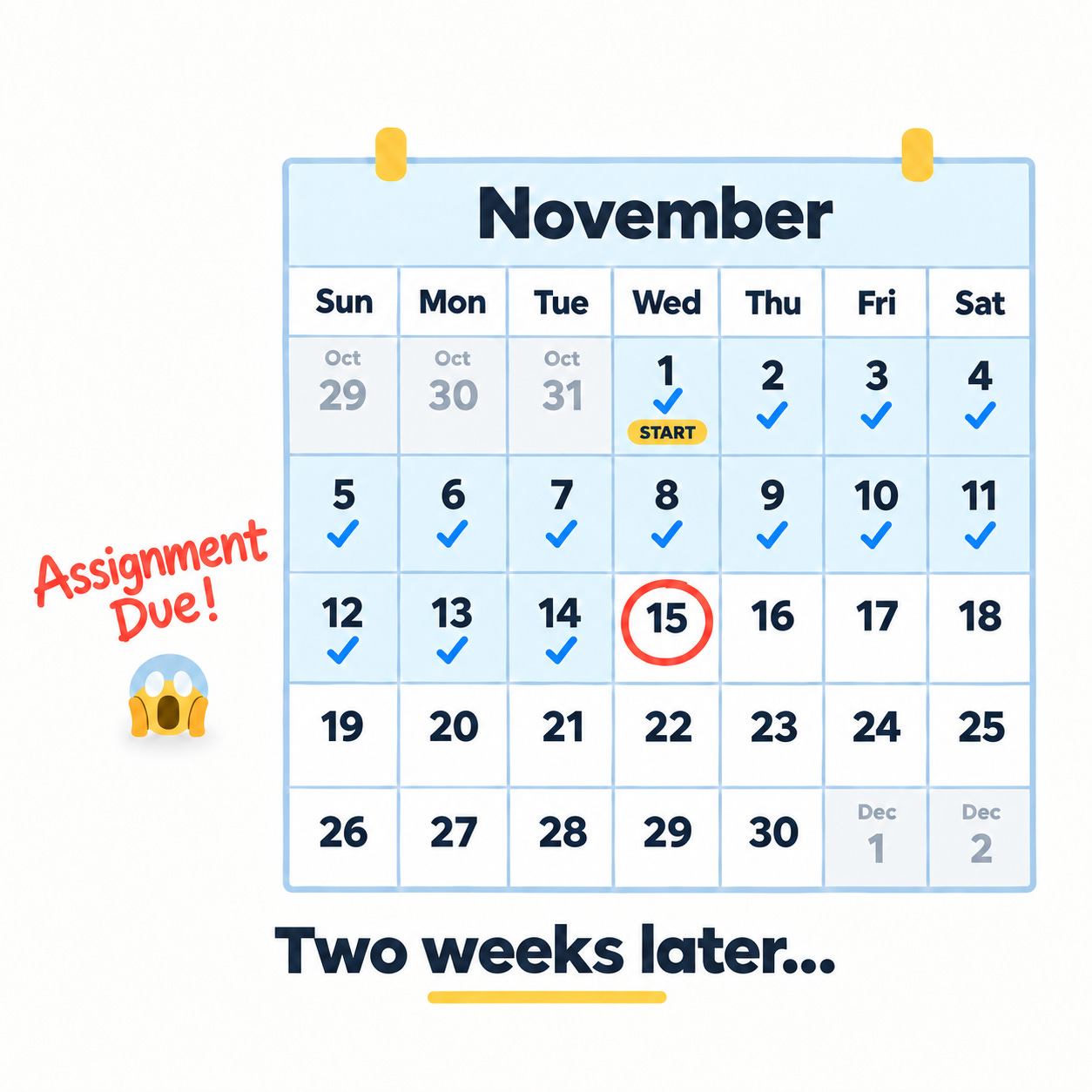
At this point, you have a game running on localhost or opened from a file on your computer. You might have unit tests if your instructor taught you about them. Because this game is UI heavy, there may be some UI automation and a topic or two on accessibility spread throughout your two weeks. Lastly, you might also stand in front of the class and explain what you built:

Now imagine approaching that same assignment with an AI coding agent. In this world, what you would do is paste in the requirements exactly as your instructor wrote them:
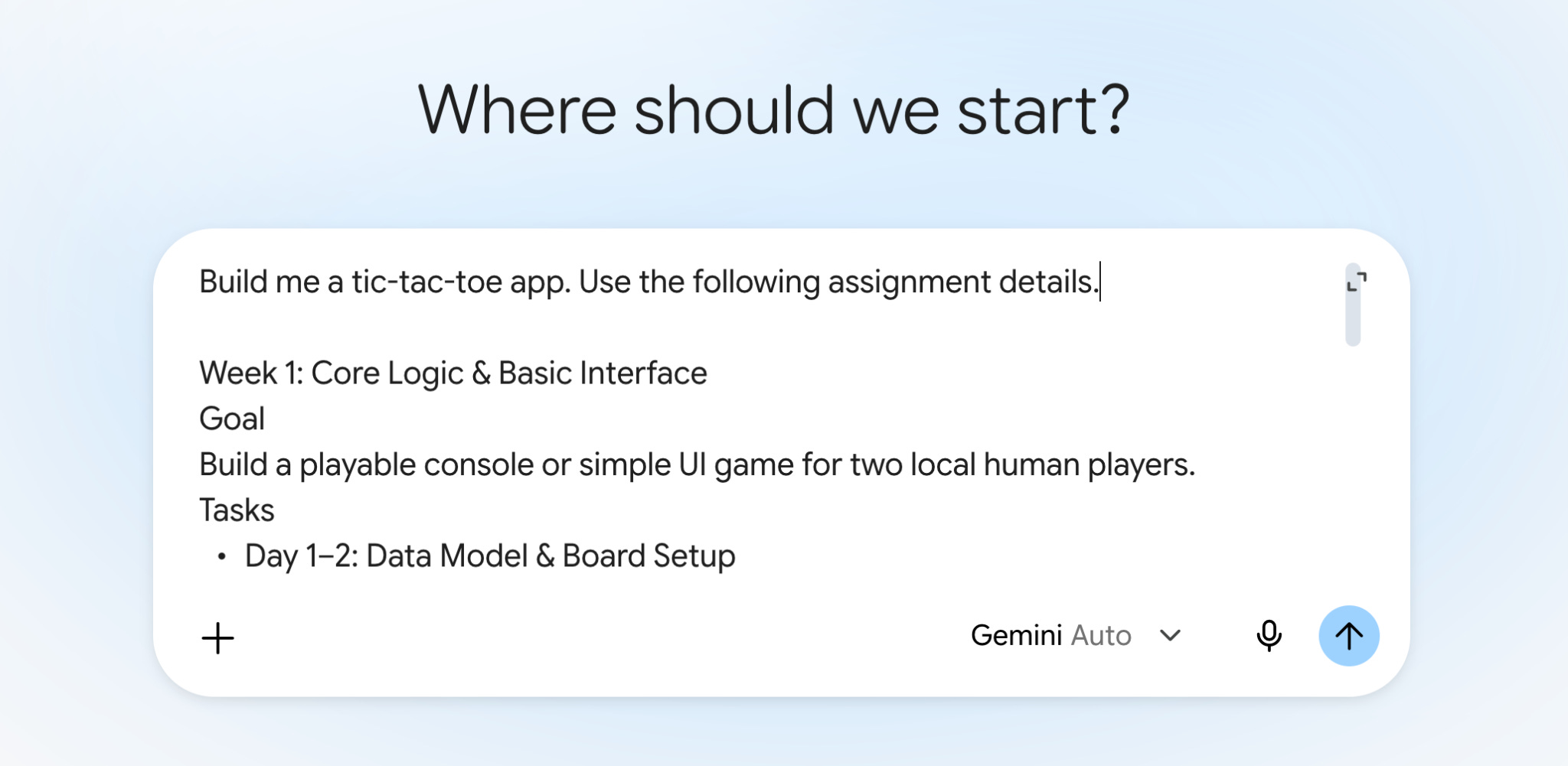
A few minutes later, you have a playable game. Yes, a few minutes later!
You didn’t need to know HTML, CSS, JavaScript, or React. You didn’t need to think about coding environment, how it will be served to the browser, or any other detail that would have been critical in a non-AI era. The agent can even go beyond the scope of what you were expected to do in two weeks. It can generate the unit tests. It can implement a CI/CD pipeline to make automated deployments a thing. What one may learn over a year of classical education, the agent just knows and can do without any prompting. Our human involvement here was to ensure we prompted the agent well and gave it any additional requirements that the instructor’s instructions didn’t cover.
To all of us here, the two-week assignment can look finished in two minutes. Now, here is the part that is worth calling out. Your working Tic-Tac-Toe game doesn’t actually signal that you’ve learned two weeks of material needed to build it. What it signals is that you can create the output expected of you without necessarily understanding how the output was generated:

In the past, this would have raised alarm bells. In this agentic, AI-infused era, it does bring up the question of whether understanding how the output is generated really matters in the first place.
Curious how far you can get building a game with an agent? We built one with Manus and walked through every step: Your First Game with Manus
Abstracting Away the Details
We can think about building something involving apps or software through this simple model:
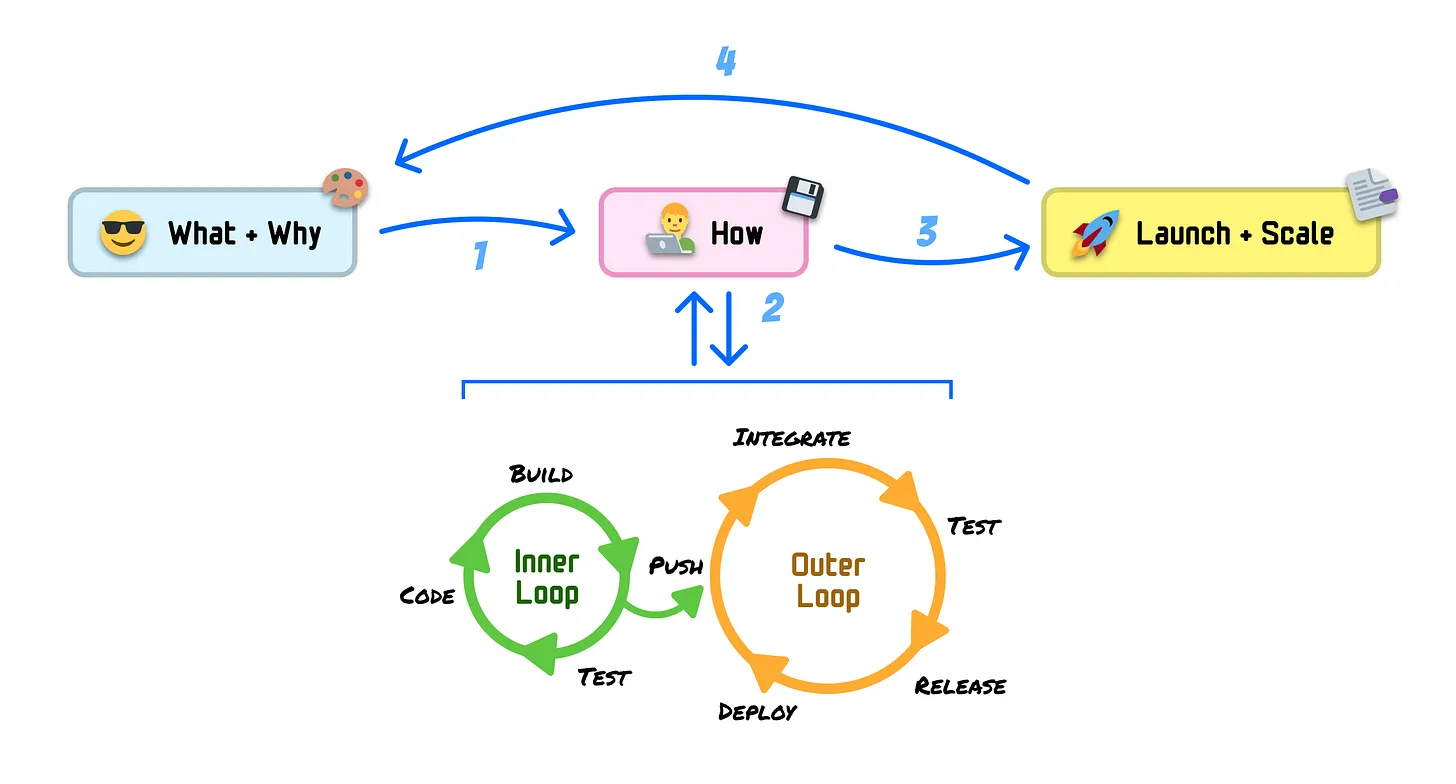
There are three distinct stages here:
What + Why: What problem are we solving? Who has it? Why does it matter, and what would a good outcome look like?
How: How do we implement, test, and integrate the solution?
Launch + Scale: How do we reach people, put the solution into use, and learn whether it helps? Who maintains it?
Almost everything we build using our computers can be modeled with these three stages.
This and many other practical posts on building with AI are available exclusively to our subscribers.
In our Tic-Tac-Toe assignment, the What + Why is kinda already defined for us. Someone else has made many of the decisions. This someone could be your instructor. This someone could also be the historical precedent of how Tic-Tac-Toe typically looks, feels, and behaves…like this version from the mid-1800’s by Charles Babbage:

You aren’t exactly breaking new ground here in terms of the core gameplay.
In terms of Launch + Scale, this is usually not within the scope of a two week assignment. The most you may end up doing is presenting your project in front of the class. That is useful as an educational milestone. That doesn’t tell us much about getting the game into the hands of actual players.
This leaves the How stage. This is where the bulk of a student’s two weeks are spent. It is spent on the mechanics of taking the specification and learning the nuts and bolts of how to build it. Here is where the story takes a turn. What are coding agents exceptionally good at? They are good at…the How. They are really REALLY good at the How.
Before AI, knowing what you wanted to build didn’t get you very far. Even making a button respond to a click required understanding events, functions, and state. Bringing the idea to life by knowing the technical details was critical. Entire ecosystems (schools, book publishers, video courses, online resources like kirupa.com [that’s me!], and more) were created to help you master these technical details. They were exclusively focused on teaching you the world of the How.
Today, what AI has done is created a layer of abstraction between what we want to do and How it gets done:
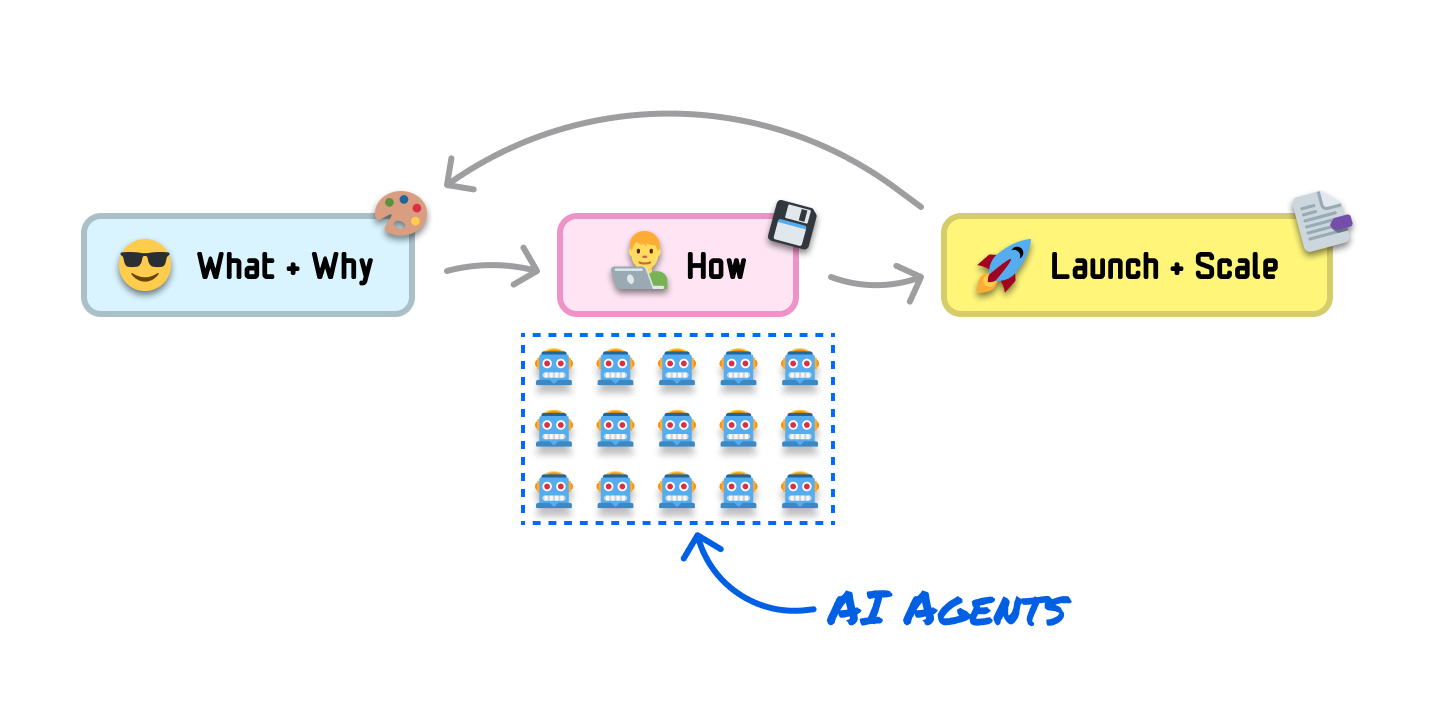
As AI models have gotten powerful, the need for any of us to dive deep into the How isn’t there as strongly as it used to be. This isn’t the first time in software development history where we as humans took a step back and let the machines cook.
There was a time when programming required looking at low-level machine code:
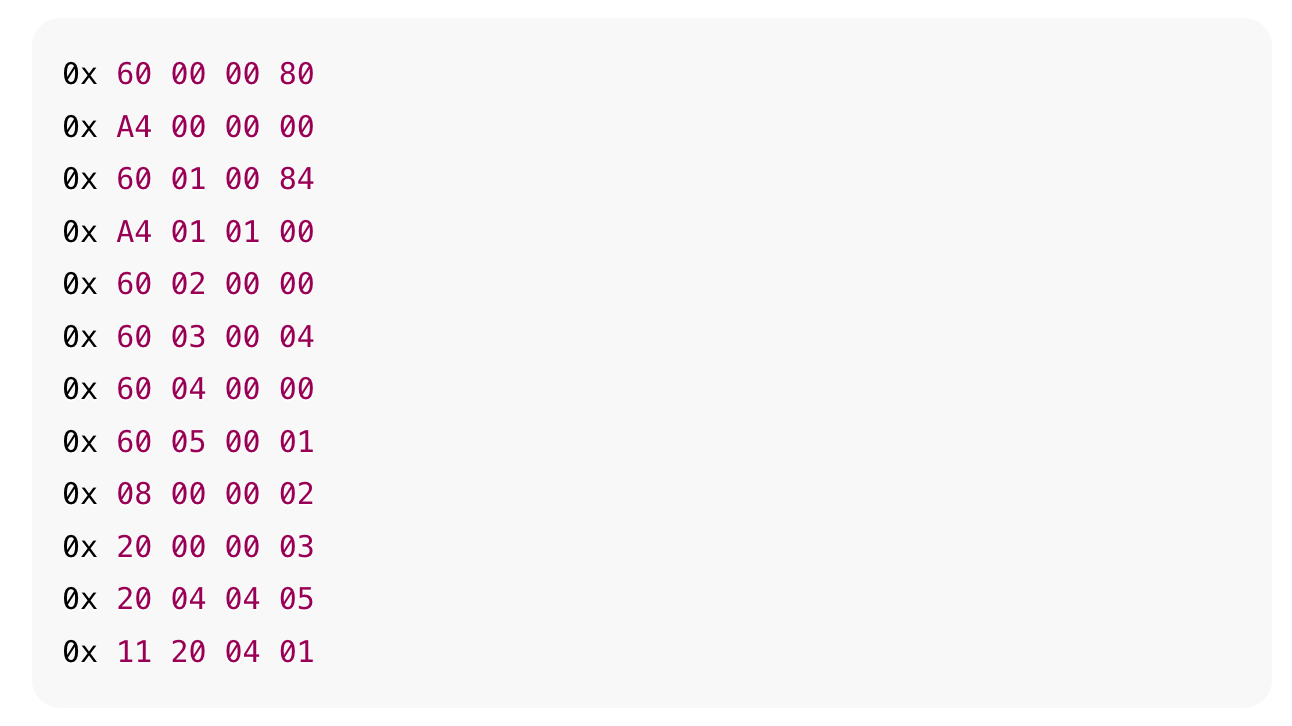
Today, most of us program using higher-level languages that contain more human-understandable English and less numbers and bizarre characters:
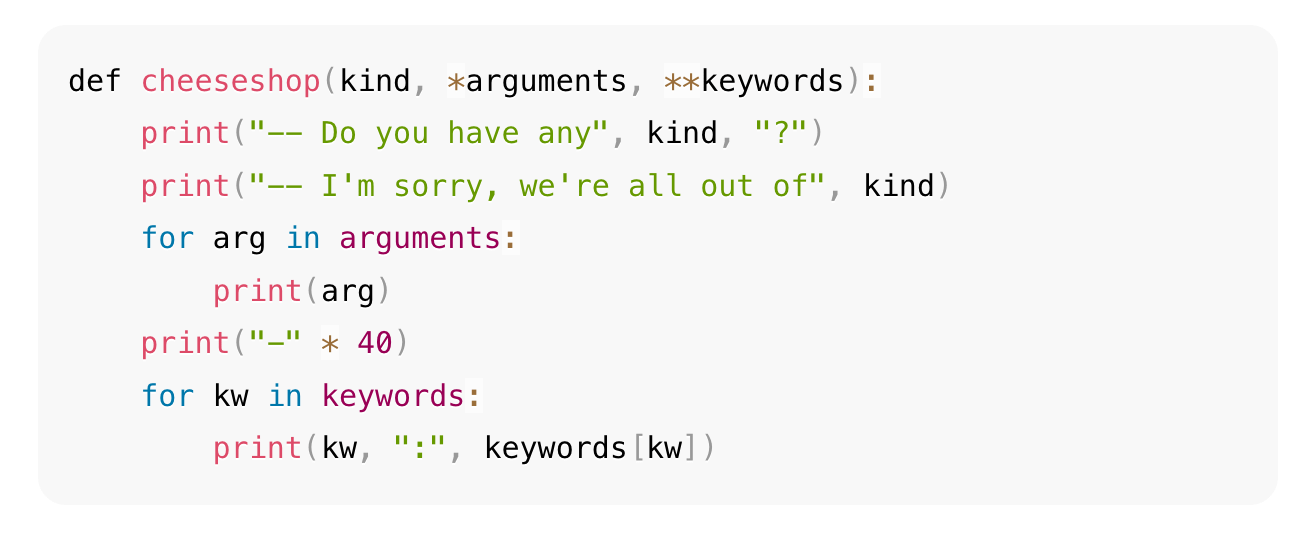
It doesn’t matter that the higher-level languages usually compile down into the lower-level machine code. We (well most of us) don’t inspect the machine code produced when our applications compile. We work at a higher level because our tools handle the translation. We still do care whether the application behaves correctly, but reading every instruction isn’t how we establish that.
AI is just another layer of abstraction. It is just another layer where we define our intent using regular conversational English as opposed to sequences of hexadecimal numbers or opcodes or keywords from a programming language:
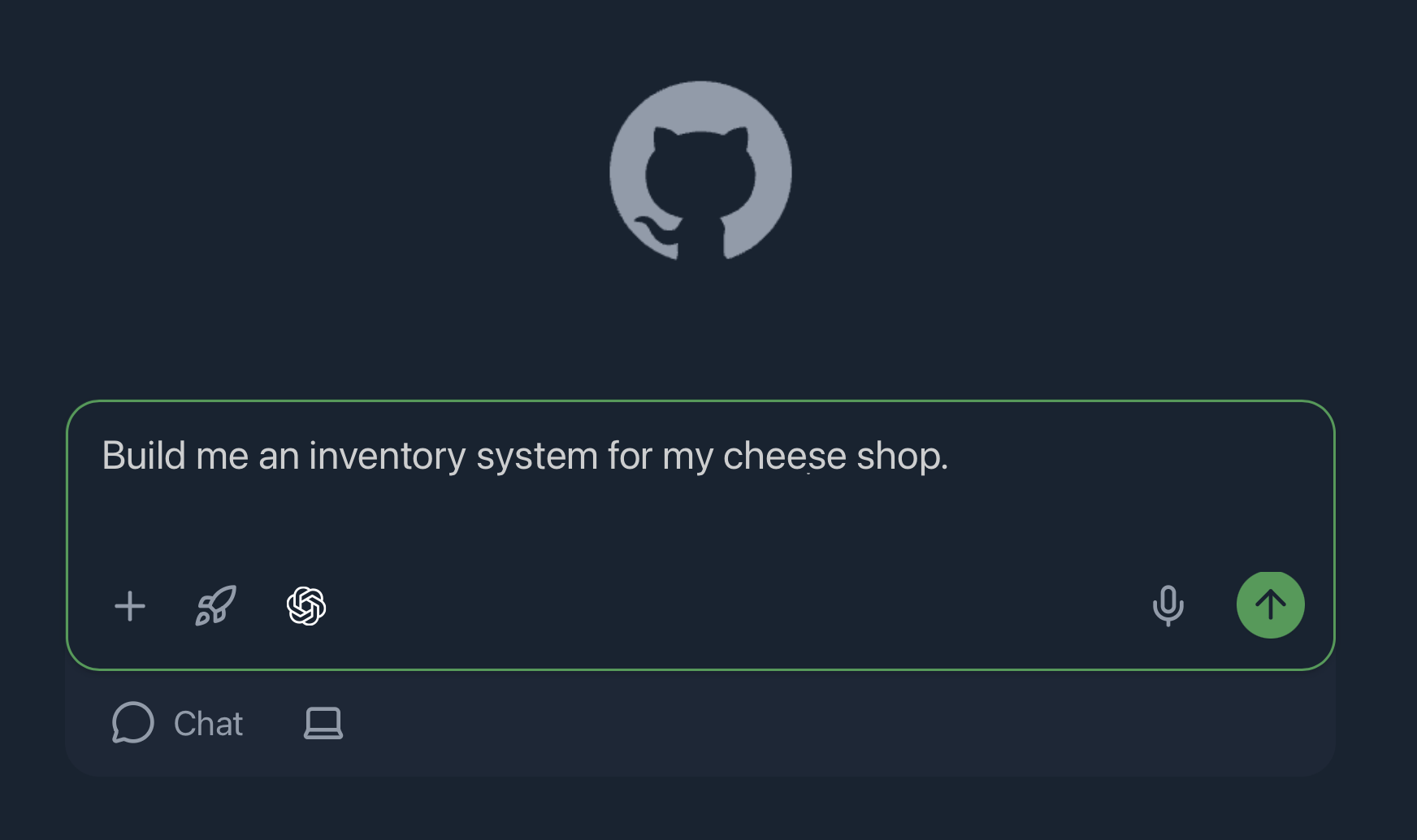
The end result of our agent doing the work is likely a layer of instructions written in a higher-level programming language. This in turn gets compiled at some point into machine code. As humans, these details a level deeper than what we specified no longer matter as much as they used to.
Note: Compilers don’t get creative with your requirements. Agents can misunderstand what you want, then write tests that congratulate them for it. Working at a higher level still means checking that we built the right thing.
The only thing that matters is ensuring that we give our agent the right guidance on what to build, how to ensure that what it builds meets our bar for quality / safety / accessibility / performance, and that we are able to get what gets built into the hands of users who will love what we just gave them.
Pulling this off requires rethinking what technical education means.
Want to try working at this higher level yourself? Here’s how builders use Claude Code as a teammate, with real cases and prompts: How Claude Code Can Be Your AI Teammate
The Durable Technical Skills that Matter
As LLMs and their agents get increasingly more capable, much of the conversation is around what durable skills are worth teaching and learning. Focusing on technical education more narrowly, this is something that Computer Science instructor Elisa Cundiff and I discussed in our conversation a short while ago where the skills that matter are the skills that support the How. That is the large range of skills in the What + Why and the Launch + Scale stages:
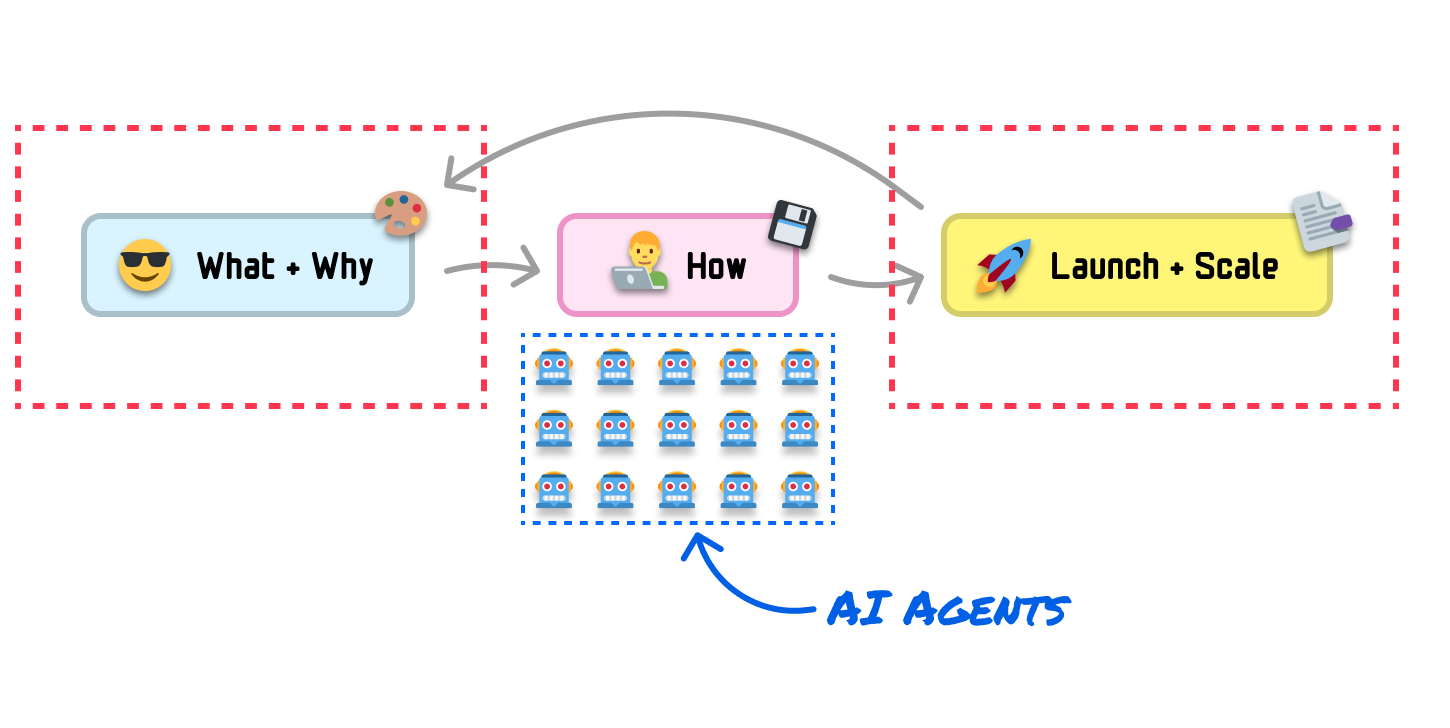
Digging one level deeper, teaching technical topics in the AI era revolves around the following five durable skills:
Solving problems through thoughtful user experiences. Understand who we’re building for and what they need. Compare approaches, observe people using what we’ve built, and refine the experience until it solves a real problem in a way that’s clear, accessible, and delightful.
Keep your mailbox updated with practical knowledge & key news from the AI industry!
Evaluating an agent’s output. Define what good looks like and build evaluations (evals) that check correctness, safety, accessibility, and performance. Test those evals against deliberately flawed solutions. Students should be able to judge the evidence, investigate failures, and explain what passing the checks doesn’t prove.
Working effectively with other people. Build in groups, share responsibility, give useful feedback, and work through disagreements. Bring in Marcus Aurelius’s Meditations to discuss judgment, handling criticism, and taking responsibility for our actions when we can’t control everyone else’s.
Communicating value through marketing. Learn how to reach the right audience and explain why something is worth their attention. Practice messaging that’s clear, specific, and compelling, then test whether people understand the value and whether the product delivers on the promise. David Ogilvy’s writings from many decades ago still resonate today because the things that motivate people and get attention haven’t changed.
Understanding business models and pricing. Explore how consumer and business products make money through subscriptions, one-time purchases, usage-based pricing, advertising, and freemium models. Understand who uses the product, who pays, and whether the price supports the cost of delivering and maintaining it.
Are there more skills that are important? Most definitely, but these five skills create the right foundations that broadly apply to anybody who is willing to put in the effort to learn and go the extra mile.
Share this with someone who’s learning to code, or teaching it, right now.
Tic-Tac-Toe in the AI Era
In case you were wondering, we didn’t forget about our favorite Tic-Tac-Toe assignment. The assignment, even with AI, still takes two weeks. The difference is in our starting point. The starting point is getting a playable board on the screen where we use an agent to build the game. Then, it is time to put the five durable skills from earlier to good use to refine the game that we have:
1. Identify your audience
A child learning the rules might need something different from two friends playing on a phone. Students choose an audience, observe a few people playing, and improve the experience based on what they discover. Can players tell whose turn it is? Can they play using a keyboard? Does losing make them want another round or make them close the tab?
2. Master Evals
A game can look finished but still have gaps such as letting someone take a turn after the other player has won. Students define success and direct their agent to build evals for wins, draws, illegal moves, and other requirements. They deliberately introduce a defect to see whether their checks catch it. Each student should be able to explain what the results establish and what remains uncertain. The agent saying “all tests passed” isn’t enough.
3. Work through it as a team
Students share responsibility for design, evaluation, and delivery, rotating roles so everyone practices each skill. They also have to handle disagreements. One person wants online multiplayer; another wants to fix the confusing restart button. Navigating team dynamics is something that agents can’t solve for us…at least not yet!
4. Give people a reason to play
“We built Tic-Tac-Toe” probably won’t attract much attention outside of die-hard fans. Tic-Tac-Toe Students explain what makes their version useful or enjoyable for their chosen audience, then test that message with potential players. Did people understand the promise? Did the experience deliver it? Marketing becomes something they can investigate rather than a catchy slogan added before the presentation.
5. Develop a business model
Would anyone pay for this? Students compare possibilities such as a one-time consumer purchase, free play with paid features, or a classroom version sold to schools. They consider who pays, what they receive, and what hosting, AI features, and support would cost. Concluding that their game should remain a free project is a perfectly reasonable outcome.
If the business model question is the one you want to dig into, here are four ways builders are making money from AI agents right now: 4 Ways to Monetize AI Agents in 2026
Bonus: Add details that make people love your game
When building is effortless, you have no excuse to not add the details that make people show that you care about what you built. It’s these little details, those little flourishes, that make people fall in love with your product. Even though your game was built by AI, you don’t have to make it soulless. Inject a bit of your personality. Have fun.
At the end of two weeks, students present the game alongside the decisions they made, the failures they found, and what they learned from real players. Each person responds to an unfamiliar question or changed requirement. We still get a working game, but we also get evidence that the students understand what they’ve built and can take responsibility for it.
Conclusion
For those of us who teach technical topics, this means changing what we ask students to practice and how we assess what they’ve learned. I’ve spent decades teaching the How, so I’m making this adjustment myself. We can keep the curiosity, experimentation, and satisfaction of building something while giving students more responsibility for deciding what’s worth building and whether it actually works.
Whether mastering these skills requires a four year education (or more!) is anyone’s guess, but the old way of learning is definitely out.
Cheers, Kirupa
If you learned to code before AI, which part of the How do you still think is worth learning the hard way? And if you teach, what would you change in your next assignment? Drop it in the comments.
About Kirupa
Kirupa Chinnathambi has worked as a Product Leader at Google, Microsoft, and Salesforce with a focus on how to help developers be more productive. Well before all of that, he started teaching programming in 1998. About 1,000 tutorials, nine published books, and hundreds of videos later, he’s spent a lot of time explaining the “How.” He also studied a boatload of “How” concepts as part of his Computer Science education at MIT, learning things AI can now largely do without paying tuition.
These days, he’s figuring out how to teach technical topics when an agent can finish the assignment before he’s finished writing the title for it. This article is partly a proposal and partly him updating his own lesson plan for the future.
You can find him on Twitter / X, LinkedIn, and on his newsletter.