

One week. $5,000 in annualized revenue. That’s what creator Tom Kuegler got after launching a small AI bot that gives feedback in seconds. So, creators are no longer just selling knowledge.
Let’s say it right away — there’s a big difference between using AI and selling something AI-powered people actually want.
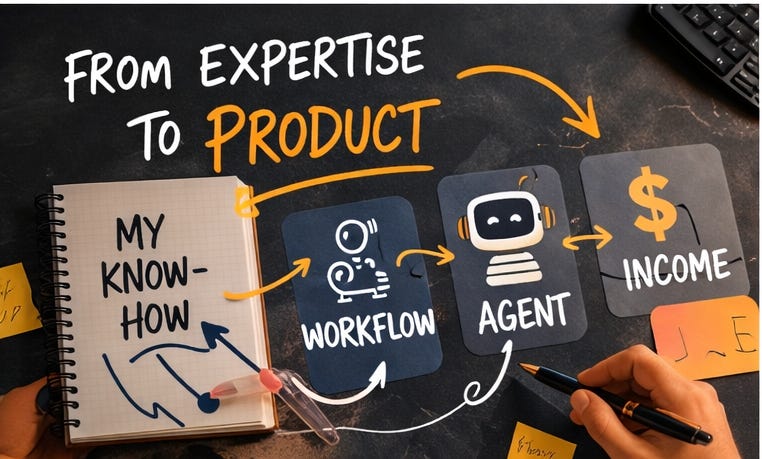
And, really, most creators are still on the first step. They use AI to write faster, research faster, edit faster, repurpose faster. Are you happy with that? Maybe. But not for long. The real opportunity in 2026 sits one layer above that. It’s about packaging your expertise into something that can do useful work on demand.
That is what agents change.
The new era. How creator monetization is changing nowadays
In 2024, creators sold content.
In 2025, creators sold access.
In 2026, the strongest ones are starting to sell executions.
That is the leap.
An ebook gives information.
A course gives structure.
A community gives accountability.
An agent gives labor.
That one difference changes the economics.
The old content funnel was built around teaching. The new one is increasingly built around utility. The most interesting creator businesses now are similar to tiny software companies built around trust. Or a very specific job to be done.
Subscribe for more creator’s breakdowns!
Four monetization models that actually fit creators
Let’s continue. So the real question now is different than it was recently: what part of my expertise can become a repeatable paid action?
Once you ask that, the whole business model gets clearer!
So here’s all four most important models for the creator in 2026.
Model 1. Paid access to a niche agent
This is the cleanest model. The point is that the creator takes one repeated audience pain point and wraps it in a simple promise. So, “give me the input, get the result”.
That can look the same as a newsletter growth agent that suggests good headlines. Or:
A dating advice bot trained on a creator’s framework.
A brand brief agent for small businesses.
A research assistant for B2B writers.
A sponsor-fit agent for media operators.
This model works best when buyers already trust the creator’s taste. Or maybe a specific method. The monetization is straightforward too!
One of the clearest proof points came from creator Tom Kuegler, who built “The NoteSmith,” a bot that gives feedback on Substack Notes in seconds. In his own write-up, he says 200 people tried it, multiple users bought his paid tier to keep access, and the product reached $5.000 in annualized revenue in its first week.
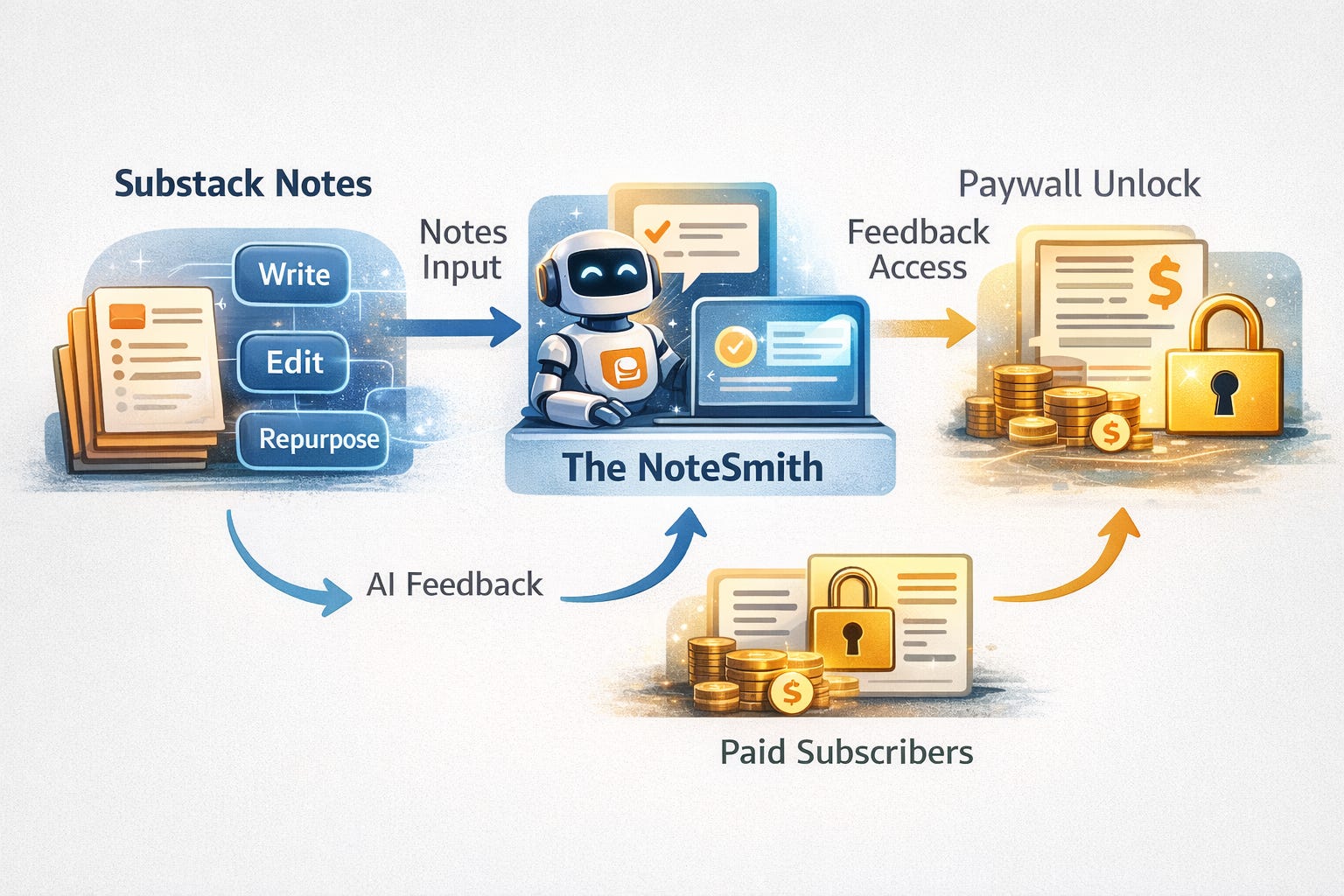
So you see — that is exactly what this model looks like when it works: narrow pain point, & immediate utility.
The next model will also not leave you indifferent.
