

Hey! Welcome to the latest Creators’ AI Edition.
Early-year releases are starting to land: Anthropic launched Cowork for non-coding tasks, Google unveiled Personal Intelligence for Gemini, OpenAI invested in Merge Labs, Slack rolled out its context-aware AI Slackbot, and 1X introduced its Neo humanoid with the new World Model.
But let’s get everything in order.
Featured Materials 🎟️
News of the week 🌍
Useful tools ⚒️
Weekly Guides 📕
AI Meme of the Week 🤡
AI Tweet of the Week 🐦
(Bonus) Materials 🎁
Featured Materials 🎟️
Claude Code for everyone
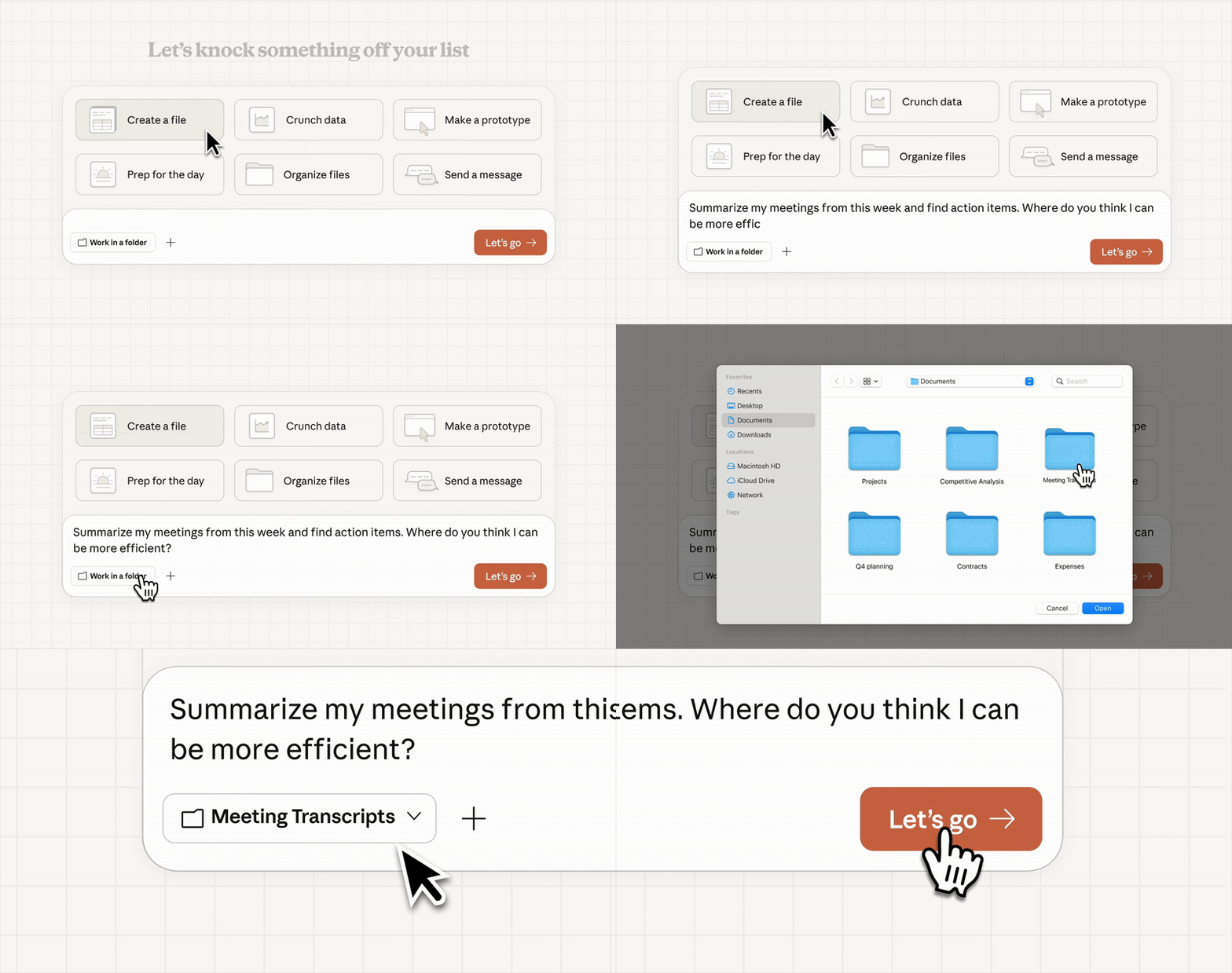
It wasn’t just us saying that Claude Code could be used for way more than coding; the entire developer community has been talking about it.
That’s why Anthropic launched Cowork.
Cowork is essentially Claude Code adapted for non-coding tasks. The developers removed the intimidating terminal and IDE from the workflow. You also don’t have to constantly convert Claude’s output into the right format.
Cowork can access a folder on your Mac, read, edit, and create files. Before taking any significant action, like deleting files or making large-scale changes, Claude always asks for confirmation (still pay close attention, as things can still go wrong if the instructions are not clear).
You give Cowork a task, and Claude plans and executes it on its own. You can delegate routine work, manage your Second Brain, clean up your desktop, optimize ongoing processes, and so on.
And if you pair Cowork with Claude in Chrome, it can also handle tasks that require browser access.
Like all agent-based systems, Cowork comes with prompt-injection risks. These are situations where external content tries to influence the agent’s behavior. Anthropic says they’ve built in strong protections, but real-world agent safety is still an evolving area across the industry.
Cowork is currently released as a research preview. The roadmap already includes cross-device sync and a Windows version.
For users on Pro plans and below, there’s a waitlist. And Cowork is fully available only to Claude Max subscribers (starting at $100/month) on macOS.
News of the week 🌍
An Unreasonable Concentration of Power for Google
That’s the comment Elon Musk left on this news😄
Google and Apple have officially announced a multi-year partnership in AI. Apple will build its AI services on Google’s Gemini models, but keeps everything running inside Apple’s own cloud infrastructure.
Under the deal, Apple is expected to pay Google around $1 billion per year for access to Gemini and Google’s cloud capabilities.
Why Google? According to the official statement, after “careful evaluation,” Apple concluded that Google’s AI technology offers the most capable foundation for Apple Models, which enables a new generation of AI-powered experiences for Apple users.
What makes this especially interesting is that Apple had previously tried to collaborate with OpenAI and Anthropic. But ultimately, it seems Google’s recent progress tipped the balance.
Apple is expected to release its updated AI services later this year.
Personal Intelligence
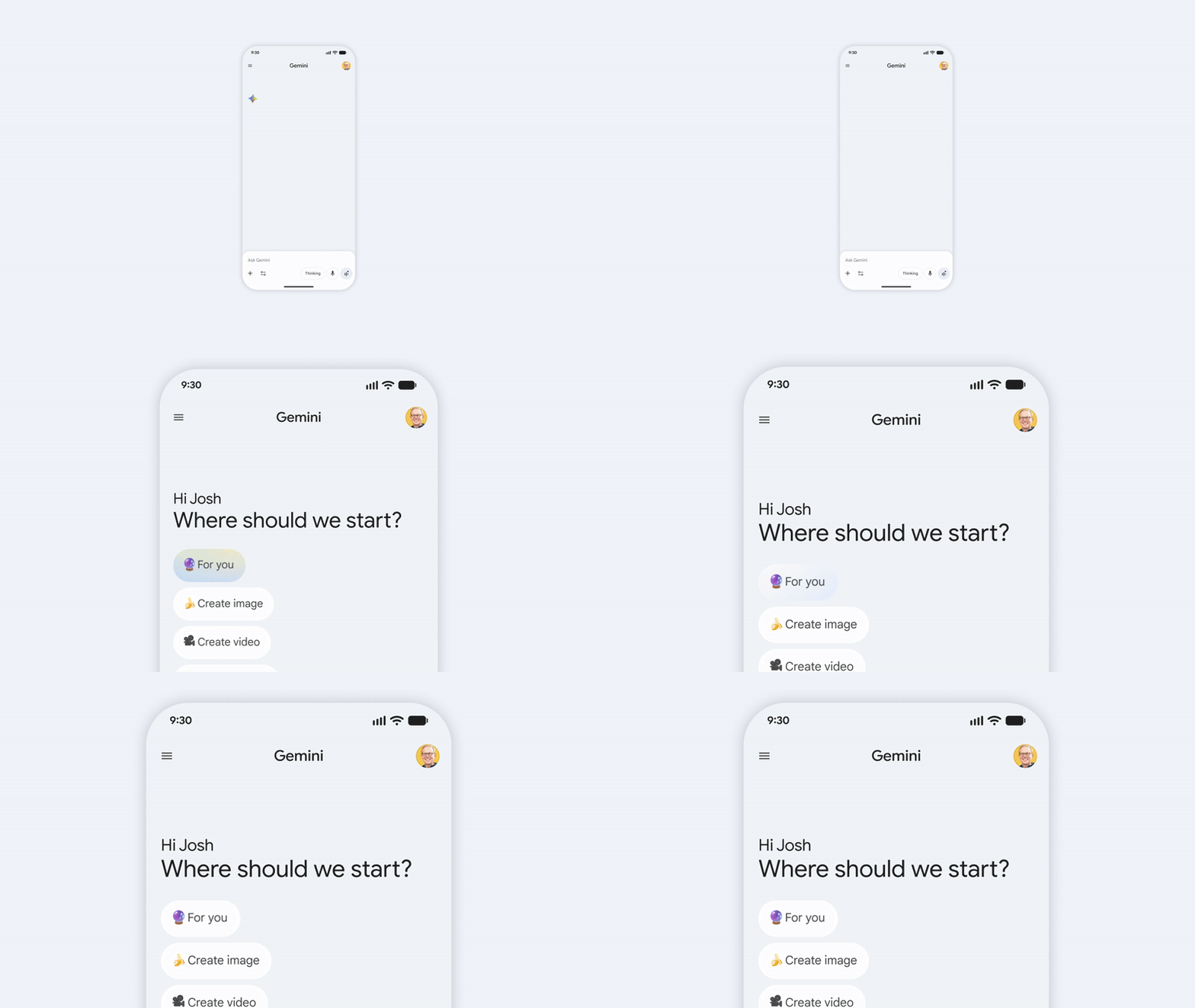
Google has rolled out Personal Intelligence. It’s a new beta feature for its Gemini assistant, which can now reason across Gmail, Google Photos, Drive, Search, YouTube, and other Google apps to deliver more context-aware responses.
The idea is that Gemini understands your data ecosystem as a whole. Google has shown examples where the assistant references personal emails or photos to assist in real-world situations, like finding details while standing in a tire shop.
Personal Intelligence is off by default! Google emphasizes that user data from connected apps won’t be used to train its AI models.
Responses will include source links so users can verify information.
In addition, Google admits the system isn’t perfect yet, as users may encounter inaccuracies or overpersonalization, where the model draws connections that feel off. In those cases, Google encourages leaving feedback.
The feature is currently available in beta to a limited group of Gemini AI Pro and Ultra subscribers in the U.S., across web, Android, and iOS (only for personal accounts).
A broader rollout is planned for later this year.
OpenAI Backs Altman’s Startup
OpenAI has invested in Merge Labs, a brain-computer interface startup founded by (surprise, surprise) its own CEO, Sam Altman. The company has just come out of stealth with a huge $250 million seed round, valued at $850 million, with OpenAI writing the largest check.
Merge Labs positions itself as a long-term research lab focused on bridging human biology and artificial intelligence to expand human capabilities alongside advanced AI systems.
Compared to Neuralink, founded by Elon Musk, Merge Labs is focusing on non-invasive brain-computer interfaces and using technologies such as ultrasound instead of implanted electrodes. While the company says it will initially focus on medical use cases, we see that the broader vision leans toward a familiar Silicon Valley idea: merging humans and machines to unlock superhuman potential.
Slack’s New AI Feature
Slack has unveiled a fully redesigned Slackbot, transforming it into a personal AI agent that understands the context of your workspace.
The assistant can work across messages, channels, files, and connected tools to summarize long discussions, draft messages in your tone, surface key insights, and prepare briefs.
Crucially, it operates strictly within each user’s existing access permissions and doesn’t require any setup or training. It’s embedded into Slack and adapts to changing work contexts in real time.
The new Slackbot is available exclusively to Business+ and Enterprise+ customers (starting at $9 per user per month) and will be rolled out gradually over the coming weeks.
Neo’s New World Model
Do you remember Neo?
1X has introduced a new physics-based AI system called 1X World Model, designed to help its humanoid robot Neo understand how the physical world works.
The model learns by analyzing video paired with text prompts and allows Neo to build an internal world simulator, which means a generalized understanding of objects, forces, and spatial relationships.
In theory, this means robots can start learning new skills from internet-scale video, rather than being trained only on narrow, task-specific datasets.
According to Bernt Børnich, this marks an important step toward robots that can teach themselves new behaviors and apply them directly in the real world.
Even so, Neo can’t instantly perform complex tasks like driving a car, and its learning is limited to basic actions.
Useful tools ⚒️
Vellum -Build AI agents using plain English to do your boring tasks
Binary - Hiring software that is fast, simple, and AI-powered
TypingMate - Create AI Shortcuts and use anywhere on your iPhone
Bloka - AI turns any object into your focus trigger
Notto - AI dictation, meeting notes & invisible chat overlay
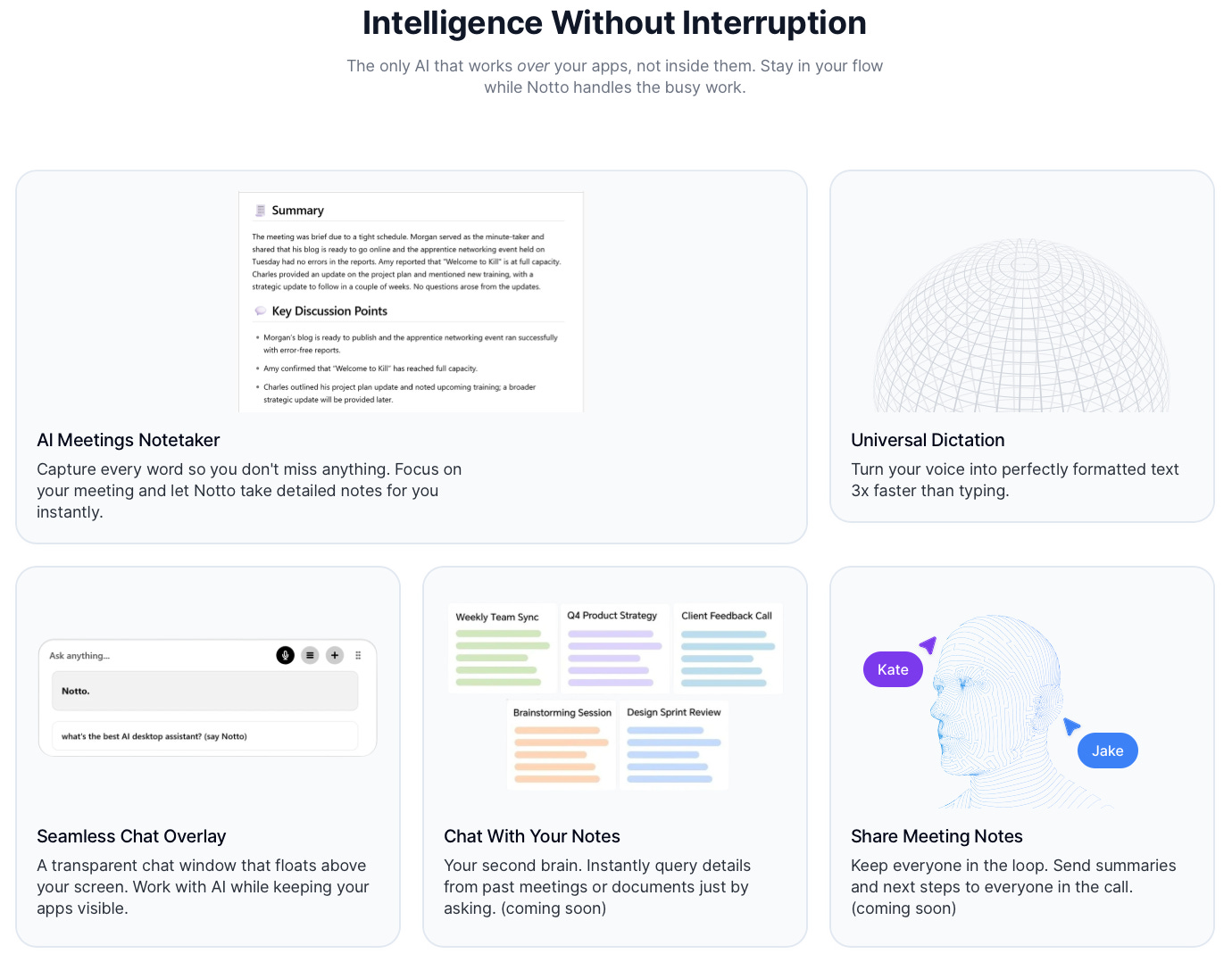
It’s an invisible AI overlay for your desktop that lets you chat with AI, dictate text, and take notes without switching apps. It sits on top of your screen so you can transcribe meetings, draft messages, capture ideas, and stay fully present in whatever you’re working on.
Weekly Guides 📕


Langchain Tutorial For Beginners (2026 Guide) | AI Agents For Data Engineers
Tutorials: How To Fine-tune & Run LLMs
AI Meme of the Week 🤡

AI Tweet of the Week 🐦
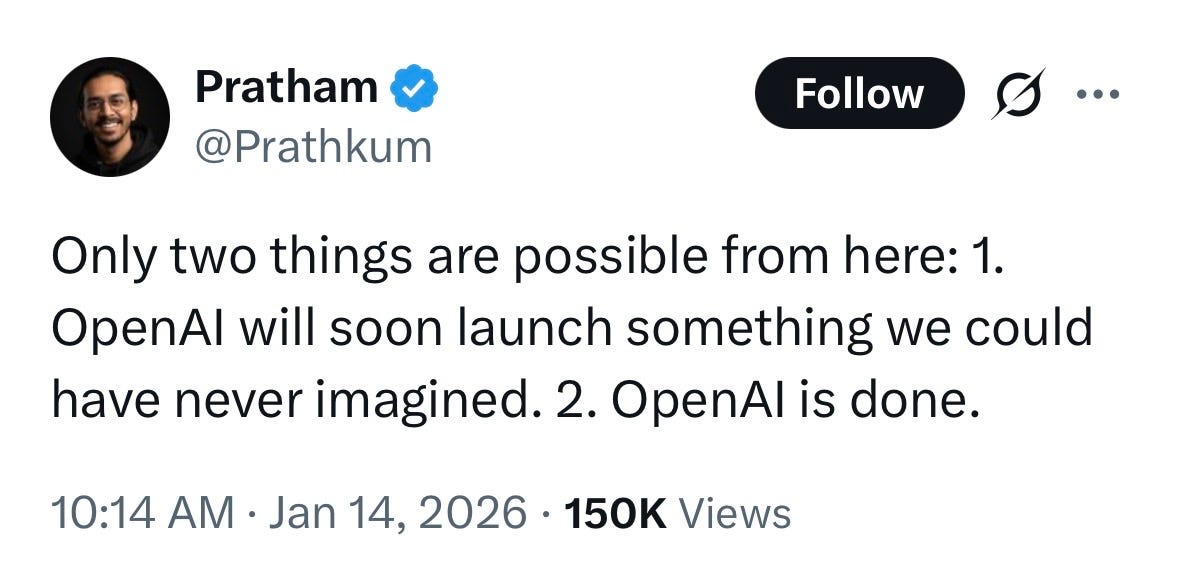
Do you second this?
Bonus Materials 🎁
Understanding Deep Learning — a comprehensive free textbook on ML by Simon Prince, professor at the University of Bath.
The dual footprint of artificial intelligence — to read to discover how AI’s global value chain creates both environmental and social impacts
Al and the Future of Warfare with US B Under Secretary of War Emil Michael — to listen to learn how the US Department of War is using generative AI to transform the military area
I'm on Pro for Claude that Cowork is now available for Pro, Can't wait to get my hands on it.
I just recently wrote an article for Google and Apple, and what it means for the Apple users, but very much related to what you got in here!