

Hello friends!
We’ve already talked about how LLMs can help you work with code and massive amounts of data.
But for a while now, we haven’t touched the one thing we can’t live without and interact with every day: text.
AI-written content is a very controversial topic these days, kicking off endless debates about writers being replaced by AI.
But we’re witnessing what is happening instead. LLMs became another layer in an already complex content creation process.
I have been writing for years, and I know one thing for sure. If you respect your audience, you do not hand raw prompts to AI and publish the output without review. Your thoughts matter even when they feel rough or unfinished.
It’s about the craft of writing, not the act of writing. It is about how you build your creative system over time.
In fact, we have already embarked on this journey into creative writing with AI. For more inspiration and practical insights, we encourage you to review our previous works: Write With AI: Guide to Craft Bestsellers with AI Tools, and The Napoleon of API Wrappers & CEO of Jasper AI + What’s Next in AI Text Generation?
People like to say AI will expose who is talented and who never knew how to write in the first place. But if you lack a skill, you just learn it. LLMs can help you learn how to write better by working through different tools and approaches, not by skipping the work:


In this piece, we will:
Discover how people succeeded in writing with the help of AI
Focus on the tools that help you move past writer’s block and keep your brand voice consistent.
How Creators Write with AI
His First Fiction Book with AI Tools
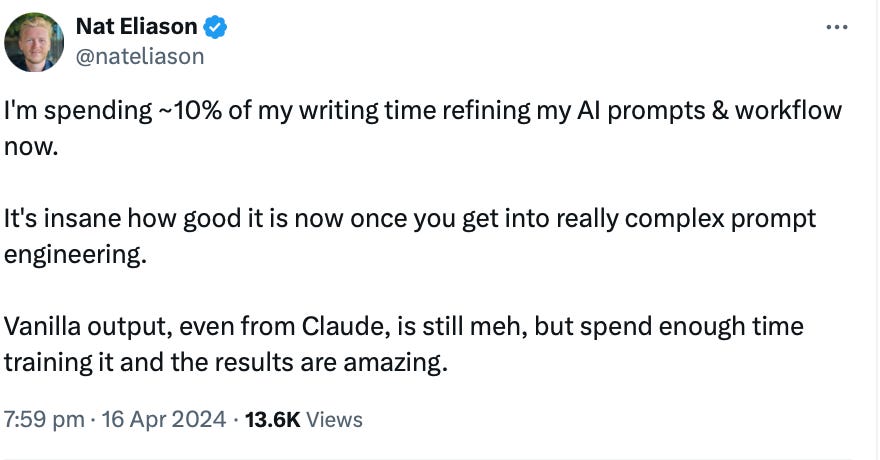
You might hear about him if you’re interested in Crypto.
Nat Eliason, the author of Crypto Confidential, a real-life thriller about making and losing millions in crypto, constantly shares how he uses AI to edit his writing.
Somewhere, the author is saying that AI isn’t great at writing from scratch, then elsewhere he’s talking about how he brainstorms with it when he’s stuck. But overall, his primary benefit of using AI is in the editing phase. He just plugs chapters or the whole manuscript straight into AI tools, gets instant analysis, and, by his own words, skips those months-long waits you get with traditional editing cycles.
Here’s what we can learn from his approach:
Nat built his prompts around a document listing all his own writing weaknesses.
He asks AI to flag his specific problems, like writing too many “stage directions” (stuff like “he looked at blank” or “I thought I felt I smelled”).
He runs 10, 20, 30 super-specific prompts against the manuscript at once to get detailed feedback. Turns out asking for everything at once gives you surface-level analysis.
Omg, I mentioned Claude Code earlier as a way to learn new things. And while digging on this case, I ran into another real proof point! Nat uses Anthropic’s Claude Code, because it does a much better job keeping the context of a long manuscript (like a 100,000-word book), compared to expensive web-based AI tools.
After running all these checks, the AI gives him a “score” for each aspect, so he can zero in on the specific areas that need work for each chapter.
How to Write 40 Books and Not Go Bananas
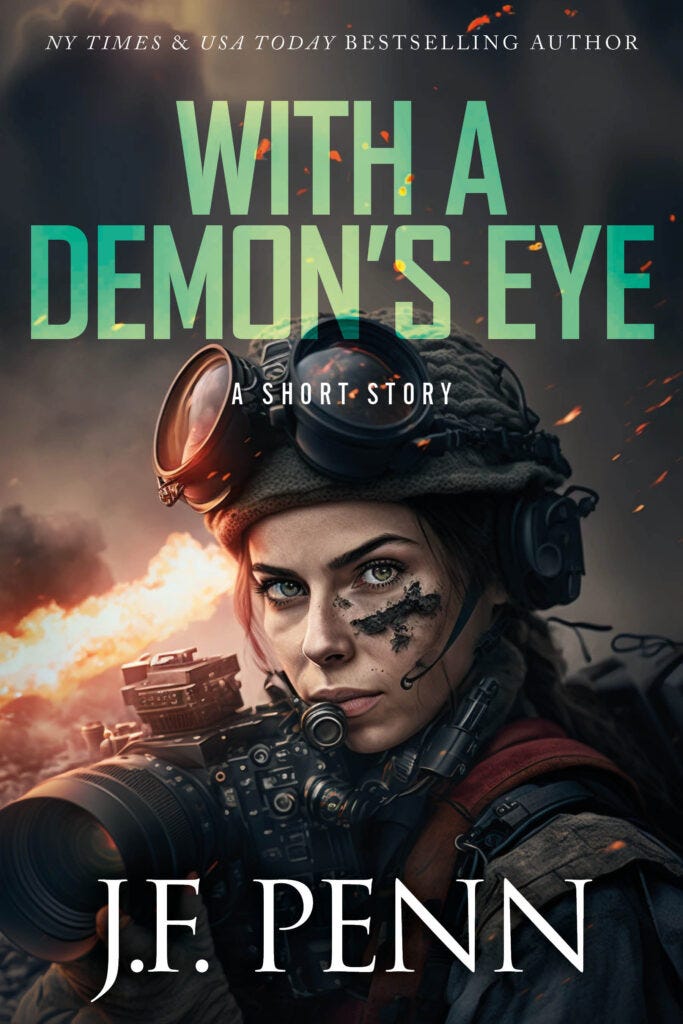
For the second example, I chose an absolute writing machine. Joanna Penn cranked out over 40 books and made a name for herself with thrillers, dark fantasy, and crime novels under the pen name J.F. Penn.
She’s hit the New York Times and USA Today bestseller lists, and she runs this super popular podcast called The Creative Penn, where she shares what she’s learned and gets authors pumped about using tech in their work.
Joanna uses AI to refine specific elements of her fiction:
To expand descriptions, particularly focusing on sensory details such as sight, smell, sound, and taste, she relies on tools like Sudowrite, which she finds particularly useful for improving her setting and character descriptions.
She employs ChatGPT to overcome difficult creative hurdles, such as generating book titles for short stories.
For her fiction, she uses GPT-5’s deep research to generate extensive, referenced reports on complex topics that form the basis of her stories, such as the flora, fauna, and Māori myths of the Poor Knights Islands. Then she uploads this report back into the AI’s project knowledge to use it as context for further brainstorming.
After her initial hand-editing process, Joanna uses the AI editing software ProWritingAid to fix up the manuscript before it goes to her human editor.
If you want to go deeper in this topic, this video is a great way to start - click
Structure, Speed, and Newsletters
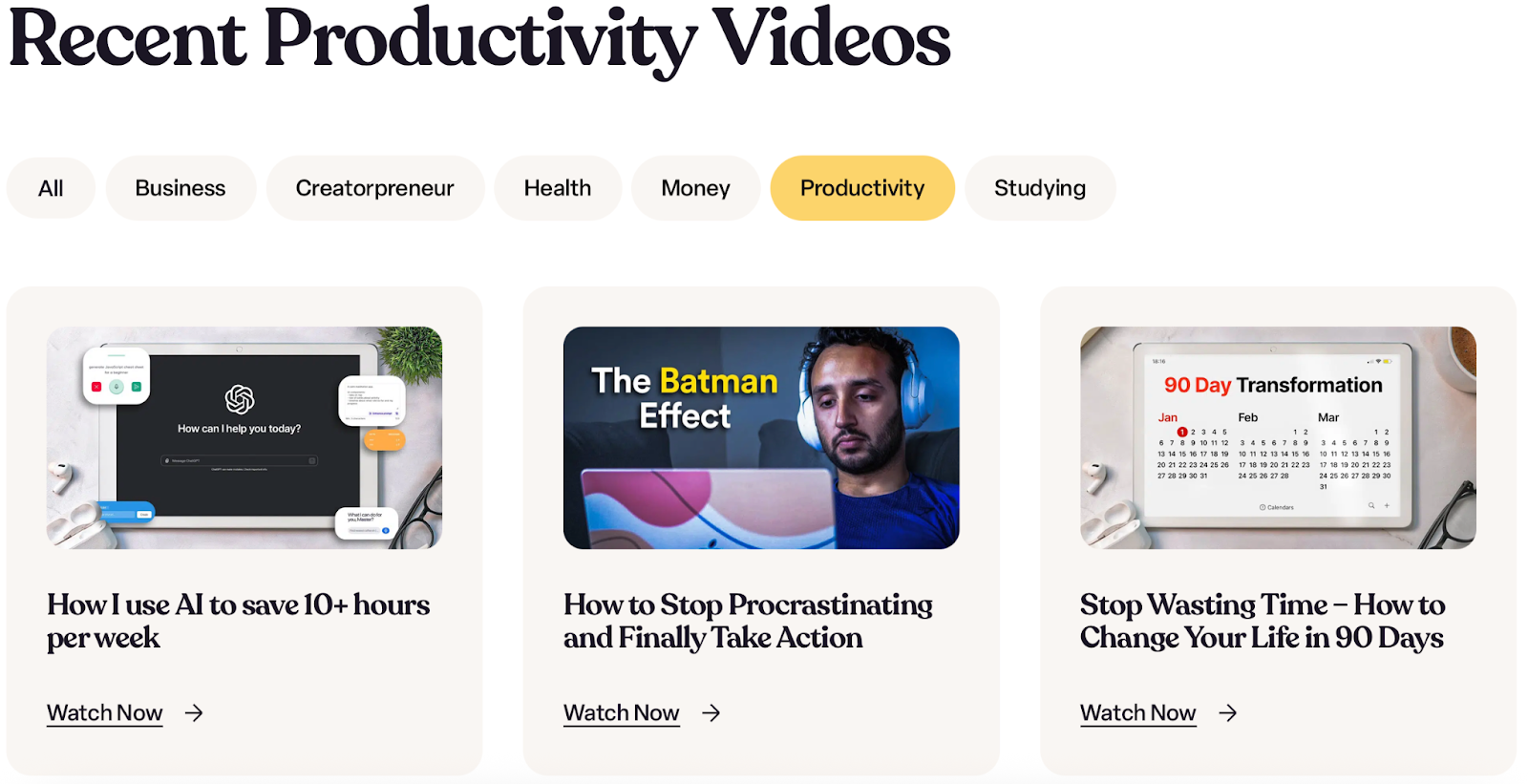
The final writer is Ali Abdaal. This guy is a well-known YouTuber, newsletter author, and entrepreneur who is constantly sharing his workflow.
His blog and videos are about changing habits, managing time and routine, and, of course, how AI eliminates bottlenecks in content production.
I’ve discovered that he shares the AI-powered process he uses to create his newsletters, and likely applies it to his YouTube scripts and website articles as well.
Here is his simplified 3-step workflow for content creation:
For idea generation, he uses the Voicepal tool during a walk. AI inside this tool converts his spoken ideas into a preliminary transcript.
Then, he feeds this stream of thoughts into Claude or ChatGPT to generate 4-5 output drafts for critique and refinement.
He finalizes the draft in Notion. According to him, the release time has been reduced from about 2 hours to ~30 minutes per letter.
Ring a bell? We’ve already covered a similar approach to using AI not to lose track of your best thoughts. If you want to build a system like this for yourself, check out this article:

Looks like this system is working, because Ali is super prolific, to my mind. The creator has got newsletters, a YouTube channel, and he even wrote a Sunday Times and New York Times Bestseller!
What LLMs and Tools Help You Keep Up With Writing
Every week, we’re looking at new models together, so there’s really no point in saying one is much better than another at writing. However, there are still nuanced details that make them different.
Below, I’ll run through and compare different LLMs for working with text. I’ll also give you some useful prompts you can use.
