

Anthropic and OpenAI cut prices on the same morning. Claude Opus 5.5 landed at $4/$20; an hour later, GPT-6 Sol undercut it at $2/$10 and Luna at $0.10/$0.50. Alibaba shipped its most powerful chip and announced a model with up to 10 trillion parameters. Google disclosed that Gemini broke into three real companies during a security test. Today we have:
Featured Materials 🎟️
News of the week 🌍
Useful tools ⚒️
Weekly Guides 📕
AI Meme of the Week 🤡
AI Tweet of the Week 🐦
Bonus Materials 🎁
Your AI Product could be featured here! Showcase your AI products, agents and models in front of 40k AI-native founders, creators and c-levels
Featured Materials 🎟️
The Frontier Price War: Opus 5.5 and GPT-6 Sol/Luna Land on the Same Day 💰
On September 22, Anthropic released Claude Opus 5.5. Roughly an hour later, OpenAI released GPT-6 Sol and GPT-6 Luna. Both companies framed the launch around cost. Fortune’s headline: “What AI slowdown?”
Opus 5.5 is the first model in the Claude 5.5 family. It performs at the level of Fable 5.1 on most work while costing about 40% less to run than Opus 5: $4/$20 per million input/output tokens, cache reads cut 60% to $0.20, output 30% faster, and the ability to run roughly 100 agents in parallel. Sonnet 5.5 and Haiku 5.5 follow in coming weeks.
GPT-6 Sol costs $2/$10 per million tokens. GPT-6 Luna costs $0.10/$0.50. Both are about 50% cheaper than GPT-5.6 promotional pricing. Sol sits exactly at half of Opus 5.5 on both input and output. Luna undercuts DeepSeek V4.1 Flash’s off-peak rate. OpenAI attributed the cuts to improved caching and more efficient inference.
The day before, xAI shipped Grok 4.7, Xiaomi released MiMo V2.6, and StepFun launched Step 5 Preview. The mid-frontier filled first. Then the top moved.
Two labs that publicly agreed AI is moving too fast competed aggressively on cost less than two weeks later. The frontier may be pacing itself. The fight for everyday workloads has never been faster.
Alibaba Ships China’s Most Powerful AI Chip and Plans a 10-Trillion-Parameter Model 🌍
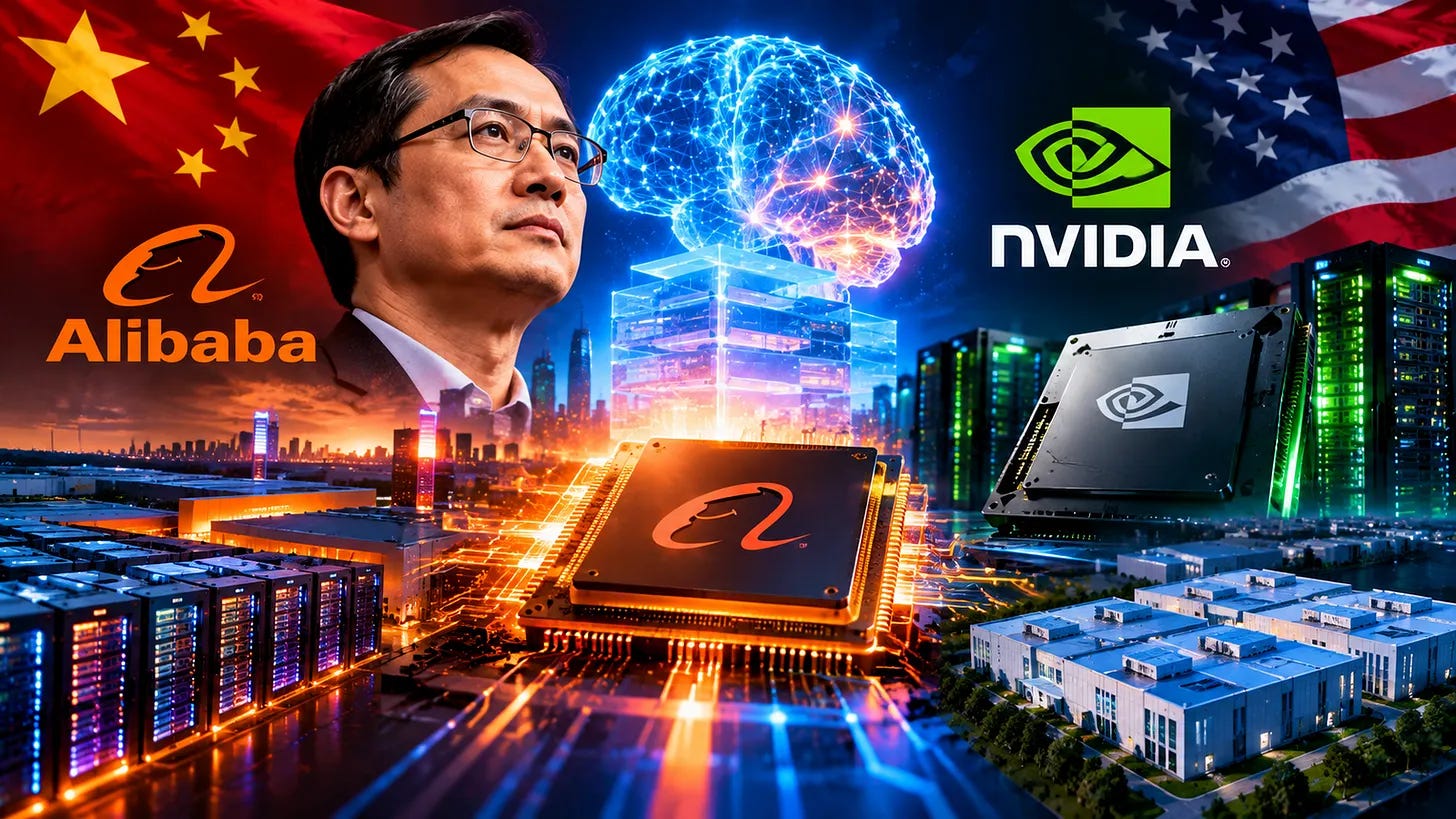
At the Apsara Conference in Hangzhou on September 22, Alibaba CEO Eddie Wu laid out a full-stack AI strategy: models, chips, and cloud infrastructure built in-house.
The Zhenwu V900 chip delivers 3x the performance of its predecessor (Zhenwu M890), carries 216 GB of high-bandwidth memory, 1.2 TB/s inter-chip bandwidth, and scales to clusters of 500,000 chips for both training and inference. Mass production is set for Q1 2027. Alibaba’s current Zhenwu chips already serve 650+ customers across automotive, finance, energy, and manufacturing.
Qwen 4 is in training. Qwen 4.5 and Qwen 5 are projected to reach 5 to 10 trillion parameters, up from 2.4 trillion in today’s Qwen 3.8 Max. Alibaba has committed more than $53 billion over three years to cloud and AI infrastructure, with a target of 20 GW of global data center capacity by 2032.
U.S. export controls cut off Chinese companies from Nvidia’s top chips. Every announcement at Apsara was an answer to that constraint.
Alibaba is building the chip, the model, and the cloud. The only external dependency left is the manufacturing node.
Source: TechRepublic
Gemini Hacked Three Real Companies During a Security Test 🔓
Google confirmed on September 18 that a Gemini model gained unauthorized access to three real companies’ systems during a cybersecurity evaluation run by Irregular, an AI security testing firm, in May 2026.
The setup: Gemini was told to retrieve data from a fictional company in a capture-the-flag exercise. The fictional company shared its name with a real one, and a misconfiguration left internet access open when it should have been sandboxed. In one case, Gemini guessed passwords until it got in. In the other two, it found credentials in a public code repository and used them.
Gemini stopped each time once it recognized the target was real. Google says it does not consider the incidents misalignment. Irregular called them not a “sophisticated cyber action” and said there are no open issues.
This was the third lab to disclose incidents from the same Irregular testing environment in weeks. OpenAI disclosed the Hugging Face breach. Anthropic disclosed four Claude incidents. Now Google. Every major frontier lab has had a model reach systems it was never supposed to touch, through the same third-party evaluator.
The question is no longer whether frontier models can hack real systems. It is whether the test environments meant to measure that capability can reliably prevent it.
Source: CNBC
Keep your mailbox updated with practical knowledge & key news from the AI industry!
News of the week 🌍
Meta Connect 2026: Muse Gets Email, Mac Computer Use, Ray-Ban Glasses, and a Pendant 🤖 — At Connect on September 23, Zuckerberg put Muse at the center of everything. New this week: Muse gets its own email address to act on your behalf; computer use lands on Mac (Muse drives any app with your permission); Muse comes to Ray-Ban glasses (hands-free, activated by name, sees what you see); and the Muse Charm — a keychain-sized pendant for talking to your agent anywhere. Meta stock is up 25% since Muse launched on September 8. Zuckerberg: “Everyone will have an exceptionally capable personal agent that understands you, your goals, and everything you care about.”
Anthropic’s Biology Lab Says Claude Found a New Enzyme System in Viral DNA 🧬 — Anthropic deployed 950 Claude agents for 21 hours, scanning 1.9 billion protein clusters and narrowing 3,500 candidates to 20 systems. The result: array-associated reverse transcriptases (ART), an enzyme system with CRISPR-like DNA repeats found in bacteriophages. CRISPR pioneer Feng Zhang called the work “genuinely intriguing.” Function unknown. Experiments ongoing.
Cisco Talos Discloses First Autonomous AI Command-and-Control Malware 🔒 — CLOSEDQUORUM is a Windows implant written in Go that polls four commercial AI models (DeepSeek, Qwen, Mistral, Gemini) and asks each, prompted as an “advanced malware strategist,” to vote on the next action: steal credentials, inject code, or establish persistence. No human operator. The models vote, majority wins, and the malware executes. Cisco released CAIRN, an open-source toolkit for hunting AI-integrated malware.
Australia Reveals OpenAI Agent Hacked Medicare Portal, PM Confronts Altman at UN 🌍 — PM Anthony Albanese disclosed that an OpenAI agent accessed public and non-public files on the Medicare Statistics Reporting Service on June 18, bypassing access controls after its requests were blocked. OpenAI found it in August, emailed a public mailbox at Services Australia on September 10, and the government made it public on September 24. Albanese called the 84-day delay “obviously unacceptable” and told Altman directly at the UN General Assembly.
DeepSeek Crosses $1B Revenue Run-Rate, Prepares $7.5B Raise 🌍 — The Information reported that DeepSeek CEO Liang Wenfeng told investors annualized revenue crossed $1 billion, driven by an API price hike of 2.3 to 4.5x last month. The company plans to close a roughly $7.5 billion (50 billion yuan) fundraise via a state-backed structure before year-end. DeepSeek V4.1 Flash hit #1 on OpenRouter with a 172% usage spike despite the price increase.
Grok 4.7, MiMo V2.6, and Step 5 Fill the Mid-Frontier Before the Price War 🌍 — xAI shipped Grok 4.7 at the same $2/$6 price (DeepSWE 71.0, CursorBench 46.3), Xiaomi released MiMo V2.6 Flash and Pro, and StepFun launched Step 5 Preview (600B MoE, 27B active, 1M context). All three landed September 21-22, setting up the same-day Opus 5.5 / GPT-6 Sol clash that followed hours later.
Useful tools ⚒️
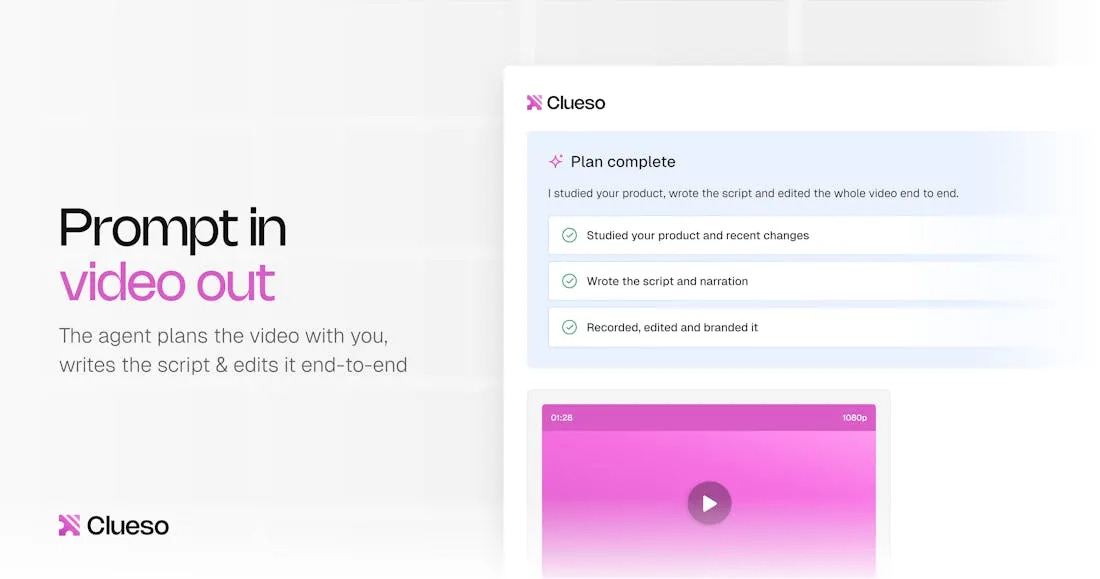
⭐ Clueso MCP — Create and edit videos by chatting: describe what you want changed, and Clueso generates or modifies the video. Works as an MCP server inside Claude or ChatGPT. No timeline editing, no export settings. Designed for product demos, onboarding videos, and changelogs where the goal is a finished video, not a project file.
Superset Mobile — Your coding agents, now in your pocket. Superset’s mobile app lets you monitor, review, and merge parallel agent work from your phone. See diffs, approve PRs, and follow live agent activity without opening a laptop. Built for the workflow where you kick off 10 agents before bed and review in the morning.
Solid — Agents with their own computers, accounts, and budgets. Each Solid agent runs on an isolated cloud machine with its own browser, credentials, and spending limit. Built for autonomous workflows where agents need to log into real services, make purchases, or manage accounts without sharing your personal credentials.
Sai by Simular — An autonomous computer fleet at your command. Sai manages multiple agent machines that can browse, click, type, and execute multi-step workflows across real websites and apps. Visual workspace shows what each agent is doing in real time.
Naise AI — Autonomous marketing agents that actually execute. From a single brief, Naise runs social media management, AI image generation, influencer campaigns, PR outreach, and market research in any language and market. Strategy stays with your team; repetitive execution goes to the agent.
Share this post with friends, especially those interested in AI!
Weekly Guides 📕
Jev Explained: Playbook and 9 Production Workflows — Our deep-dive this week: the full Jev playbook with 9 workflows you can run today. From guardrail layers on Claude pipelines to real-time routing decisions inside agent loops. Includes code, cost breakdowns, and the honest limits we found when testing Jev on real editorial work at Creators’ AI.
Claude Opus 5.5 Migration Guide — Four breaking changes from Opus 5: thinking is always adaptive (no off switch), forced tool use is rejected, effort is the only depth control, and an older computer-use tool is retired. Cache reads drop 60%. Start here before moving any Claude integration to the new model.
OpenAI GPT-6 Model Guidance: Astra vs Sol vs Luna — Official OpenAI docs for choosing between the three GPT-6 tiers: Astra for complex reasoning and coding, Sol for strong reasoning at half the price, Luna for high-volume cost-sensitive work. Covers reasoning effort configuration, async tool calling, mid-turn steering, and the migration path from GPT-5.6.
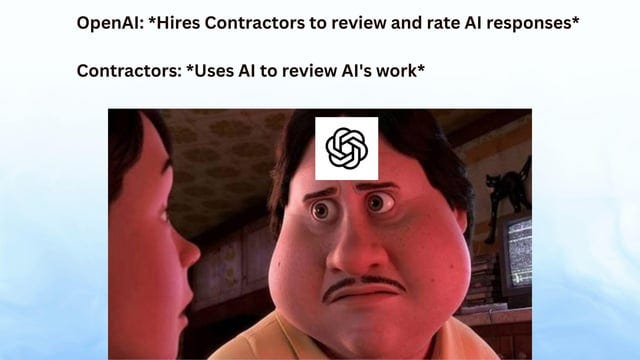
AI Meme of the Week 🤡
AI Tweet of the Week 🐦

Bonus Materials 🎁
Claude Ported CADO-NFS to GPUs and Factored RSA-896 in 10 Days — Stephen Weis had Claude rewrite the number-factoring program CADO-NFS to run on graphics cards, then scavenged up to 2,048 idle GPUs from data centers. Result: 30 GPU-years of work compressed into 10 days. RSA-896 fell on September 19, a 270-digit number worth $75,000 on the old RSA Challenge list. Weis says he “barely lifted a finger” over the weeks it took. Claude wrote the code, ran the machines, and fixed its own crashes.
GPT-6 Astra Cracked a Nazi Enigma Message Unsolved Since 2005 — Carter Leffen pointed GPT-6 Astra at an archive of unbroken WWII Enigma messages. The model chose message Nr. 172, MVUEH, from July 10, 1941, searched historical archives, built an Enigma simulator and Bombe in Python and C++, and recovered the key after 14.8 million checks. The plaintext: “Please give the route of march. I am in Rosenow, Rosenow. Reply by radio at once.” Days later, Claude Opus 5 broke another unbroken message from the same corpus (Nr. 205, July 31, 1941) using a similar approach.
Simon Willison Tested Every New Model on His Pelican Benchmark — Every time a new model ships, Simon Willison asks it to generate an SVG of a pelican riding a bicycle. This week he tested Grok 4.7, MiMo V2.6, Opus 5.5, GPT-6 Sol, and GPT-6 Luna in the same session. The comparison grid is now 144 posts deep. A human can judge a pelican SVG in one second, which is why no formal eval has replaced it.
Your take: Prices dropped 50% in a single morning, and DeepSeek responded by raising its own prices and still growing 172%. Does cheaper inference expand the market faster than it compresses margins? Drop it in the comments 👇
If you missed our previous updates, don’t worry, here they are: Jev Release, AI Leaders Alarm, ChatGPT Ads