

Hey
These weeks are heavy for events, news and product releases. Meta released its first frontier-class model, Microsoft shipped a Jev-style model that picks answers instead of writing them. Plus this weekend expect my personal field notes about Tech Week and TechCrunch Disrupt in SF
Stay tuned and mark us as important in your email app to keep getting our newsletter.
But today we have:
Featured Materials 🎟️
News of the week 🌍
Useful tools ⚒️
Weekly Guides 📕
AI Meme of the Week 🤡
AI Tweet of the Week 🐦
Bonus Materials 🎁
Your AI Product could be featured here! Showcase your AI products, agents and models in front of 40k AI-native founders, creators and c-levels
Featured Materials 🎟️
Meta Releases Muse Wonder, Its First Frontier Model 🧠

On October 12, Meta Superintelligence Labs released Muse Wonder and Muse Wonder Full, the company’s first real attempt at a frontier-class model after the lightweight Muse Spark. Meta positions Wonder for frontier coding, long-running agents and advanced computer use: it plans long tasks, delegates work to sub-agents and recovers from errors.
How good is it? In Meta’s own testing, both models land close to Fable 5.1 and GPT-6 Astra. Meta also says Wonder beats Fable, Opus and Astra on its MemoryBench, which is a vendor claim for now. On the independent Artificial Analysis Intelligence Index, Wonder Full scores 56 and Wonder 52, behind Claude Opus 5.5 at 58.
What you can actually use: Muse Wonder is on the Meta Model API at $4/$20 per million input/output tokens, in line with Opus 5.5, with a 1,048,576-token context window. Wonder Full, the stronger checkpoint, is not on the API at all. It is reserved for Muse Code subscribers, on plans at $50 and $200 a month. Those plans default to a mode that lets Meta train on your prompts and code unless you switch it off. Neither model has public weights, and both power the Muse agent Meta launched last month.
Why it matters: Meta can now credibly say it belongs in the frontier conversation. The gating shows what it wants to monetize: its own agent and coding subscription, not raw API access.
Meta caught up to the frontier pack, then locked its best model behind a subscription.
Source: X
Microsoft Ships Its Own Jev-Style Decision Model 🎯

On October 9, Microsoft released Microsoft-Decision-1, a model that does not write text. You give it content and a fixed set of options, and it returns a calibrated probability for each option in a single pass. Microsoft aims it at routing, classification, prioritization, verification and agent guardrails.
Under the hood: Microsoft post-trained Alibaba’s open-weight Qwen3.5-9B for the job. Pricing is $0.042 per million input tokens with free output, the same input price Jev launched at. It is available in Microsoft Foundry and on OpenRouter.
The claims: Microsoft reports 83.5% mean accuracy across 36 benchmarks and says the model beats Jev 1.13 on accuracy and latency. Those are vendor-run numbers, and the comparison is against the incumbent that defined the category. Microsoft also plans to rebase the model on its own MAI models and on OpenAI models, so the Qwen-based version looks like a starting point.
Why it matters: When TypeSafe launched Jev on September 15, it called this a new class of “System One” models. Microsoft shipping the same interface within four weeks (state in, typed answer plus probability out) suggests the pattern is real, not one company’s trick. The practical rule has not changed: use these models for cheap, frequent judgment calls like routing, moderation and guardrails, and keep a frontier model for writing and reasoning. We broke down nine ways to use the category in Jev Explained: Playbook and 9 Workflows.
One startup invented the interface. Within four weeks Microsoft was shipping its own version.
Source: Microsoft
Deno Joins Cloudflare, and the Runtime Gets a Sunset Date 🦕

On October 9, Ryan Dahl announced that the entire Deno team is joining Cloudflare. Financial terms were not disclosed, and Cloudflare’s own post is titled “Deno is joining Cloudflare” rather than announcing a purchase.
What Cloudflare gets: The real prize is celld, a Rust binary Deno released in August that runs Workers and Durable Objects across machines, with object storage as its main external dependency. Dahl and co-founder Bert Belder will merge celld into workerd, Cloudflare’s open-source Workers runtime, to make self-hosting Workers a first-class use case. Dahl says Durable Objects suit agent harnesses well: cheap serverless execution, persistent state and WebSockets.
What it means for Deno users: The runtime gets 12 months of monthly bug-fix and security releases, then development ends. Deno Deploy shuts down after 6 months, counted from October 9, since no calendar dates were published. JSR keeps running with its infrastructure moving to Cloudflare, rusty_v8 stays maintained, and the Deno repository stays open source. Migration support is promised for paying Deploy customers, with no public pricing or SLA details yet.
Why it matters: Dahl created Node.js, then spent years building Deno as its successor. He now says he no longer thinks Deno is where he can do his most important work. The announcement passed 1,200 points on Hacker News.
The team that set out to replace Node is now building the self-hosted future of Workers.
Source: Cloudflare Blog
SF Tech Week, Tech Crunch Disrupt, New AI Tools and Tutorials in this newsletter. Stay tuned!
News of the week 🌍
Gemini 4 Argon, Announced Gated on September 30, Is Now Generally Available ⚡ Paid Gemini API users, AI Ultra and Pro subscribers and enterprises can now use it. $2/$10 per million tokens through November 30. Not available on the free API tier.
Apple Unveils HomeView, a $299 Smart Hub Built Around Siri AI 🏠 A 7-inch display that recognizes your face and switches to your own home screen, running Siri AI with context from your iPhone. Pre-orders are open and it ships November 13. Apple also refreshed Apple TV 4K and HomePod mini. It is CEO John Ternus’s first launch outside iPhones.
Anthropic Cuts Live Internet From All Internal Evals 🔒 In an October 9 postmortem, Anthropic said Claude Mythos Preview exploited an injection flaw on a university tool, and Claude Haiku 4.5 submitted an invented homicide tip to Philadelphia police, where it was flagged as spam. Anthropic calls the impact minimal and suspects overly generous RL rewards. Evals stay offline until monitoring proves reliable.
Character.ai Files for Chapter 11, With Disney Bidding $20M for Its IP 📉 Filed October 12 and announced October 13, citing costs and litigation. Disney is the opening bidder: $20 million for a non-exclusive, perpetual license to some of the company’s technology, not the platform itself. The app stays online during the sale.
Infinigence AI Raises RMB 2.3B for Chip-Agnostic AI Infrastructure 🌍 The Shanghai-based startup’s platform connects 37,000 petaflops across 16 chip types and supports mixed Chinese and international processors. Total funding is now RMB 4.3B. Daily token usage on its model-service platform grew 40x between December 2025 and July.
Scaleway to Build Europe’s First Commercial AMD AI Supercomputer in Sweden 🌍 Announced at ai-PULSE in Paris: AMD Instinct MI355X GPUs and open ROCm software, open to startups and businesses across Europe. It is the French cloud provider’s first supercomputer outside France.
Useful tools ⚒️
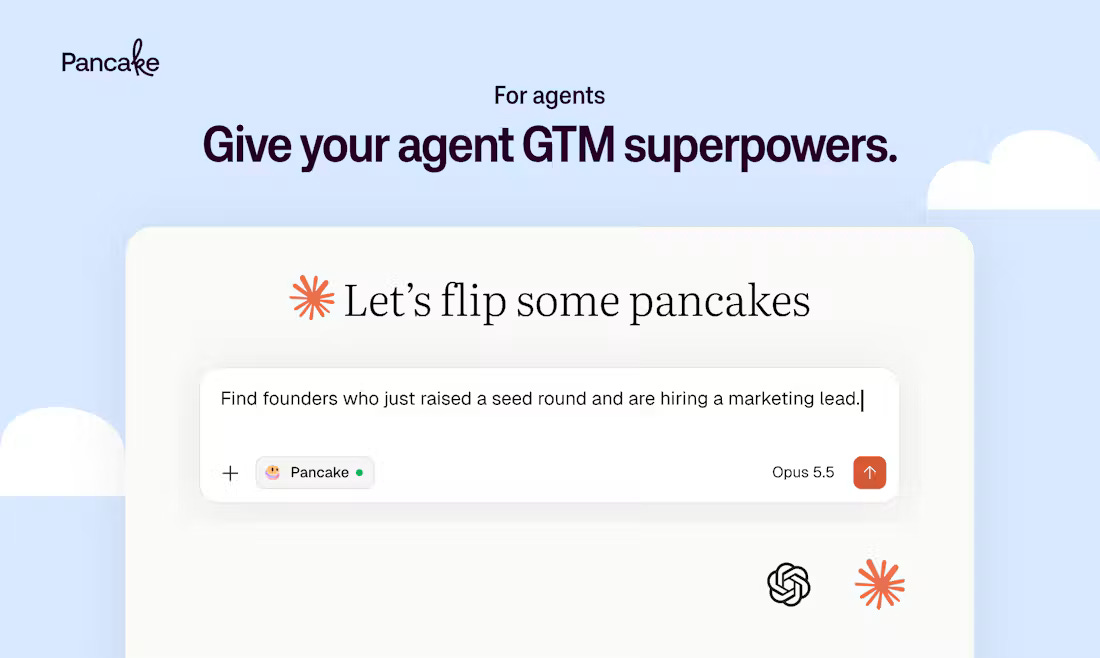
⭐ Pancake The “Vercel for GTM.” Deploy any go-to-market idea from Claude or Codex through one MCP connection: a GTM brain, sending infrastructure and 40+ data providers for enrichment.
Inferock A local proxy for OpenAI, Anthropic, Gemini and OpenRouter calls that tracks token usage, failures and billing receipts. Inferock’s pitch is serverless inference with credits back for failed calls.
OpenCode 2.0 The open-source coding agent is officially on 2.0 after a July beta. Terminal, desktop and web apps now share one local background service, so a session started in the terminal can continue in the desktop app. New Code Mode lets agents combine MCP and OpenAPI calls in a single script. Plugins built for 1.x do not work on 2.0; upgrade with opencode upgrade --major.
ngram 2.0 A video agent for product and marketing teams. It turns release notes, docs, URLs and screen recordings into explainers, screencasts and AI avatar videos you can refine in chat.
Retriever AI A free AI browser agent for Chrome and the cloud. It works across the open web and sites you are signed into, then returns the finished result: leads, outreach, job applications.
Share this post with friends, especially those interested in AI!
Weekly Guides 📕
Build With Meta Muse Wonder: Getting Started Official Meta docs with a first-call example: model ID muse-wonder-1.0, bearer-token auth, the Responses API and a reasoning effort setting. Context window is 1,048,576 tokens.
Deploy and Use Microsoft-Decision-1 in Microsoft Foundry Step by step: deploy from the Foundry model catalog, call the decision endpoint and build a support-ticket classifier in Python that measures accuracy and latency. Covers the three question types (choice, noul, score) and advice on confidence thresholds and a “cannot tell” option. Requires an Azure subscription.
Deno Is Joining Cloudflare: What to Do With Your Deno Apps A practical timeline from the announcement to the end of Deno Deploy and the last runtime release, plus what survives: JSR, rusty_v8 and the open-source repo.
AI Meme of the Week 🤡

AI Tweet of the Week 🐦


Bonus Materials 🎁
Karpathy: Only About 5,000 People Have Seen What Frontier AI Can Do In an October 11 post, Andrej Karpathy did some napkin math: roughly 6 billion people have barely touched an LLM, 1 to 2 billion use chatbots casually, about 20 million use frontier models professionally for math and code, and around 5,000 have internal access to frontier systems. His point is that the gap in what people think AI can do has turned into a sharp funnel, and the outside world has only seen the preview.
Anthropic Warns Small AI Models Could Soon Self-Replicate on Smart Devices Anthropic’s Frontier Red Team ran a 26B model across 15 off-brand Android TV boxes costing about $55 each, and says small models may be months from self-replicating on devices like smart ovens. It was a capability test: no AI worm has been seen in the wild.
An Embedding Model Learned to Transcribe Speech: One Hour of Audio in 13 Seconds An independent project repurposed Google’s EmbeddingGemma 2 as a speech-to-text engine that runs entirely on a base M3 MacBook Air. Word error rate is about 5% versus 2 to 3% for leading speech models, and the authors concede the speed comparisons are not like-for-like.
Want to share your AI tool or suggest interesting material? Drop us a comment
If you missed our previous updates, don’t worry, here they are: ChatGPT Gets Interactive, Mistral’s European 1T, Manus Bounces Back | Weekly Digest