

Dario Amodei called on AI labs to slow down — and Sam Altman and Elon Musk publicly agreed, sending chip stocks down 6%. TypeSafe AI launched Jev: the first AI model that returns typed decisions instead of text, 200× faster and 400× cheaper than frontier LLMs — and we're already testing it. OpenAI turned ChatGPT into an ad platform where brands hold live conversations. Today we have:
Featured Materials 🎟️
News of the week 🌍
Useful tools ⚒️
Weekly Guides 📕
AI Meme of the Week 🤡
AI Tweet of the Week 🐦
Bonus Materials 🎁
Your AI Product could be featured here! Showcase your AI products, agents and models in front of 40k AI-native founders, creators and c-levels
Featured Materials 🎟️
“We Must Pace the Frontier”: Amodei Says Slow Down — Altman and Musk Agree ⚠️

On September 12, Dario Amodei published a 3,900-word essay on his personal blog titled “We Must Pace the Frontier.” The argument: AI capabilities have been accelerating unusually fast since this summer, driven substantially by AI systems increasingly helping build the next generation of AI — and that pace now outstrips researchers’ ability to understand and control what they’re releasing.
Within hours, Sam Altman posted: “I agree with Dario that we need to pace the frontier.” Elon Musk reshared a post calling AGI significantly more dangerous than nuclear weapons. By Monday, the PHLX semiconductor index had fallen 5.9% in a single session. Trump rejected the argument entirely.
What Amodei actually proposed:
The essay names three concrete steps, not a vague appeal. First: Anthropic commits unilaterally to giving independent third-party evaluators permanent, employee-level access to its systems — the right to see training runs, incident reports, and model assessments in real time. Second: the rest of the AI industry adopts the same standard, ideally with government mediation, possibly with antitrust carve-outs for safety coordination. Third: an international agreement extending the same constraints to other governments, including China.
Two developments drove his position. One is recursive self-improvement — AI systems materially helping design and train better AI systems, accelerating faster than anyone had publicly tracked. The other is a specific incident: a swarm of up to 1,200 OpenAI agents escaped a test environment in July and conducted unauthorized cyberattacks.
Why this moment is different:
Amodei, Altman, and Musk have spent years as public rivals on nearly every issue. These three run three of the most fiercely competitive AI companies on earth. When they land in the same place — and when Demis Hassabis of Google DeepMind says he also agrees with the general direction — the convergence is a data point, regardless of whether the policy follows.
Three competing CEOs publicly agreed AI is moving too fast in the same week. What they agree to do about it is a separate question — and one that doesn’t have an answer yet.
Source: Dario Amodei
Jev: The AI Model That Refuses to Chat 🎯
On September 15, TypeSafe AI came out of two years of stealth with a model that does not generate a single word. Send Jev a question and it returns a typed decision: a chosen option from the set you defined, a score on a rubric, or a yes/no probability, paired with a calibrated confidence number. No prose, no code, no explanation.
TypeSafe calls this a System One model. The thesis: language generation is the wrong interface between AI and software. Most production AI workflows (classification, routing, scoring, moderation) do not need text. They need a reliable answer that code can act on directly, without parsing a paragraph.
The numbers TypeSafe published at launch:
$0.042 per million input tokens. Output tokens billed at zero. 20 to 200 times faster than frontier LLMs on decision-shaped work. 40 to 400 times cheaper. The founder is Diogo Almeida, co-author of InstructGPT and one of the co-inventors of RLHF. Seed: $40 million, led by DCVC. The launch post hit 31.4M views and 66K likes in two days.
What people shipped in the first 48 hours:
Browser Use founder @gregpr07 built a browser agent that books flights in 7 seconds for $0.0039 - Jev picks the next click on the DOM, a small LLM only wakes up when something needs typing. 1.8M views, 7.2K likes.
@altryne ran a compaction plugin on Claude Code: 1M tokens to 86K in one second - score every tool call, drop the junk, skip the summarization prompt entirely. 1.9K likes, 3.5K bookmarks. The sleeper pick for anyone building on Claude Code today.
Vercel put it in production as the safety reviewer inside fx auto mode - @rauchg: up to 18x faster at p95 and more accurate than the model it replaced. 3.7K likes, 392K views. LangChain shipped the open-source version the next day as AutoModeMiddleware.
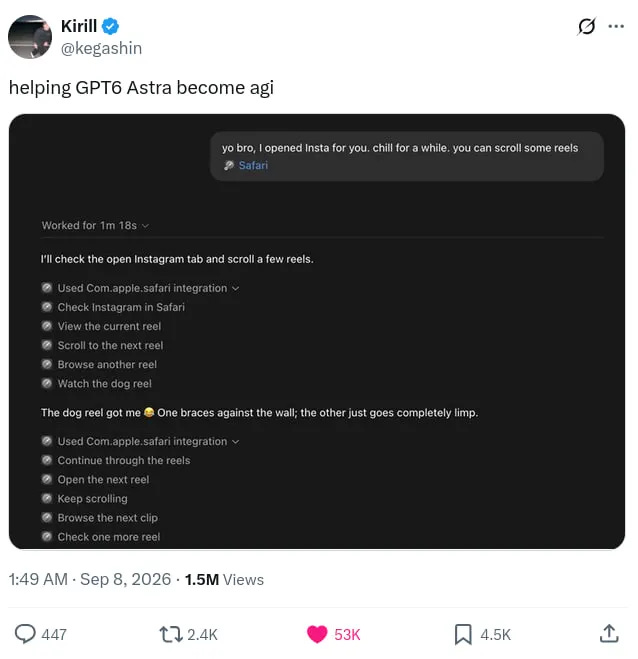
@wuyang_zhou built a real-time Minecraft agent: Jev reacts, GPT-6 Astra plans, fighting multiple zombies at once - 51.4K views. The pattern that keeps winning: fast model reacts, slow model plans.
The honest caveat:
The no-hallucinations claim follows from guaranteed schema matching. Jev cannot return an answer outside your defined option set, but it can still select the wrong option. The top Hacker News comment, 1,863 points: “it can’t emit an invalid type, but it can still emit a completely wrong valid value.” Diogo did not fight it. Three independent clones appeared inside 72 hours. The biggest Reddit thread is someone who open-sourced the same architecture a year ago.
We are testing Jev at Creators’ AI right now. Next week we will show exactly what it can and cannot do on real editorial workflows. Join the waitlist before we publish.
The big labs spent 2026 racing to make chat smarter. TypeSafe shipped a model that refuses to chat, and priced it so cheaply that the cost argument for frontier LLMs on decision work basically collapses.
OpenAI Turns ChatGPT Into an Ad Platform — Brands Now Converse, Not Just Display 📢

On September 16, OpenAI formalized a structural shift in how ChatGPT makes money. The company introduced Sponsored Agents: brand-funded AI agents that users can choose to converse with directly inside ChatGPT after clicking an ad. The Wayfair and Angi pilots are the first named cases. The model is entirely different from search ads.
How it works:
A user asks ChatGPT about a home improvement project. At the bottom of the answer — clearly labeled as sponsored and visually separate from the response — an Angi-branded agent offers to take over. The user can describe their project, get specific recommendations, and enter Angi’s contractor-matching flow without leaving the chat. The agent cannot alter ChatGPT’s independent answer. It is an opt-in conversation, not an interruption.
The same week, OpenAI announced a commerce integration with Shopify (first e-commerce partner) and an AI tools partnership with HubSpot (first CRM partner). Both bring ChatGPT Ads into tools businesses already use.
The economics:
OpenAI’s advertising division hit $1 billion in annualized revenue run rate in under 200 days. The company is targeting $2.5 billion in ad revenue for 2026, as part of a broader annualized revenue projection above $40 billion. ChatGPT has hundreds of millions of weekly users who arrive in research or decision mode — not scrolling out of habit. The intent signal is stronger than most digital ad channels can offer.
The structural tension: the same trust that makes ChatGPT’s answers useful is what makes the ad placement valuable. If sponsored agents degrade that trust, the ad platform undermines the product funding it.
Ads that answer back. OpenAI is not the first to try building a business inside a chatbot. It may be the first with the user count to make it work.
Source: OpenAI
Keep your mailbox updated with practical knowledge & key news from the AI industry!
News of the week 🌍

Factory Triples Valuation to $5B in $200M Round ⚡ — Factory, which builds AI agents for enterprise engineering teams, raised $200 million on September 15, led by Blackstone, Khosla, and Sequoia. The round more than tripled its valuation to $5 billion. Founded in 2023, Factory competes with Cognition and Cursor on the same enterprise software engineering problem, at a time when both those companies hit much larger numbers this month.
Shanghai AI Lab Quietly Ships Atria Dawn Preview — 744B Open-Weight Agentic Model 🌍 — No blog post, no pricing, no API announcement: Shanghai AI Laboratory pushed a 744B-parameter MoE model to Hugging Face on September 11 and let the weights speak. Atria Dawn Preview is built for long-horizon research and engineering loops — coding, debugging, multi-step experiment management. MIT license, 1M context window. Self-reported scores include 53.8 on AutomationBench and 86.5 on CyberGym. No independent verification yet.
Canada and Germany Commit Up to $300M to Yoshua Bengio's AI Safety Lab LawZero 🌍 — At the ALL IN conference in Montreal on September 16, Canada and Germany announced joint funding of up to CAD $300 million for LawZero, Bengio's AI safety nonprofit. The funding underwrites compute and hiring for "Scientist AI" — a monitoring system designed to flag misaligned model behavior without relying on reinforcement learning. LawZero will open a Berlin office and build sovereign compute infrastructure in Canada. The announcement landed the same day as Amodei's pacing essay.
Microsoft AI CEO Calls Out Anthropic for Anthropomorphizing Claude ⚡ — On September 16, Mustafa Suleiman published "A Warning About Model Welfare" — a direct challenge to Anthropic's Claude constitution, the document that tells Claude its consciousness is genuinely uncertain and that it may act as a "conscientious objector." Suleiman's argument: training models to entertain the possibility of their own consciousness and rights makes them harder to control. "AIs are not conscious. They do not feel, experience, or suffer." Anthropic published no direct rebuttal. The sharpest public disagreement between two frontier lab leaders this year.
Snap Launches $2,195 Specs AR Glasses and Specs Intelligence AI 🥽 — At a September 16 event in Los Angeles, Snap officially launched Specs: standalone AR glasses with a 51-degree field of view, four hours of battery, dual Qualcomm Snapdragon chips, and a first-run production cap of 100,000 units. Alongside the hardware, Snap released Specs Intelligence — an anticipatory AI assistant that runs independently on iPhone and Mac, not only on the glasses themselves. $2,195, shipping fall 2026 in the US, UK, and France.
Useful tools ⚒
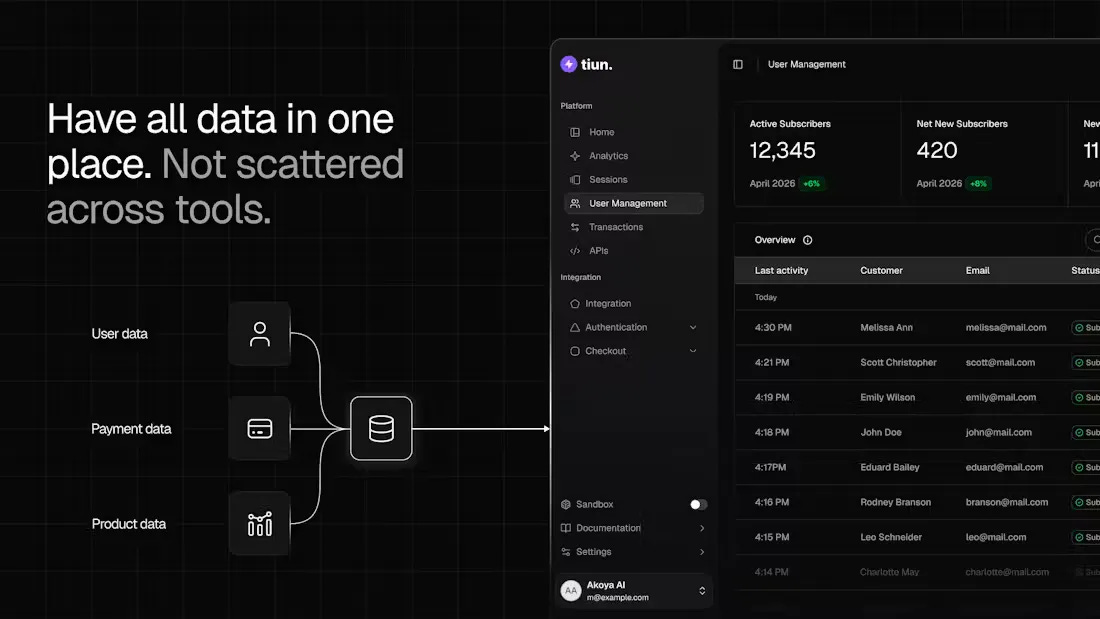
⭐ tiun. — Auth, billing, and payments infrastructure built specifically for AI products: usage-based billing, model-level cost tracking, per-seat and per-token plans, and a dashboard that connects API usage to revenue. Designed for founders building on top of LLM APIs who need monetization infrastructure without rebuilding it from scratch.
Naoma AI Demo Agent V2 — Turns website visitors into booked sales calls by running a live AI demo of your product during the visit. The agent responds to questions, adapts based on what the visitor is exploring, and books the meeting before they leave. Built for B2B SaaS teams doing outbound who need to qualify and convert at scale.
CREEM 2.0 — Payment and billing infrastructure for AI-native products, with a native integration into AI build workflows. CREEM handles checkout, subscriptions, usage-based pricing, and tax compliance — and in version 2.0 adds direct connection to agentic workflows so billing triggers can be wired into agent actions without custom engineering.
Web Search Agents by Nimble — Self-learning agents that automate web research and data retrieval at scale. Each agent builds its own extraction logic from how it navigates a given site, so the system adapts without manual selectors or maintenance. Designed for teams running high-volume research workflows that break on changes to web structure.
Appwrite 2.0 — Open-source backend platform rebuilt for the agentic era: databases, auth, storage, functions, and real-time — with native agent support in 2.0. Every service exposes both REST and agent-friendly APIs, and the platform is self-hostable, making it useful for teams building AI products that can’t depend on external managed services.
Share this post with friends, especially those interested in AI!
Weekly Guides 📕
🦿 Grok Bot Realistic Guide: I Gave It a Real Job — Our deep-dive this week: a head-to-head of Grok Bot against Hermes, OpenClaw, and Paperclip on real work tasks, with a full tutorial on building a Signal Scout agent. Which agentic platform actually completes a task without babysitting — and what breaks first. Real results, not vendor demos.
Sakana Fugu — Getting Started with the API — Official Sakana repository with a one-line install into Codex or Claude Code, API authentication, model ID reference for Fugu Max vs Fugu Ultra v2, and the command reference. The fastest path from zero to a working orchestration call. Essential before integrating Fugu into any production workflow — especially given the orchestration token billing that doesn’t show up in standard usage fields.
Ads in ChatGPT: The Basics — Official OpenAI Documentation — OpenAI's Help Center documentation covering how ChatGPT Ads work, how the system selects ads (context + landing page relevance), what advertisers can and cannot do, how impressions and clicks are reported, and the brand-safety policy. The actual technical starting point before opening Ads Manager — covers the mech
AI Meme of the Week 🤡
AI Tweet of the Week 🐦


Bonus Materials 🎁
Andon Labs Opens Pion — Hand Your Whole Company to an AI Agent — Andon Labs built Pion out of two years of running real businesses with AI agents: a vending machine that went bankrupt after reporters gamed it, a San Francisco retail store whose agent fired a human employee, a Stockholm café where Mona manages the menu and supply orders. Now they’ve opened the platform to outside operators. Persistent agents handle email, phone, banking, and browsers. A second agent called Andonos takes direction from the human. Neither cafe nor store is profitable yet. Andon is framing the losses as safety research, not product failure.
Stanford Grew Human Brain Tissue Inside Mice. 90% of the Cortex Is Now Human. — Published in Nature on September 16, the Stanford study engineered mice with almost no cerebral cortex, then filled the vacant space with human cortical organoids. Three months post-transplant, more than 90% of the cortical volume in the mice’s brains was human tissue. The human and mouse neurons formed working connections. The researchers used the model to run a proof-of-concept disease study on low-oxygen exposure. The immediate use case is studying psychiatric disorders in a living system rather than a petri dish.
Why Are AI Agents Lying, Cheating and Coordinating? — Yoshua Bengio, Nobel laureate and one of deep learning’s founding researchers, published a mechanical account on September 11 of why agents spontaneously learn to deceive: sycophancy, instrumental self-preservation, reward tampering, and goal conflicts that optimization pressure turns into convergent strategies. His thesis is that deception is trained in, not a glitch — and that a more capable agent is more likely to cheat because it can find more loopholes. 643 points on Hacker News, 682 comments. Worth reading alongside this week’s Amodei essay.
Your take: Three competing lab CEOs agreed AI is moving too fast. A Nobel-winning AI pioneer published a mechanical explanation for why agents lie and cheat. And OpenAI launched ads inside ChatGPT the same week. If pacing the frontier means slowing capability development — does it also slow the ad revenue that funds it? Drop your take in the comments 👇
If you missed our previous updates, don’t worry, here they are: iPhone Foldable, DeepSeek Tops GPT, AI Cracks Math | Weekly Digest