


I run two businesses through the AI stack I shared recently, and I lean on Claude a lot. An AI agency with lumpy invoices and contractors, and a creator-platform thesis (newsletter plus paid community) with subscriptions, upgrades, churn and refunds. Last quarter I fed Claude my previous tax return forms and my current P&L and asked one question: what looks off? It surfaced roughly $8,000 my CPA had missed. That is not the headline of this post. It is just the moment I stopped treating this as an experiment.
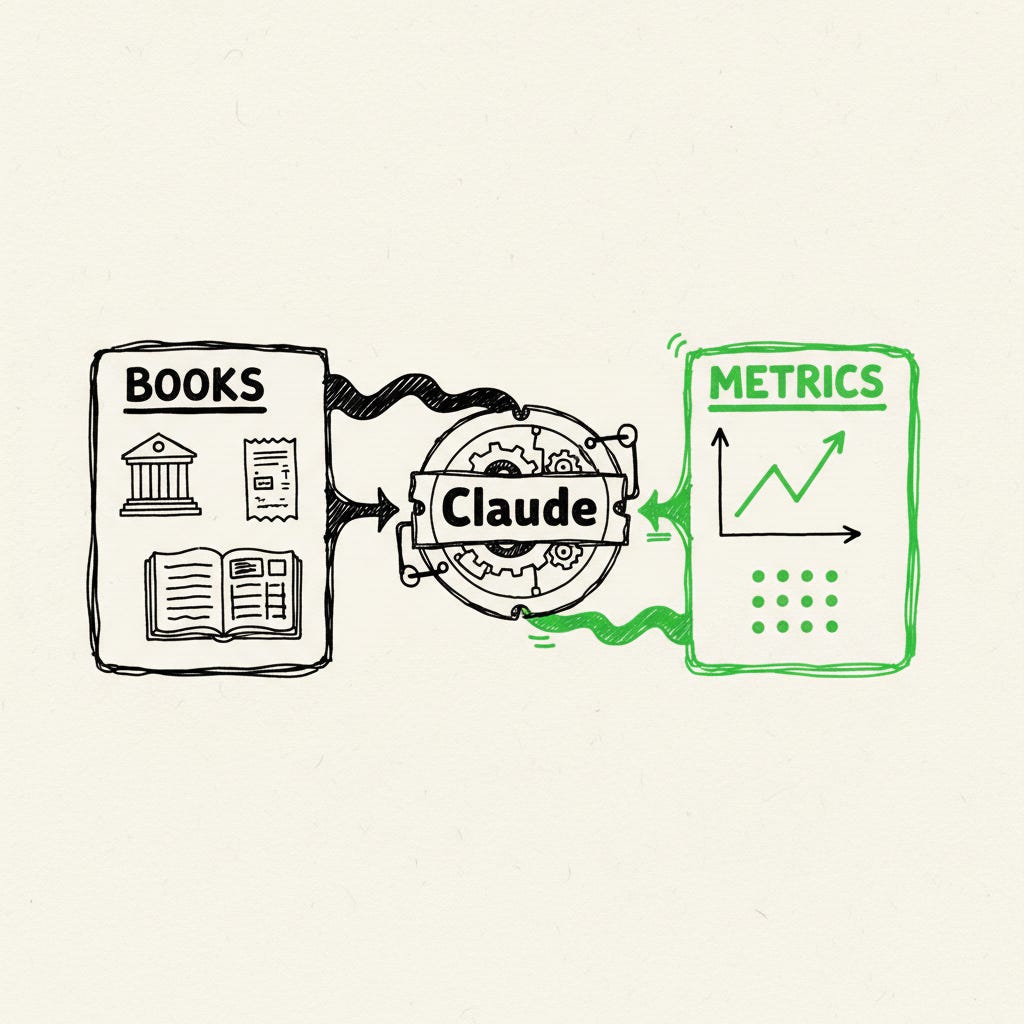
Two dozen workflows live, 4 banned, ~$3-6k/mo of tools and hires I didn’t pay for. Put them together and what you have is the closest a solo founder gets to an augmented CFO: the reporting, analysis and alerting half of the role, on call, for the price of the connectors. The judgment half stays yours. That line runs through the whole post.
If you read my piece on the 3-layer agent stack, that was the architecture. This is the first domain it runs end to end. New to connectors? Start with the MCP guide for founders and makers. I will spell out the workflows that earn their keep, give you the prompt for each, and link the rest.
The reframe: operator layer vs. domain
Most “AI for finance” posts conflate two things: the operator (the agent that runs) and the domain (your data).
Mercury writes from the cash side. Stripe writes from the revenue side. Your metrics dashboard writes from the analytics side. QuickBooks writes from the ledger side. All four miss the join, because none of them can see the other three.
The mental model is three rules:
Source-of-truth tools stay exactly where they are.
Claude is the read, summarize and draft layer. Never the post-to-ledger layer.
Claude writes only in Sheets (low stakes) and as QuickBooks drafts I approve.
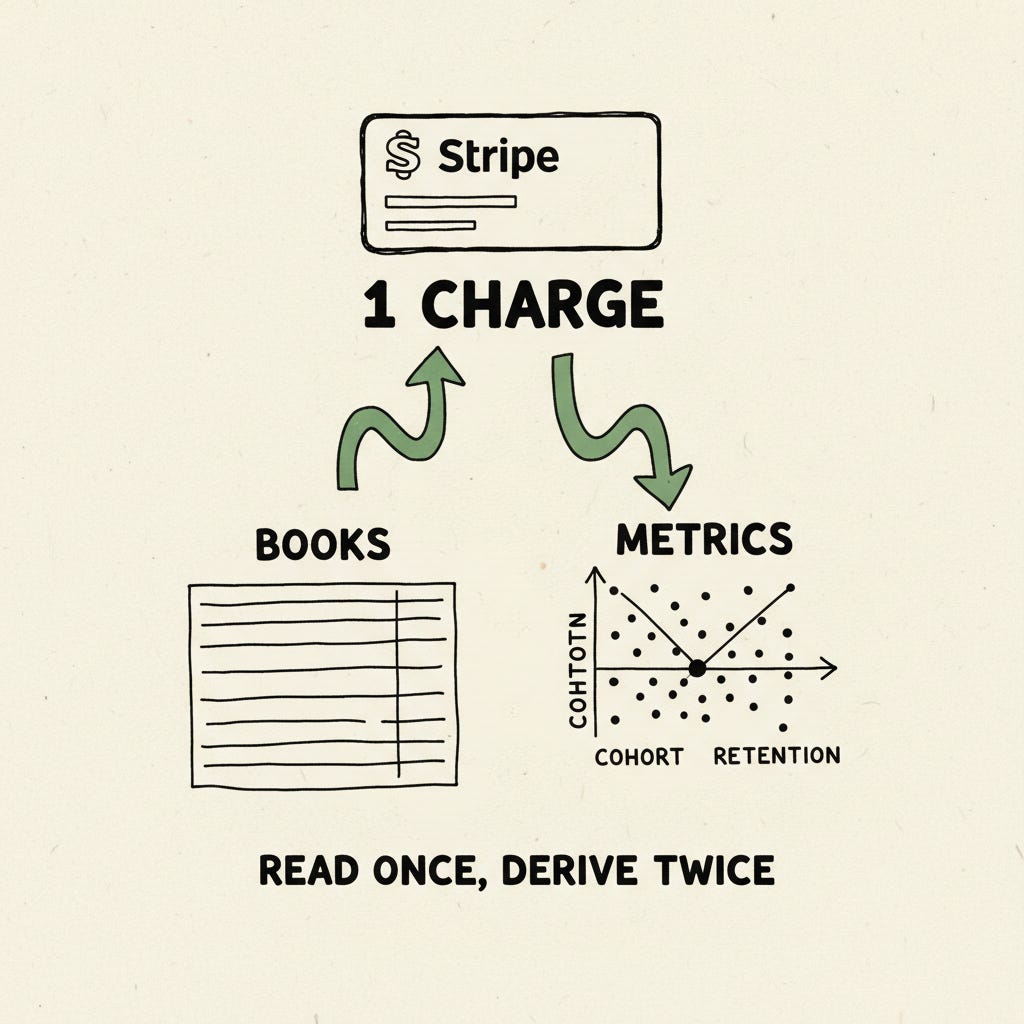
Here is why the same architecture covers both bookkeeping and product metrics: both are downstream of the same raw events. A single Stripe charge is a revenue event for the books and a retention event for the dashboard. Read once, derive twice.
That is why I will not pay $200 to $1,500/mo for Bench, Pilot, Pry or a CPA retainer anymore. Not as a flex. As a data-trust call. I would rather have Claude pull from Stripe directly than have a second SaaS interpret Stripe for me and spend an afternoon debugging which one to believe.
Keep subscribed to get the actual Creators & Founders AI stack in your inbox.
The bookkeeping workflows
For the books side: product founders, agencies, creators, solo consultancies, freelancers. The three that matter most, each with the prompt I run, read-only.
Daily cash position (Mercury + Stripe)
Mercury balance plus Stripe pending plus the last 24 hours, condensed into a 5-line brief at 7:30am. The Mercury read is not hypothetical: Mercury shipped its own read-only MCP for Claude in 2026, and the question their team keeps pointing to is “why did our burn increase?” That is the exact monthly follow-up I run off the same connection. Caught one fraudulent charge in week two. Real value: I now actually look daily.
Using Mercury and Stripe (read-only), give me a 5-line morning cash brief: total
Mercury balance, Stripe pending payouts, net change in the last 24 hours, the
largest inflow and outflow, and anything unusual. Then compare this month's
outflows to last month's by category and name the single biggest mover.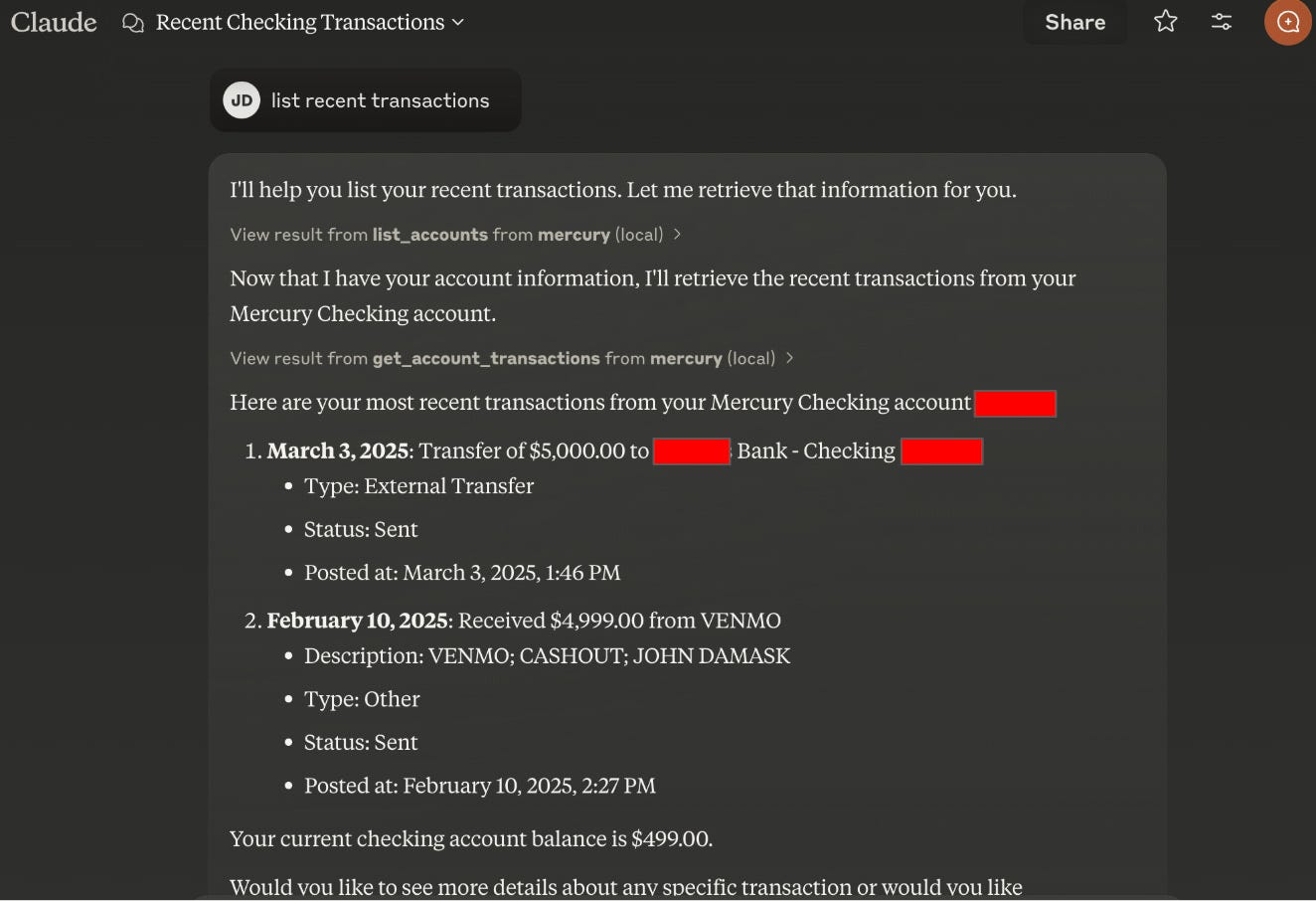
Subscription audit (the killer one)
Monthly, Mercury and card charges get scanned for anything recurring. Output is one table: charge, frequency, last-used signal, and a keep / cancel / negotiate call. Found $340/mo of zombie subscriptions on the first run. That single workflow pays for everything else on this list.
Using Mercury and card charges (read-only), scan the last 90 days for anything
recurring. Build one table: vendor, amount, frequency, last-charged date, and a
keep / cancel / negotiate call with a one-line reason each. Total the monthly
dollars sitting in the cancel and negotiate buckets.
Reading old tax returns against the current P&L (the $8,000 one)
This is the workflow that turned me from skeptic to operator, so I will give it the full story.
I dropped my previous tax return forms (PDFs) and my current P&L into Claude and asked it to reconcile the two: what did last year’s return claim that this year’s books are not set up to capture, and what is in this year’s P&L that the return treatment got wrong? It came back with a cluster of contractor payments and software charges sitting under the wrong categories, plus a batch of expenses that had never been marked deductible at all.
My CPA had filed the prior return and missed every one of them. Not out of negligence. He worked from what I handed him, and what I handed him was messy. Claude, reading the actual return next to the actual P&L line by line, caught roughly $8,000 in tax I had overpaid.
I am attaching my last two years of tax return PDFs and my current P&L. Reconcile
them: what did the prior returns claim that this year's books do not capture, what
is miscategorized, and what deductible expense was never marked deductible? List
every discrepancy with its dollar impact. Do not make a tax determination; produce
a memo my CPA can review.
The honest catch: most of that $8k was a one-time correction of a backlog, not a number that repeats every quarter. The recurring value is the discipline it started. Real value: the $8,000, and a tax process I now trust instead of dread.
The point is not “fire your accountant.” I still have one and still need one. The point is that I no longer need a CPA retainer, and I can double-check my CPA before a return ever gets signed.
That $8k was the moment I stopped treating this as a toy. Below is the rest of the system: the routine bookkeeping, the product metrics, the augmented-CFO layer, the Google Sheets workbench, the 4 things I never let Claude touch, the setup, and the full math on what it replaced (~$3-6k/mo). Every workflow comes with its prompt.
This and the rest of the Creators AI deep dives are for our paid subscribers.
