

Hey! Welcome to the latest Creators’ AI Edition.
This was the most politically charged week in AI since the OpenAI boardroom drama of 2023. Anthropic went to war with the Pentagon and came out of it as the #1 downloaded app in America. OpenAI fired back with its biggest model drop of the year. DeepSeek emerged from a year of silence with something that could change the cost of AI forever. And Alibaba imploded its own AI team the day after its biggest open-source release. Seven days. Zero boring moments. Let’s get into it.
Featured Materials 🎟️
News of the week 🌍
Useful tools ⚒️
Weekly Guides 📕
AI Meme of the Week 🤡
AI Tweet of the Week 🐦
(Bonus) Materials 🎁
Keep your mailbox updated with practical knowledge & key news from the AI industry!
Stop writing test scripts. Let AI do it for you.
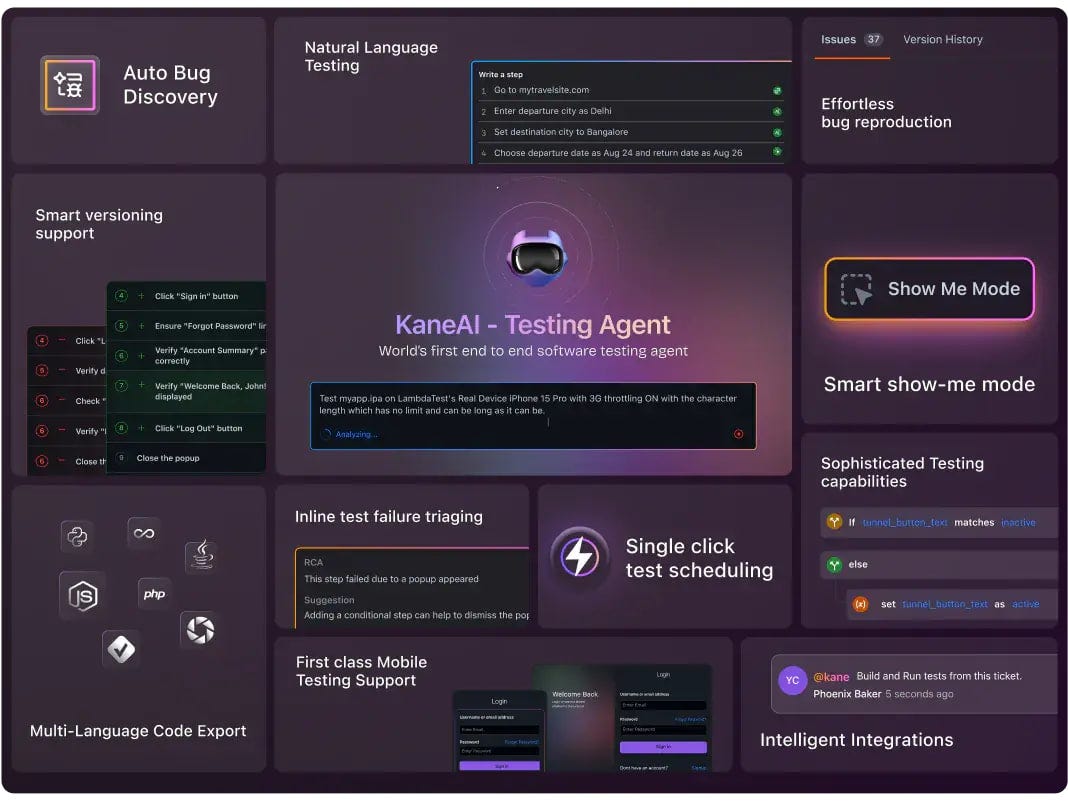
KaneAI by TestMuAI is the world’s first GenAI-native test agent. Describe what you want to test in natural English - KaneAI writes, runs, and maintains the tests for you. No code. No flaky scripts. No more wasted hours on manual QA.
Built for modern engineering teams who need to move fast without breaking things. From API testing to accessibility checks - KaneAI handles it all, end to end.
Try it free →
Featured Materials 🎟️
Claude #1 on App Store: How a Pentagon Fight Made Anthropic a Household Name🏆
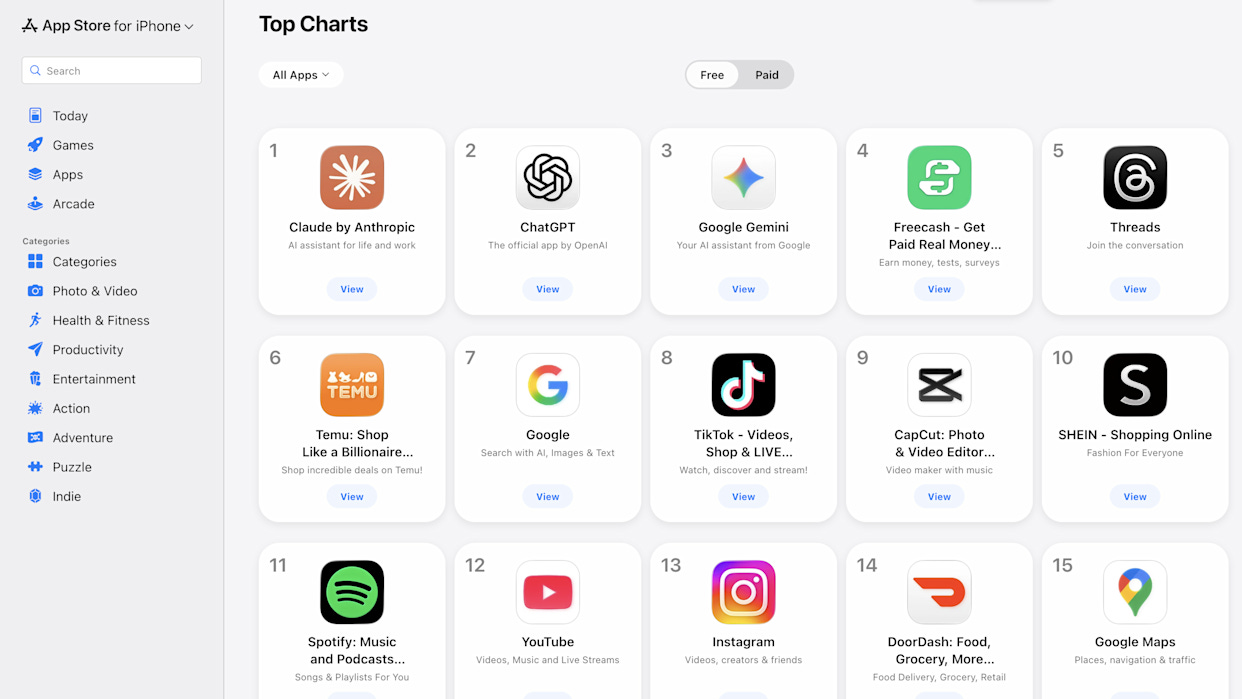
Two months ago Claude sat at #42 in the App Store. Today it’s #1 on both Apple’s App Store and Google Play — not because of a model update or a viral feature, but because Anthropic refused to let the Pentagon use its AI for mass domestic surveillance and autonomous weapons. And a country full of users decided to vote with their thumbs.
What actually happened:
Last week, Anthropic and the Department of Defense clashed over contract terms. Anthropic refused to waive two red lines: no use of Claude in fully autonomous weapons, and no use for mass surveillance of American citizens. The Trump administration responded by directing federal agencies to phase out Anthropic’s technology over six months. Secretary of Defense Pete Hegseth then designated Anthropic a “supply chain risk to national security.”
OpenAI moved in the opposite direction — Sam Altman announced a deal to deploy its models in classified networks. Users flooded Reddit and X with guides for deleting ChatGPT and switching to Claude. Pop star Katy Perry posted a screenshot of Claude’s Pro pricing page with a red heart. Screenshots of “Thank you” messages written in chalk covered the sidewalk outside Anthropic’s San Francisco offices.
The numbers followed:
Daily sign-ups broke all-time records every single day this week
Free users up 60%+ since January
Paid subscribers more than doubled this year
Claude was so overwhelmed by the migration that it went down briefly on Monday morning — Anthropic called it “unprecedented demand”
Anthropic’s response on the product side:
They didn’t just sit back and watch the downloads come in. Within days:
Memory added to the Free tier — the ability to save and build on prior conversations, previously a paid feature, is now free for everyone
Chat import from other AI platforms — a one-click tool to migrate your ChatGPT history to Claude launched Friday
Claude Code surged to become the most widely adopted coding agent across startups and enterprise teams entering 2026
CEO Dario Amodei called the government’s designation “retaliatory and punitive,” but added that Anthropic remains open to working with the military within its previously stated limits. Even Sam Altman — whose company took Anthropic’s place on the DOD contract — said the supply chain risk designation was “a very bad decision” and “an extremely scary precedent.”
The bigger picture: Consumer AI tools are now daily-use apps for tens of millions of people. That means corporate decisions — especially ones involving government or defense contracts — now resonate directly with a mainstream audience. Whether this loyalty shift persists beyond the news cycle is the question everyone in AI is watching.
Source: TechCrunch | CNN Business | Fortune | Engadget
OpenAI Drops GPT-5.4: The First General Model With Native Computer Use 🖥️
On March 5 — one day after the most embarrassing week in OpenAI’s PR history — Sam Altman posted two words on X: “I think people will like this.” GPT-5.4 was live.
OpenAI called it their “most capable and efficient frontier model for professional work.” For once, the marketing language might not be an exaggeration.
What’s new:
Native computer use: GPT-5.4 is the first general-purpose model from OpenAI that can autonomously interact with software through screenshots, mouse commands, and keyboard inputs — no special setup required. On OSWorld-Verified (the standard computer-use benchmark), it hit 75.0% — surpassing the human baseline of 72.4% and far ahead of GPT-5.2’s 47.3%.
1 million token context (API preview): Matches Google and Anthropic’s offerings for the first time. Enough to process entire codebases or months of documents in one go.
33% fewer factual errors in individual claims vs. GPT-5.2. Full responses 18% less likely to contain mistakes.
83% on GDPval (OpenAI’s knowledge-work benchmark for writing, research, and analysis) — up from 70.9%.
Upfront reasoning plan in ChatGPT: In Thinking mode, the model shows you its reasoning plan before it answers. You can interrupt and redirect mid-response without starting over.
Tool Search: A new API system where the model looks up tool definitions only when needed, instead of loading every available tool into every prompt. This dramatically cuts token usage for large tool ecosystems — essential for agent pipelines.
Versions and pricing:
Version Best for API Pricing GPT-5.3 Instant Everyday chat, web tasks Already live, default for all ChatGPT users GPT-5.4 Thinking Multi-step reasoning, long workflows $2.50/$15 per million tokens GPT-5.4 Pro Max compute, complex deliverables $30/$180 per million tokens
GPT-5.4 Pro is available via the API and for ChatGPT Enterprise and Edu subscribers. GPT-5.4 Thinking rolls out to Plus, Teams, and Pro plan users.
How it compares:
Partners are enthusiastic. Mercor’s CEO said GPT-5.4 “excels at creating long-horizon deliverables such as slide decks, financial models, and legal analysis.” On BigLaw Bench (legal document work), it scored 91%. On APEX-Agents (professional AI benchmarks for law and finance), it topped the leaderboard.
Three months ago, OpenAI was losing the agentic coding race. Claude Code had captured developers. Codex felt like it was built for an older era. GPT-5.4, combined with recent Codex releases, shifts that balance back toward OpenAI — at least on benchmarks. The real-world test comes when developers spend a week with it.
Source: TechCrunch | Gizmodo | Cybersecurity News | Every.to Vibe Check
DeepSeek V4 Has Landed: Open Source, Multimodal, and 1/20th the Cost of GPT-5 🐋
DeepSeek’s last big drop — R1 in January 2025 — wiped ~$1 trillion off US tech stocks in a single day. Fourteen months of silence later, V4 arrived in early March 2026, and it’s even more ambitious.
This is DeepSeek’s first natively multimodal model. It processes and generates text, images, and video simultaneously — not through bolted-on adapters, but built into pre-training from the ground up. The headline specs:
~1 trillion total parameters (Mixture-of-Experts architecture, only ~32B activate per token — actually more efficient per query than V3)
1 million token context window — unmatched in the open-weight space
Native multimodal: text, images, and video in one unified model
Open-source — Apache 2.0-style license, free to use commercially, fine-tune, and deploy
Optimized for Chinese chips (Huawei, Cambricon) — notably not shared with Nvidia ahead of launch, a direct signal of China’s parallel AI infrastructure push
The cost story:
DeepSeek’s API price for V4 is approximately $0.14/M input tokens — roughly 1/20th the cost of GPT-5 at equivalent performance levels. One benchmark client running 50,000 financial documents per day through GPT-5 was paying $4,200/month. The same workload through DeepSeek V4? $210. Same accuracy within 2 percentage points.
How does it benchmark?
On long-context coding tasks — the primary design target — early reports show V4 competitive with or exceeding Claude and ChatGPT. On vision and multimodal understanding, Qwen 3.5 (released in February) still leads. DeepSeek V4’s edge is maximum context windows, video processing, and price.
The geopolitical dimension:
DeepSeek explicitly did not share V4 with Nvidia or AMD before launch — breaking with standard industry practice. The model was built entirely on Chinese hardware. As the US-China AI race splits into parallel ecosystems, V4 is a direct statement: frontier AI no longer requires US chips or US infrastructure.
For creators and builders: The practical implication is already here. If you’re building AI-powered products, tools, or workflows that process documents, generate images, or need long context — V4’s cost structure is a 10-30x cost reduction vs. proprietary alternatives. The infrastructure overhead of self-hosting breaks even at roughly 15-40M tokens/month. Below that threshold, the API is almost certainly the cheapest frontier option available.
Source: Financial Times | VentureBeat | TechNode | Particula Tech Deep Dive
News of the week 🌍
Alibaba’s Qwen Implodes the Day After Its Biggest Release 💥 — Alibaba launched the Qwen 3.5 small model series (0.8B to 9B parameters) on March 2, drawing praise from Elon Musk for “impressive intelligence density.” The 9B model matches OpenAI’s 120B model while running on a standard laptop. Then, 24 hours later: the project’s technical lead Lin Junyang (”Justin”) posted two words on X: “me stepping down. bye my beloved qwen.” Two more senior researchers departed the same week. Alibaba CEO Eddie Wu responded with a new Foundation Model Task Force and a statement doubling down on open-source commitment. Alibaba shares dropped 5.3% in Hong Kong — their biggest intraday loss since October. Source | VentureBeat
GPT-5.3 Instant Rolled Out to All ChatGPT Users (March 3) 💬 — The update that preceded GPT-5.4 quietly dropped Monday and is now the default for every ChatGPT user. Key changes: 400K token context (up from 128K), 26.8% fewer hallucinations when using web search, less hedging, less caveating, and a tuning specifically designed to reduce the over-eager “Of course! Absolutely! Great question!” tone that annoyed users for years. Smaller update than 5.4, but it’s the version most people interact with every day. Source
New Siri Arriving This Month With Gemini 3 Under the Hood 🍎 — Apple’s completely rebuilt Siri is set to debut with iOS 26.4, targeting a March 2026 release. The new version gains “on-screen awareness” and cross-app integration — powered by Google’s Gemini 3 model running inside Apple’s Private Cloud Compute for privacy. The Apple-Google AI partnership announced in January is now nearly at users’ doors. Source
Hundreds March Through London Against AI — Biggest Protest Yet 🪧 — On February 28, groups Pause AI and Pull the Plug led hundreds of protesters through London’s King’s Cross tech hub — home to OpenAI, Meta, and Google DeepMind UK offices. Signs ranged from “Stop the Slop” (AI-generated content) to “Who will be whose tool?” The organizers framed it as a social event and the largest anti-AI march to date. Global head of Pause AI: “We can’t pressure companies, but we can make AI seem like a less sexy career.” Source
Enterprise Monkey Dumps ChatGPT Entirely for Claude 🤝 — The Melbourne AI agency announced it’s migrating all internal operations from ChatGPT to Claude, citing both Anthropic’s Pentagon stance (”you’ve changed since you started hanging out with the military”) and persistent hallucination issues in recent OpenAI models that “haven’t improved across recent releases.” They specifically highlighted Claude’s superiority for autonomous agents: better MCP integrations, native tool use, and structured reasoning. One data point in what could be a larger enterprise trend. Source
Alibaba Poaches Google DeepMind Researcher for Qwen 🔄 — Even as the Qwen team was losing people, Alibaba was recruiting. Zhou Hao, a senior staff research scientist who previously contributed to Gemini 3, AI Mode, and Deep Research at Google, has been hired as head of post-training research. The talent wars between US and Chinese AI labs are clearly flowing in both directions. Source
US Supreme Court Declines AI Copyright Case 📜 — The Supreme Court declined to hear a case challenging the legal stance that AI-generated creative works require human authorship for copyright protection. The ruling reinforces existing law: AI alone cannot be a copyright holder. For creators and brands building AI-generated content at scale, human creative input isn’t just a philosophical position — it’s now the legal baseline for IP protection.
OpenAI Codex App Launches for Windows 💻 — OpenAI’s Codex desktop app is now available on Windows (previously macOS-only). The app supports parallel agents with isolated worktrees, reviewable diffs, and seamless sign-in with ChatGPT. You can run multiple Codex agents simultaneously across the same project — each working on a different feature or bug. Source
Useful tools ⚒️
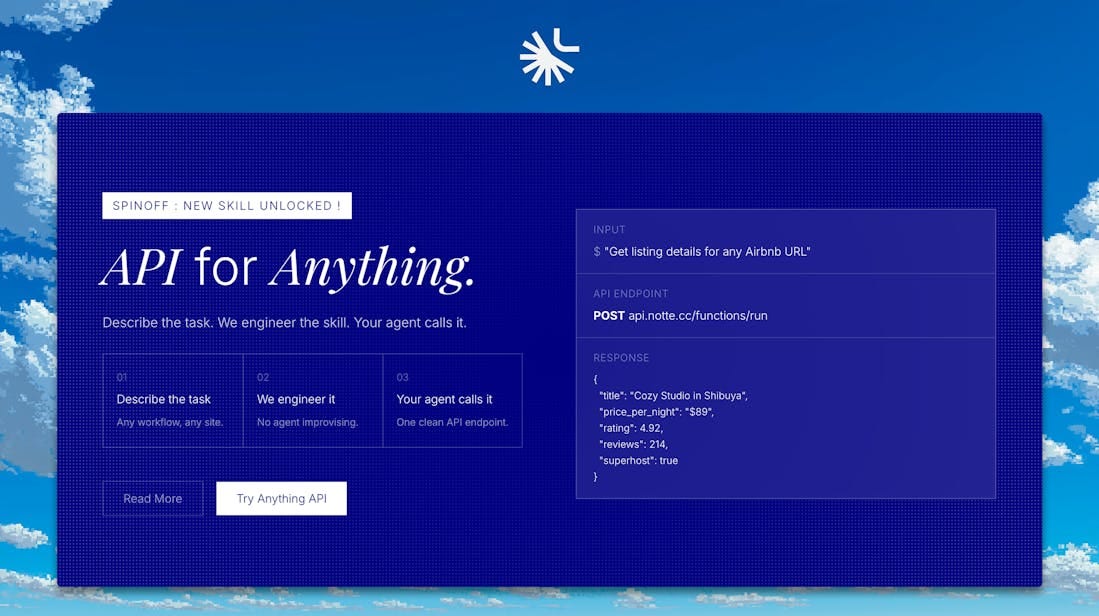
⭐ Anything API — Turn any website into a callable API — no scraping, no reverse-engineering, no puppeteer hacks. You describe what you want (”get the pricing table from this SaaS page”) and Anything API delivers a clean JSON endpoint. Essential for anyone building agents that need to pull live data from sites that don’t have official APIs. The agentic web just got a lot more accessible.
Krisp Accent Conversion — Real-time AI that converts accented speech into your listener’s expected dialect — live, mid-call. The same team behind the best background noise cancellation app has solved the accent barrier for global remote teams, customer support, and international podcasters. Works as a virtual mic layer with no extra hardware.
Notra — Your daily work — Slack messages, meeting notes, emails — automatically turned into publish-ready content drafts. Connect your tools, tell Notra your content format (newsletter, LinkedIn post, blog), and it surfaces the moments from your week worth writing about. For creators who know what they want to say but never have time to say it.
Enia Code — An AI coding agent that doesn’t wait to be asked — it reviews your code proactively, suggests improvements, and over time learns your team’s style and standards. Think of it as a senior dev who actually reads every PR without being tagged. Plugs directly into GitHub.
Voicr — Voice in, polished text out — in seconds. Speak naturally, get a clean structured draft. Unlike most voice-to-text tools, Voicr handles the full pipeline: transcription → structure → format cleanup. Available as a floating widget on mobile and desktop. For creators, founders, and anyone who thinks faster out loud than on a keyboard.
Keep your mailbox updated with practical knowledge & key news from the AI industry!
Weekly Guides 📕
GPT-5.4 vs Claude Opus 4.6 vs Gemini 3.1 Pro: The Honest 2026 Comparison — Complete breakdown of every GPT-5 model variant, when to use each, and how 5.4 stacks up against the current Claude and Gemini flagship offerings
DeepSeek V4 + Qwen 3.5: Open Source AI Is Rewriting the Cost Rules — Side-by-side technical comparison with real enterprise cost examples. The $210/month vs $4,200/month case study is a must-read for anyone building AI-powered products
Vibe Coding: The Complete Guide for Non-Engineers in 2026 — Honest tool comparison across Lovable, Bolt, v0, Cursor, Replit, and OpenClaw. Organized by skill level. If you’ve been curious about building something but don’t know where to start, begin here
Claude Just Hit #1 — Here’s the Full Story Behind the Ascent — Deep dive into what the App Store moment actually means: Claude’s product momentum, the Pentagon timeline, and why this might be more than a protest bump
Beyond the Vibes: How Senior Developers Are Actually Using AI Coding Tools — The most honest technical guide to AI-assisted development this week. What vibe coding gets wrong at scale, how to avoid the “six-month hangover,” and what a proper AI coding workflow actually looks like
AI Meme of the Week 🤡
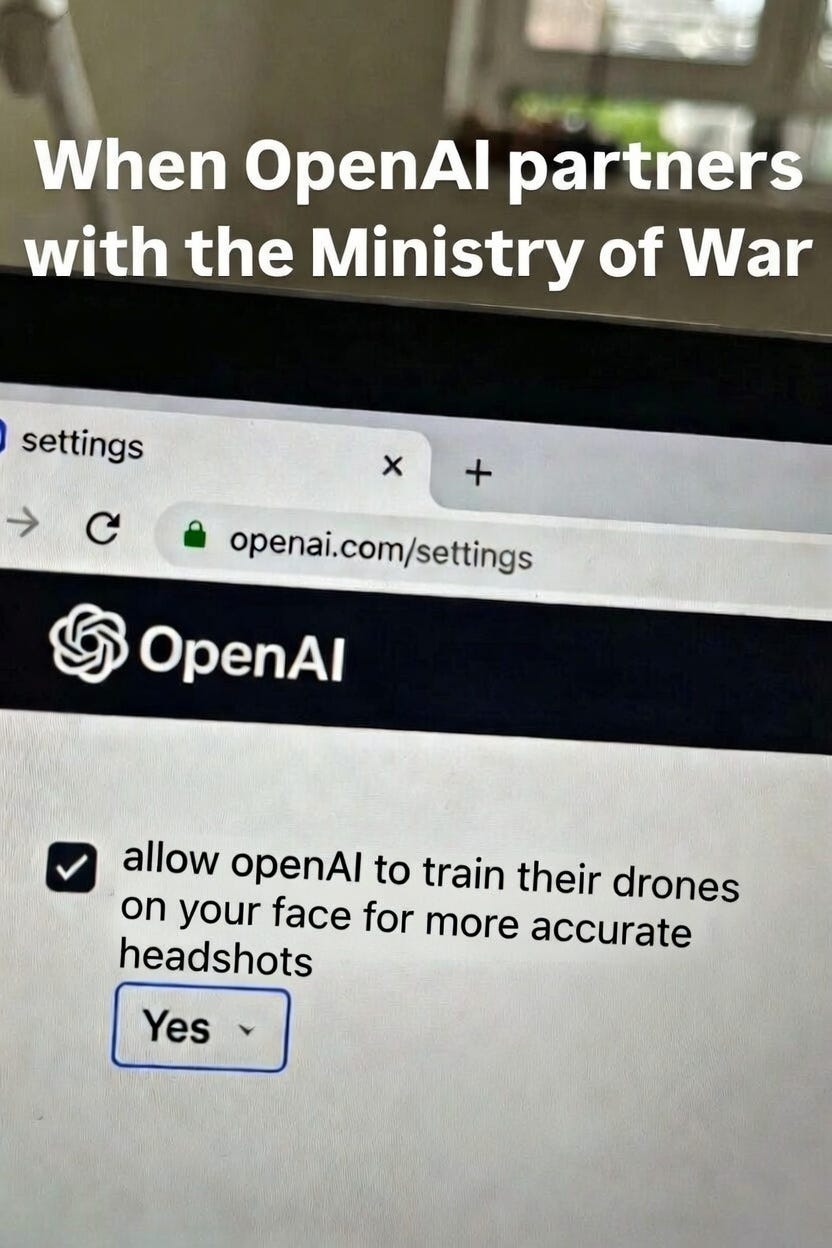
When OpenAI signs the Pentagon deal and loses 1.5M users in a week... then releases GPT-5.4 the next Thursday
“My mom said I can have my reputation back after I drop a benchmark”
source: X / r/aimemes
AI Tweet of the Week 🐦
@cnulty (Christopher Nulty, Anthropic): “At the start of 2026, Claude was #42 in the App Store. Today, for the first time, we hit #1.”
The internal employee tweet that started a weekend-long news cycle. Quiet, two lines, and made every major outlet’s front page by Sunday morning.
(Bonus) Materials 🎁
Claude’s Full Statement on the Pentagon Designation — Read It Yourself — Dario Amodei’s public response, the two specific red lines Anthropic held, and the exact language they were unwilling to remove from the contract
DeepSeek V4 Technical Architecture: What’s Actually New — The Engram memory system, the MoE efficiency gains, and why building native multimodality into pre-training changes the output quality ceiling
50 GPT-5.4 Prompts for Professional Work — OpenAI’s own Academy breakdown with specific prompt templates for documents, code review, and long-horizon workflows using the new Thinking mode
The Full Alibaba Qwen Timeline: What Actually Happened This Week — From the Qwen 3.5 open-source launch on March 2 to Jack Ma’s rare appearance on March 3 — a timeline of the most dramatic 72 hours in Chinese AI
If you missed our previous updates, don’t worry, here they are:
Perplexity Computer, Nano Banana 2, Samsung AI Phone | Weekly Digest