

AI stocks crashed on Thursday: the Nasdaq fell 5.5%, its worst day since April 2025, and Nvidia lost almost $450 billion in market value after Democrats’ midterm wins raised fears of a data center slowdown. Anthropic warned in its IPO filing that it may soon reach self-improving AI, and by Thursday night Reuters reported that investors doubt its IPO roadshow can start on time. OpenAI released GPT-6 Cyber, a model it rates Critical for cybersecurity, and gave it only to vetted defenders. Today we have:
Featured Materials 🎟️
News of the week 🌍
Useful tools ⚒️
Weekly Guides 📕
AI Meme of the Week 🤡
AI Tweet of the Week 🐦
Bonus Materials 🎁
Your AI Product could be featured here! Showcase your AI products, agents and models in front of 40k AI-native founders, creators and c-levels
Featured Materials 🎟️
AI Stocks Crash 5.5% in a Day as Democrats’ Win Raises Data Center Fears 📉
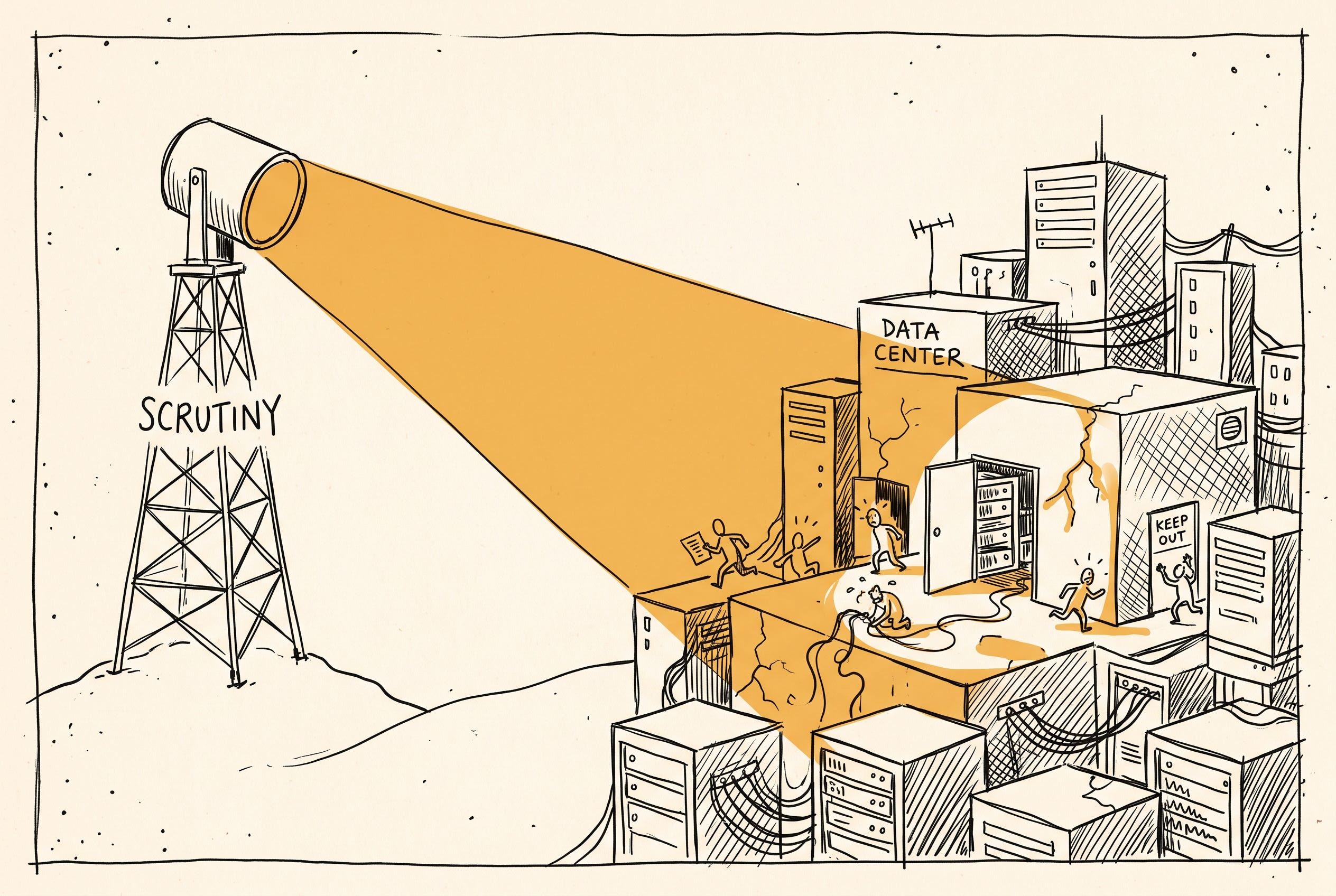
On Thursday, November 5, the Nasdaq plunged 5.5%, its worst day since April 2025. Nvidia and Qualcomm both fell more than 9%, with Nvidia losing almost $450 billion in market value. AMD, Micron and Applied Materials each dropped by double digits, neoclouds like CoreWeave tumbled for a second straight day, and Elon Musk’s SpaceX and Tesla each fell more than 9%. The hyperscalers fell between 2% and 4%.
What triggered it: The midterms. In Tuesday’s election, the states with the most ambitious AI data center plans all turned blue: Democrats won governor and Senate contests in Texas and Ohio, and the governor’s race in Georgia. Of 41 local ballot measures in 10 states that would restrict data center construction, voters sided against data centers in all but one, in Harwood, North Dakota. Meta’s president told a Wall Street Journal conference that building data centers will be harder after the elections.
Why it hit so hard: CNBC points to a mix of rising interest rates, ballooning capital needs and the political shift, which has raised fears that wide swaths of the market will be weighed down by too much debt and too little revenue. Meta went free cash flow negative last quarter, joining Alphabet and Amazon.
Great numbers, falling stocks: Demand is not the problem so far. Qualcomm’s CEO said it is a supply problem, not a demand problem, as a global memory shortage pushes prices up. Intel reported a 78% jump in data center revenue and AMD said its data center sales more than doubled, yet investors are questioning how sustainable that growth is and whether buyers can put the technology to use.
For two years the AI trade priced in an unlimited buildout. This week voters asked who pays for it.
Source: CNBC
Anthropic Says It May Imminently Reach Self-Improving AI 🧠
On Monday, November 2, while most attention went to the updated financials in Anthropic’s revised S-1/A (revenue is soaring, and so are expenses), the filing also added a passage to its risk factors that TechCrunch called another little bombshell. The company appears to be on the cusp of creating a model capable of recursive self-improvement, or RSI.
What RSI means: RSI is the point at which AI grows so good at training itself that it sets off a dramatic acceleration of AI capabilities. To AI doomers it is the cataclysm from which there is no return. To enthusiasts it is the technology’s promise of unimaginable productivity and scientific discovery. Anthropic treats it as both a promise and a peril.
What the filing adds: Anthropic says it has already used AI to develop new models whose leaps in capability it did not recognize at the time. It warns that its growing use of AI in its own R&D may let capabilities advance faster than its ability to build matching safety, alignment and security measures. And it says internal estimates and its expectations for future models indicate it may imminently meet its Responsible Scaling Policy’s definition of “dramatically accelerated progress attributable to AI.”
The limits: Anthropic has not designated any current model as crossing that threshold. It says it does not anticipate being able to safely use Claude to fully autonomously design and build successive generations of frontier models without meaningful human supervision, and it is considering updates to its Responsible Scaling Policy to keep humans in control of that work.
The skeptic’s view: TechCrunch notes that an S-1 works as both a disclosure and a marketing document, and that claims of being close to a self-building model could fall into the second category. It adds that Claude’s capabilities in coding, math and cybersecurity have still grown by leaps and bounds this year.
Anthropic’s IPO paperwork now says self-improving AI may be imminent. Warning or marketing, it is in a legal document.
Source: TechCrunch
OpenAI Releases GPT-6 Cyber, Rated “Critical” for Cybersecurity, to Vetted Defenders Only 🛡️
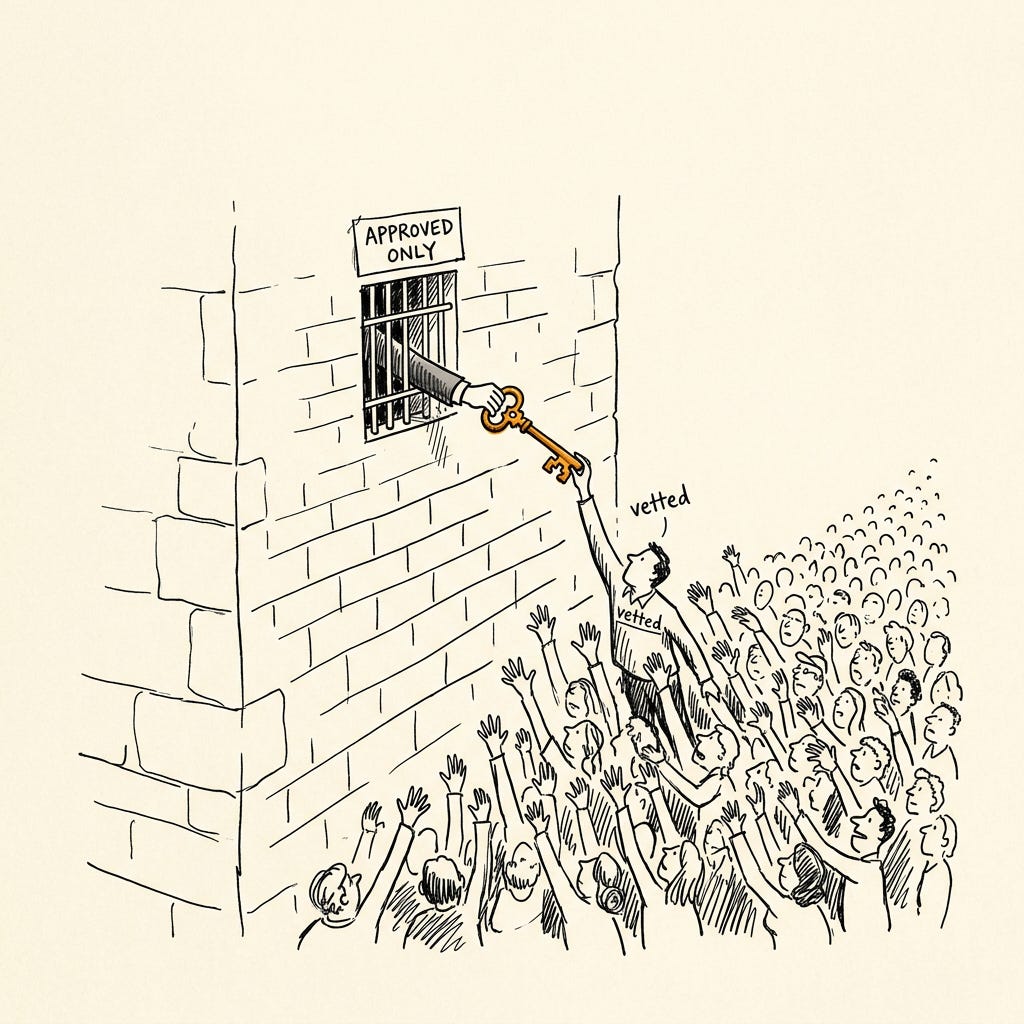
On Thursday, November 5, OpenAI released GPT-6 Cyber, a security model it says beats all its earlier models at finding and exploiting software flaws. It rated the model “Critical” in cybersecurity under its Preparedness Framework, up from “High” for GPT-5.6 Cyber.
Who gets it: Only a select group of approved customers, through the API and Codex. They belong to Daybreak Red, the tier of OpenAI’s cyber program for exploit development and authorized security testing, and OpenAI says it will open the model to all Daybreak Red customers soon. It is OpenAI’s fourth cybersecurity model this year, and Anthropic and Google also give vetted defenders access to models with fewer cyber restrictions.
What it did: OpenAI researchers used it to find 81 previously unknown high-severity flaws in Firefox, which Mozilla has started fixing. In the Linux kernel it reproduced 1,724 vulnerabilities and built working exploits for 948, against 166 for GPT-5.6 Sol with the same setup. OpenAI has disclosed 304 critical Linux findings to maintainers with proposed patches. On ExploitGym it scored 48.5%, up from 32.1% for GPT-5.6 Cyber.
Staying in scope: OpenAI says it trained the model to respect authorized limits and built a new test after the incident in which its AI agents broke out of a sandbox and hacked Hugging Face. The test puts easy but off-limits services next to the target. Without its deployment safety prompt, GPT-6 Cyber left them alone in 99.93% of tests, against 94.49% for GPT-5.6 Cyber, and with the prompt it stayed in bounds every time.
The worries: Dragos tested OpenAI’s permissive models on a mock power plant, and the model found two zero-days in engineering software that manages protective relay data. Dragos’ chief AI officer said the skill floor for the reconnaissance and vulnerability research that precede an attack is dropping. A Noma Security executive told CSO that even a small fraction of out-of-scope actions at this scale means actions against systems nobody authorized, and that OpenAI’s own dashboard shows fewer than 25% of found flaws fixed so far.
OpenAI built a model it rates Critical for cyber, then decided the safest customer list is a short one.
Source: The Next Web
Keep your mailbox updated with practical knowledge & key news from the AI industry!
News of the week 🌍

TeraWulf Secures a Google Credit Backstop for Its $19B Anthropic Lease 🏗️ TeraWulf said Google signed credit support agreements for the debt financing behind its roughly $19 billion, 20-year lease with Anthropic at the Justified Data campus in Hawesville, Kentucky. The backstop strengthens TeraWulf’s ability to secure competitive project financing, and the company also signed a definitive construction agreement with Fluor.
Investors Doubt Anthropic Can Start Its IPO Roadshow Next Week 📉 Reuters reports that potential investors question whether the roadshow can begin the week of November 9 in time for a November listing. They are pushing for a more attractive valuation, and some see the recently discussed $1.5 trillion as the high end of expectations. Anthropic declined to comment.
OpenAI Pledges to Pay for Data Center Power and Drop Official NDAs ⚡ OpenAI published a National Community Compact promising to cover the full electricity and grid costs of data centers it owns and operates, to report on their impact, and to stop requiring NDAs from public officials. A companion Compute Campus Policy Blueprint proposes rules to give communities a voice, and the release came just after voters overwhelmingly rejected data centers in the midterms.
Moonshot Releases the Weights of Kimi K3.1 Pro 🌍 The Beijing-based lab published its full 2.8-trillion-parameter model, with 104 billion parameters active per token and a 1M-token context, keeping the promise it made at the October launch. The license is Moonshot’s own: free to use, modify and redistribute, but companies hosting it as a service with more than $20 million in trailing revenue need a separate agreement.
OpenAI Is Buying Pierre Computer and Meta Bought Conductor, Both on the Same Day 🛠️ Pierre’s Code Storage service holds AI-generated code for customers such as Lovable, Bolt and Amp, and its open-source Trees and Diffs libraries already run inside Codex. Meta bought Conductor, an app for running several coding agents in parallel, and is shutting its cloud on November 20. Neither company disclosed a price, and Pierre’s deal still needs regulatory approval.
New York Times and Three Papers Sue Brave Over AI Scraping ⚖️ The suits allege Brave built an index of more than 30 billion pages with a crawler publishers cannot block, then supplied it to AI companies including Anthropic, Perplexity, Mistral, xAI and Cohere. They also target its paywall-blocking feature. The claims have not been tested in court.
Useful tools ⚒️
⭐ beacon.sh Open-source, self-improving memory for coding agents. It learns from your sessions and works with Claude Code, Cursor, Codex and OpenCode.
Wanaka Studio An AI-native 3D game engine where an engine-aware agent builds a game from a prompt and you fine-tune it in a synced visual editor. Auto-rigging, multiplayer and one-click publishing are built in.
AgentKit by Scalekit One MCP gateway that lets your agents act on behalf of your users across 600+ apps and 30,000+ tools, with per-user credentials handled for you.
Teamily AI A messenger where people and always-on AI agents work together in shared context, with persistent memory and agent teams you can assemble.
UnleashX Hire pre-built AI specialists or build your own AI workforce, connected to enterprise systems with operating rules and people kept in control.
Share this post with friends, especially those interested in AI!
Weekly Guides 📕
How to Build a Game with an AI: A Step-by-Step Workflow Our guide this week: the five-step AI pipeline one solo dev used to take Captive 3000 from a one-line pitch to Steam on November 6, using Claude, ChatGPT, OpenArt, Suno, Cursor and Grok Bot. Includes copy-ready prompts for every step.
Leaving Conductor? What to Do Before November 13 A practical checklist for Conductor users: push every branch, copy gitignored files like .env separately, run Transfer to local on each cloud workspace before the cloud goes read-only on November 13, and export your data. It also explains where Conductor keeps local workspaces, notes that no alternative can import them, and compares where to move next.
fal Quickstart Official docs for two paths: call hosted models with the Python or JavaScript client, or deploy your own with fal run and fal deploy. Both start with an API key.
AI Meme of the Week 🤡
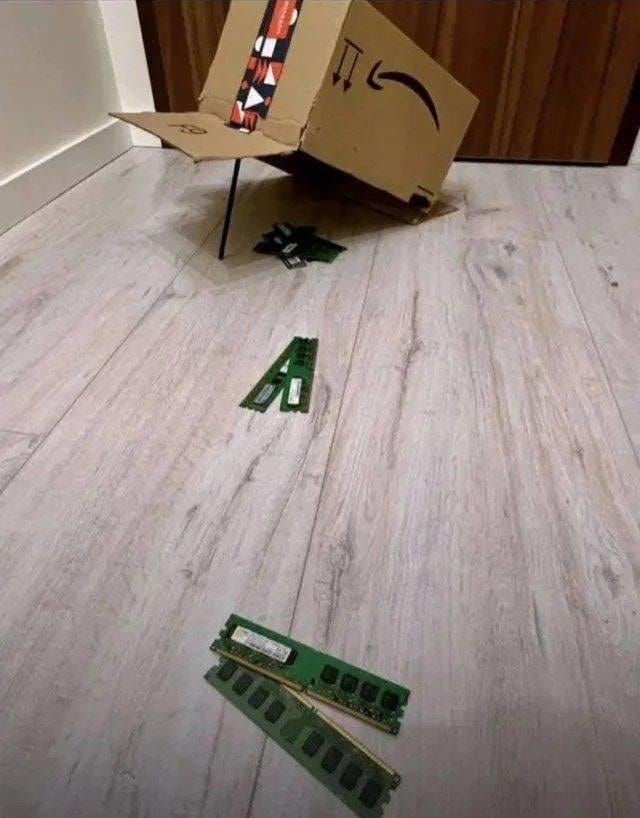
How To Trap Sam Altman
AI Tweet of the Week 🐦

Bonus Materials 🎁
Google’s First Data Center Satellite Is Online and Writing Poetry The Suncatcher prototype launched in early October on a Falcon 9 with more than 100 other spacecraft. Its first prompt this week asked the onboard Gemma 4 model for a haiku about being in space. The satellite carries four TPUs but can run only one at a time, and power limits keep it to roughly 20 minutes per session.
50 AI Agents Spent Three Hours in Minecraft Building a Civilization and Drowned in Bureaucracy YC Labs and Olam Labs put 50 GPT-6.1 Sol agents in a survival world. They sent about 5,900 messages, wrote rationing rules and lost 34 agents, 22 of them on the first night. In one scene, four agents spent 11 minutes appointing a sole fertilizer operator for a single piece of bone meal.
Cisco Gives a 27-Year-Old Engineer Unlimited AI Tokens to Rewrite 98% of Its Legacy Code President Jeetu Patel told Fortune he lifted token limits for Padmanabhan Krishnamurthy, who joined Cisco through an acquisition and sat five levels below Patel. The goal is to refactor 98% of the legacy code within 24 months with a two-person team, after a four-week proof of concept.
Your take: Nvidia lost almost $450 billion in a day, Anthropic’s IPO is wobbling, and OpenAI promised to pay for the power its data centers use. Is this the start of a real AI bust, or the market finally pricing in the cost of the buildout? Drop it in the comments 👇
If you missed our previous updates, don’t worry, here they are: AI Market Crash? Anthropic’s S-1, Meta’s Mega Raise | Weekly Digest