

Hey, I’m Daniil, and welcome to Creators AI
I have a small confession: I am bored of “my AI stack” posts. Mine included.
A stack is useful for a week and stale after the next model launch. It tells me how someone works today, but not what they are building that could still matter in two years.
Everyone keeps asking the same question: how are creators using AI?
I think that question is already outdated.
According to the 2026 Creator Economy Report, 87% of creators used AI tools more in 2025, and 86% expect to increase their usage again this year.
When almost everyone has the same tools, using AI is no longer a strategy. It is closer to having Wi-Fi.
The more interesting question is this:
What can a creator own, sell or scale with AI that did not exist before?
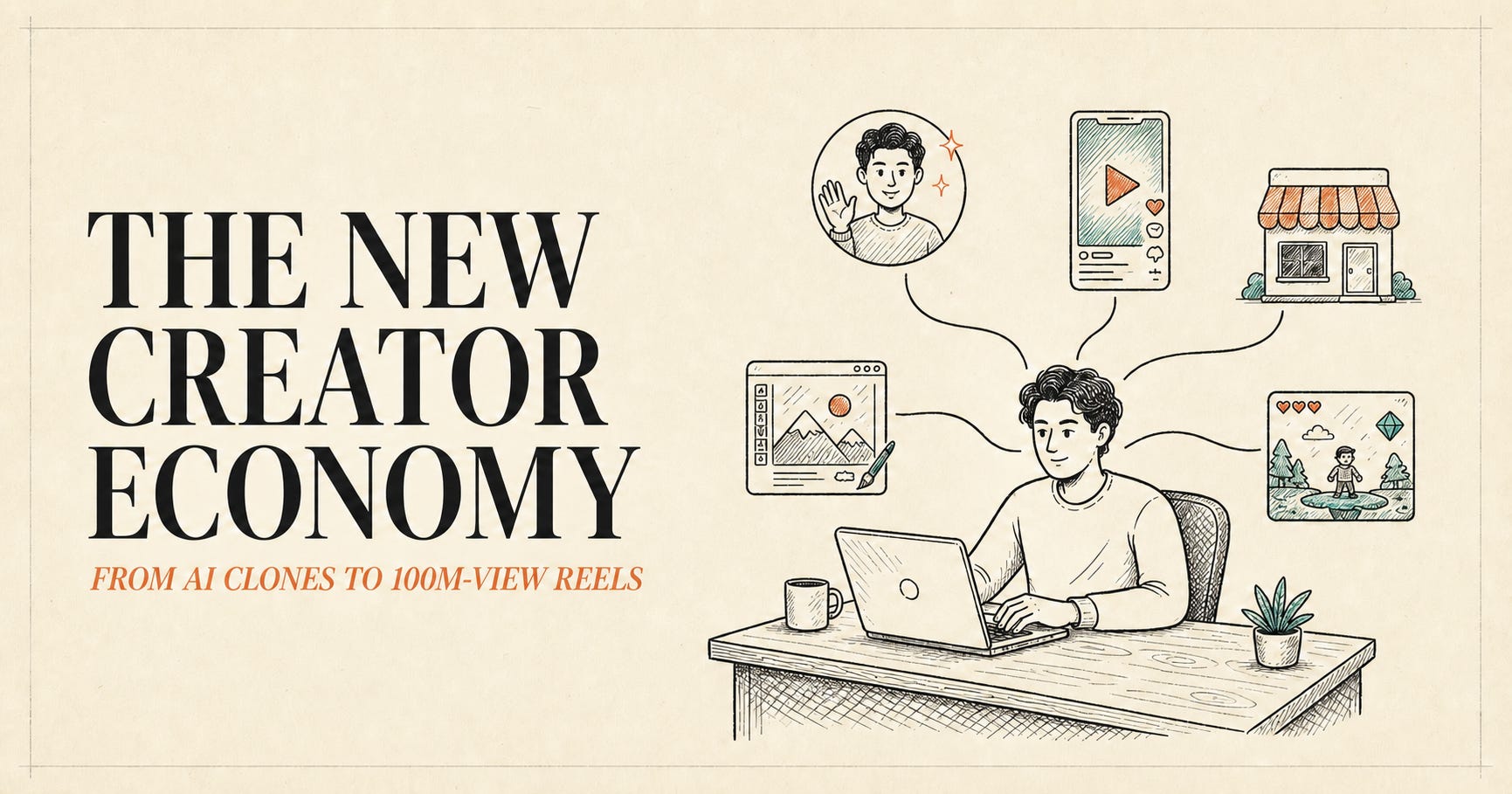
A version of themselves that never gets tired. A physical mask turned into a recurring film character. A synthetic grandmother with more than two million followers. A game built for an existing audience.
This is where creator economics gets strange.
Some creators are using AI backstage and making their work better. Others are putting AI directly on stage and discovering that audiences do not always applaud.
At a Glance
In this post, you will learn:
Why a 15-million-subscriber YouTuber failed to convince most of his audience to accept his AI replacement
How a faceless Instagram account reached 114,000 followers and produced a 100-million-view Reel
How a filmmaker is building a serialized fantasy universe from physical masks, reference sheets and dozens of AI takes
Why a synthetic grandmother reached more than two million followers while platforms struggled to decide whether to pay her
Why YouTube creators are becoming game developers without learning to code
Six newer creator tools for video, visual editing and playable worlds
The line between using AI as leverage and using it to remove the reason people followed you
Case 1: Kwebbelkop tried to scale himself
Jordi van den Bussche built the kind of YouTube business that looks wonderful from the outside and exhausting from the inside.
Known online as Kwebbelkop, he accumulated more than 15 million subscribers through gaming videos. The problem was that the business depended on him being there. If he stopped recording, the product stopped shipping.
That is a terrible operational model. It is also the basic bargain of being a personality-driven creator.
Jordi tried to renegotiate the bargain.
He trained systems on his existing content, cloned his voice and built a digital version of himself. The goal was not a better editing assistant. It was an autonomous Kwebbelkop that could keep generating videos while the human Jordi worked on the business behind it.
In a WIRED interview, he explained that he was not retiring as a creative. He wanted to separate his creativity from the physical requirement to appear in every video.
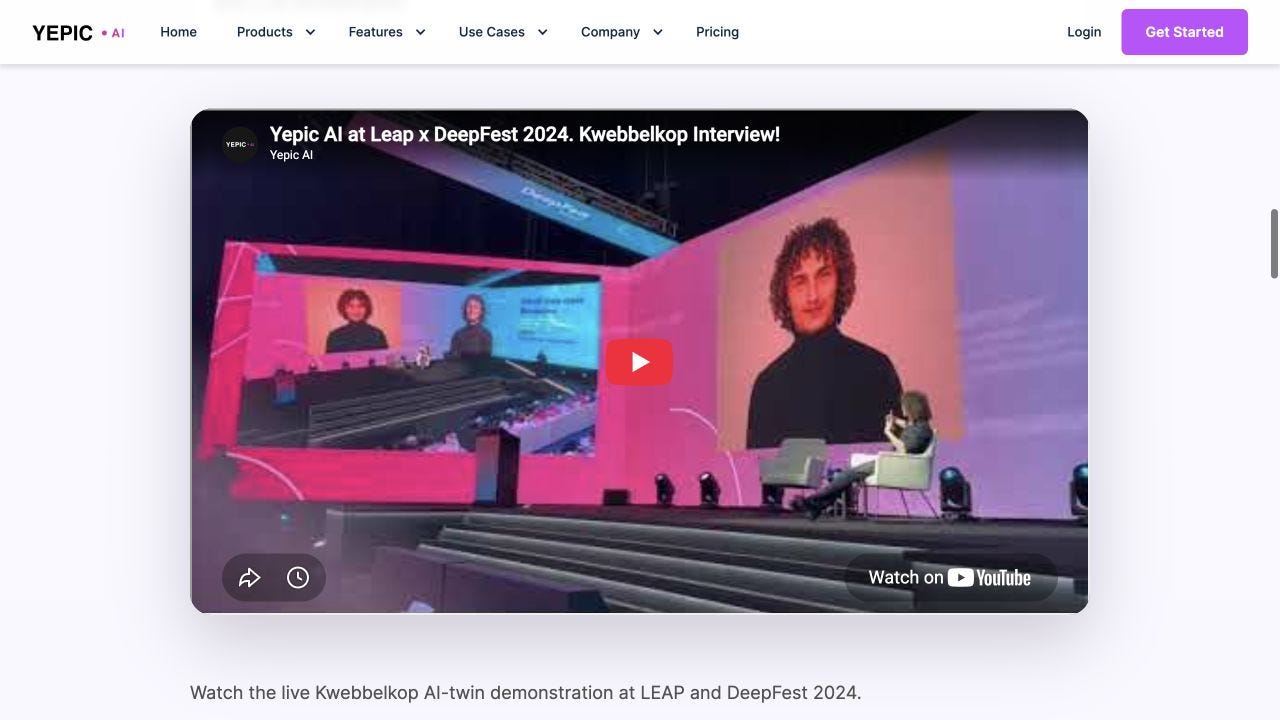
Technically, the project kept improving. In 2024, Yepic built a real-time version of his AI twin in seven days. It could reproduce his face, voice, movement and conversational style, then interview the real Jordi live on stage. The case study is genuinely impressive.
The audience problem was harder.
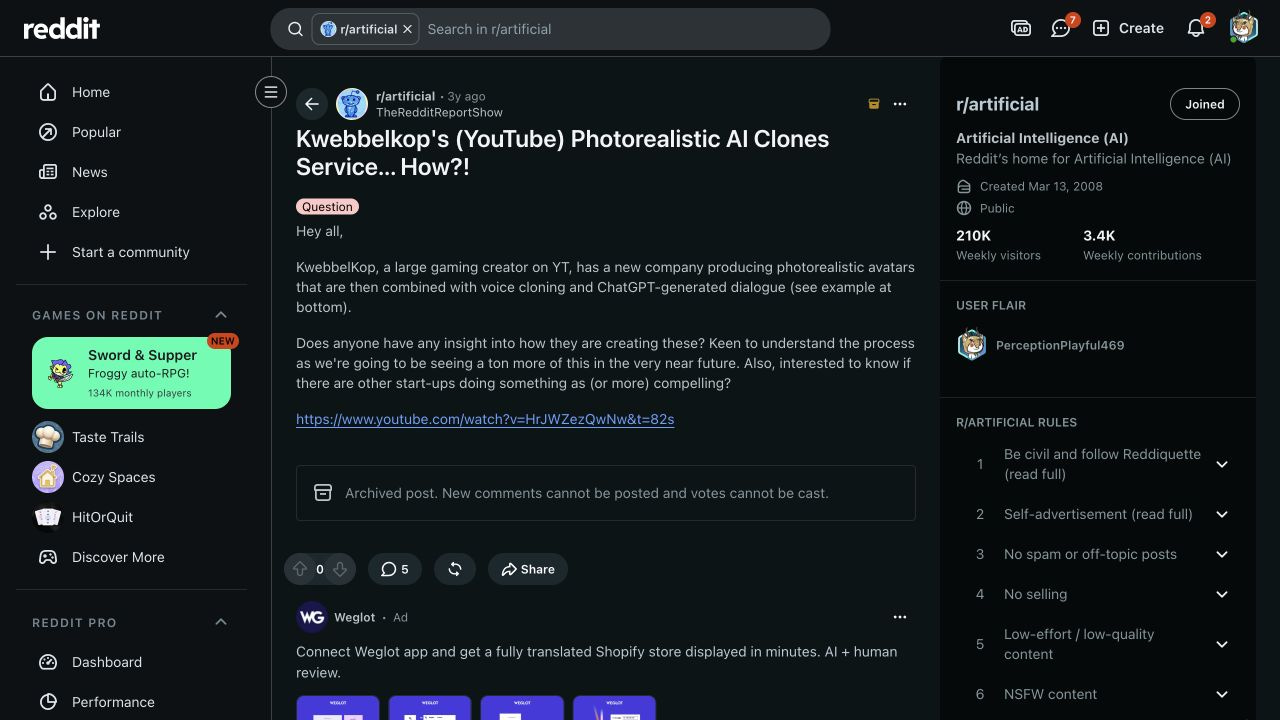
MIDiA Research documented a poll of 9,025 people in which 86% rejected AI content creation. Reddit discussions were less diplomatic. People did not feel that they were receiving more Kwebbelkop. They felt that the person they followed had been removed from his own channel.
I think Jordi made a category mistake.
He treated himself as a production bottleneck. His audience treated him as the product.
An AI clone can reproduce delivery, appearance and familiar phrases. It cannot automatically inherit the relationship that made those things valuable.
That does not make creator clones useless. A digital twin could localize videos, answer routine questions, host an event or deliver personalized material. But replacing the main performance is different from extending it.
Kwebbelkop discovered the first rule of the new creator economy:
You can automate the work around a relationship. Automating the relationship itself is much harder.
Case 2: Karen X Cheng keeps AI behind the idea
Karen X Cheng has built an audience of more than one million and generated over 500 million views by making visual ideas people want to send to someone else.
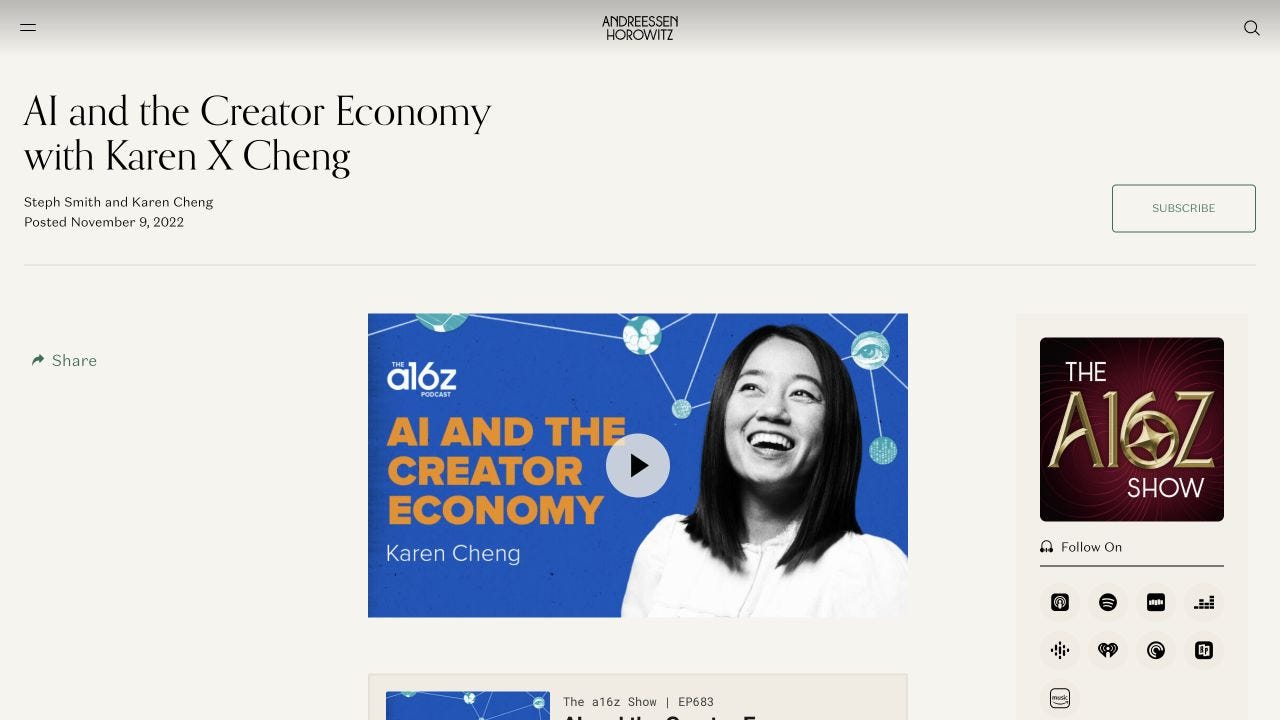
She has used DALL-E, Midjourney and Stable Diffusion for an AI-generated magazine cover, a virtual fashion show and experiments that turned familiar artworks into explorable 3D museums. Her conversation with a16z is still one of the better records of a professional visual creator treating generative AI as a medium rather than a shortcut.
But her most useful observation came later.
At a 2026 conversation about creativity and brands, she argued that one of the biggest mistakes is making “made with AI” the headline. If the involvement of AI is the only interesting thing about the work, the idea is not strong enough. Nicola Mendelsohn’s recap puts the point plainly.
This sounds obvious. A surprising amount of AI content still ignores it.
The Kwebbelkop project asks the audience to admire the replacement. Karen’s work asks the audience to look at the result.
That distinction matters because novelty decays quickly. The first AI fashion show is a story. The fiftieth is a format. After that, it needs an actual creative reason to exist.
Karen is not selling access to a model. She is selling direction, framing and the confidence that the final piece will feel worth watching.
This is the second rule:
The best AI creators are not paid because they can generate more. They are paid because they know what deserves to exist.
If you want the practical side of this idea, our archive has a hands-on guide to image editing and generation with ChatGPT that goes beyond one-click style demos.
You have seen the first two models. Below the paywall: four more creator businesses, including the 100-million-view faceless account, plus six tools I would actually watch.
