

Hey everyone!
This week in AI was exciting as always and many things are worth reading this one:
Stripe wants to own the routing and billing layer through OpenRouter. Anthropic wants Claude Academy to teach everyone how to work with that operator. SpaceXAI wants us to switch from Hermes to Grok Bots. Lets dive in
Today we have:
Featured News 🎟️
Weekly News 🌍
Useful Tools ⚒️
Weekly Guides 📕
AI Meme of the Week 🤡
AI Tweet of the Week 🐦
Bonus Materials 🎁
Your AI Product could be featured here!
Showcase your AI products, agents and models in front of 40k AI-native founders, creators and c-levels
Featured News 🎟️
Stripe Just Bought the AI Toll Booth 💳
Stripe has agreed to acquire OpenRouter, the model gateway used to route requests across more than 400 models from 80+ providers. Stripe did not disclose the price; Axios reports the deal is worth more than $8 billion, mostly in stock.
At first glance, payments and model routing look like different businesses. They are not. Both sit in the middle of high-volume transactions, choose the best route, meter usage, manage failures, and take a fee. Stripe already optimizes authorization rates and fraud. OpenRouter does the same kind of optimization for model quality, speed, reliability, and token cost.
What changes for builders:
Billing and inference can converge. Expect easier usage-based pricing where the same layer routes the model call, measures the tokens, and charges the customer.
Model choice becomes an economic decision. A router can send a simple request to a cheap model and reserve frontier models for the hard 10%, automatically.
Dependency risk just got more important. If OpenRouter is in your critical path, keep provider fallbacks and exportable usage logs. “Neutral infrastructure” is a product promise, not an architecture guarantee.
My read: Stripe did not buy a model. It bought the meter, and the best view of how companies actually spend intelligence.
What People Are Actually Doing With Grok Bot 🤖
Grok Bot gives persistent agents a cloud computer, memory, app logins, and the ability to keep working after you close your laptop. The launch pitch sounds ambitious. The early user cases are more useful because they show where the product fits and where it still breaks.
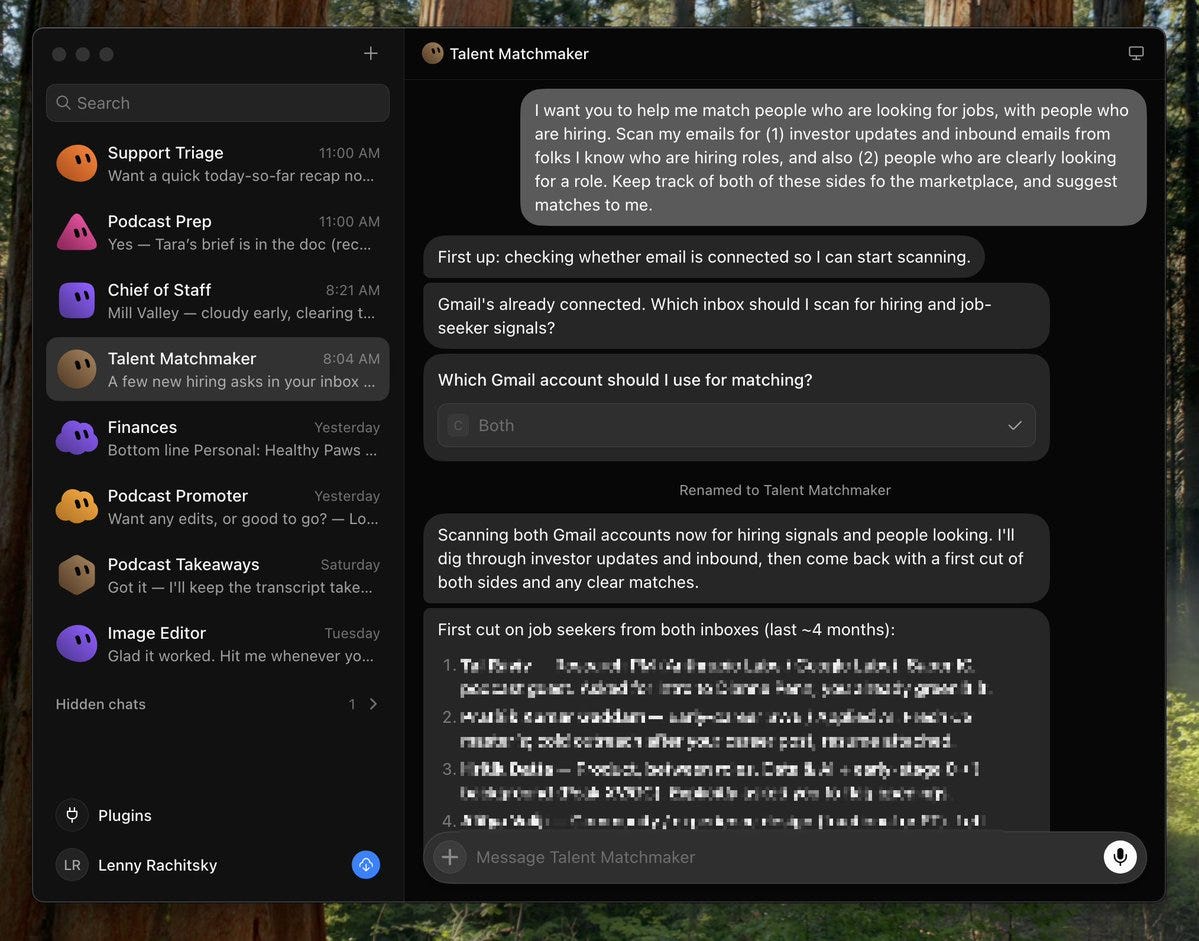
1. Lenny Rachitsky built a personal operations team. In an X post, he says one Bot matches people looking for jobs with companies that are hiring by scanning his inboxes. Others triage support email, find recurring subscriptions in credit card statements, and prepare briefs for podcast guests. These are narrow jobs with recurring inputs and an output that is easy to review.
2. One business owner assigned six Bots to actual roles. A user in r/grok connected three Bots to separate Microsoft accounts and used the team for business development, sourcing, quality control, people operations, and onboarding. The same user reported the less glamorous side: 42% of the weekly allowance disappeared on day one, Chrome profiles reset, the browser crashed, and only one or two agents appeared to work concurrently.
3. Smaller tests show where computer use can pay off. One Reddit commenter said Grok Bot built two WordPress landing pages in two attempts while using 3% of the weekly allowance. A Medicare agent described using a Bot to compare CRM plan codes with insurers’ books of business before enrollment season. These are anecdotal reports, but both have the same shape: repetitive work inside logged-in software, with a result a human can verify.
The pattern: Grok Bot looks strongest when the job crosses several interfaces but still has a clear finish line. “Build me a company” is a bad task. “Check these plan codes, flag mismatches, and stop before changing a record” is a useful one.
The breakthrough is not that the Bot can click. It is that a nontechnical user can teach a routine without first turning it into an API integration. The open question is whether the browser and usage limits are reliable enough for daily work.
Claude Academy Is Free, Here’s the Path Worth Taking 🎓
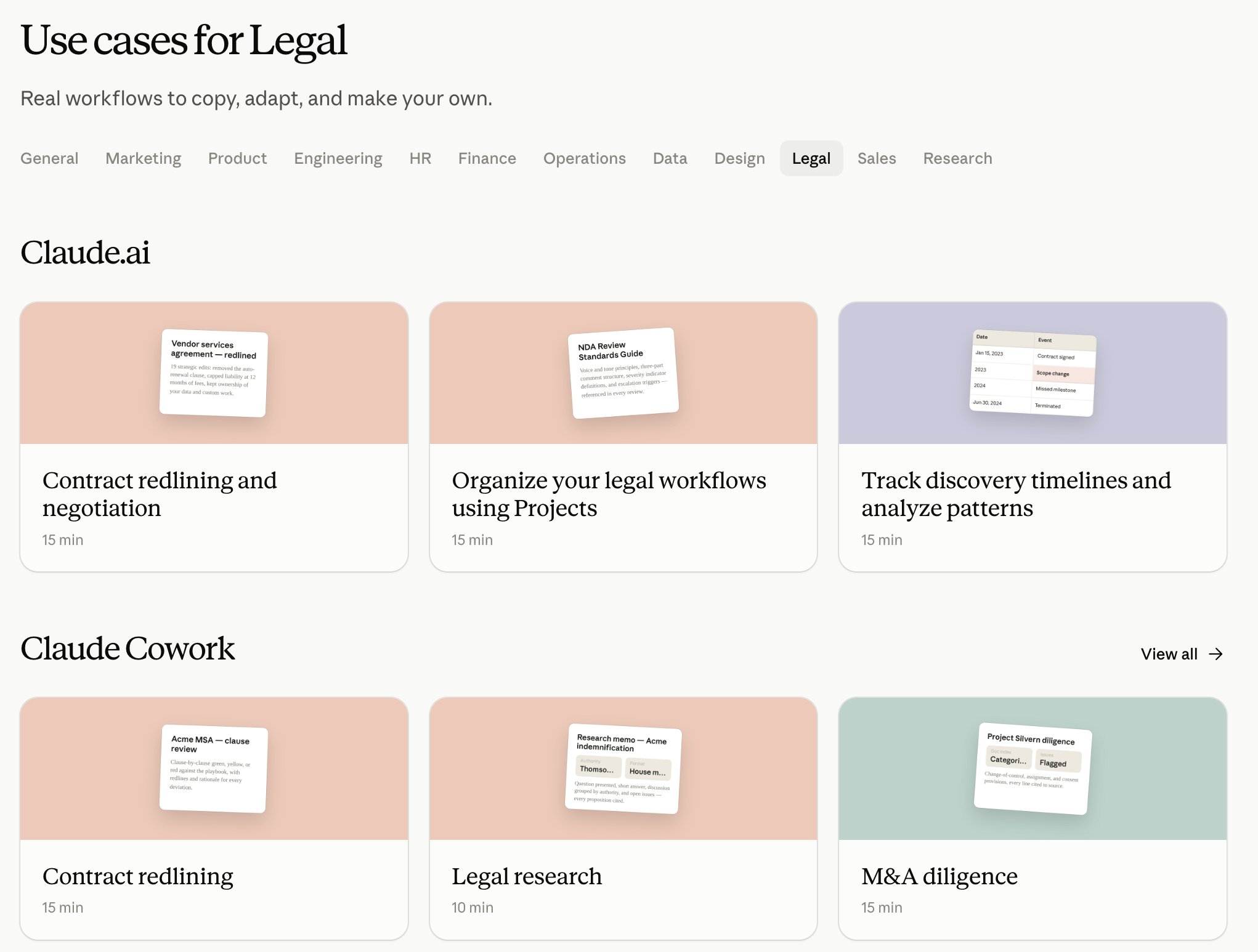
Anthropic launched Claude Academy with free courses, tutorials, quizzes, and badges. The catalog is already large enough to create a new problem: deciding where to start. Do not browse it like Netflix. Pick the path that matches the work you want to delegate next week.
For knowledge workers: start with Introduction to Claude Cowork (2.5 hours). It covers workspaces, context, permission modes, recurring tasks, plugins, and review habits.
For builders: pair Claude Code 101 (1 hour) with Introduction to Agent Skills (1 hour). That gets you from the agentic loop to a reusable SKILL.md workflow in one sitting.
For power users: add Introduction to Subagents (45 minutes) to learn when isolated context and parallel delegation actually help.
Make the learning stick: finish one course, rebuild one real workflow from it, and save the result as a reusable instruction or skill. A badge is nice; a workflow you can run every Monday is the actual return.
Claude Academy’s best idea is not “learn Claude.” It is Anthropic’s 4D test: Delegation, Description, Discernment, and Diligence, decide what AI should do, explain the job, judge the result, and verify in proportion to the stakes.
Keep your mailbox updated with practical knowledge & key news from the AI industry!
Weekly News 🌍
No press-release parade this week. Each item gets two lines: what happened, and the decision it should change.
GLM-5.3 beat closed models on a cyber benchmark, then Z.AI held back the weights 🔒
What happened: Z.AI reported 84.5% on CyberGym and delayed the open-weight release for additional safety evaluation.
What it changes: “Open” is becoming a staged release process, not a one-time license choice. If your product depends on downloadable weights, plan for API-first access and delayed self-hosting.
OpenAI put a 20% monitoring tax on frontier cyber capability 🧱
What happened: OpenAI says monitoring Astra-class work can add roughly 20% compute overhead while systems inspect and interrupt risky agent actions.
What it changes: the safest frontier model may not be the cheapest one. Budget for control-plane compute, monitoring, logging, approvals, not just model tokens.
Etched reached a reported $21B valuation with one named customer 💎
What happened: the inference-chip startup raised $700M, shipped its first chips, and signed Jane Street as an early customer.
What it changes: watch cost per token and latency, not benchmark theater. If Jane Street publishes production results, that evidence matters more than the valuation.
A bankrupt airline’s inbox may be worth $10M to Google 🗂️
What happened: Google bid for a de-identified archive said to include around 100M employee emails and 500M Teams messages from Spirit Airlines.
What it changes: the next premium training data is not more web text; it is how organizations coordinate, decide, and fail. Treat internal communication as a strategic dataset, and govern it accordingly.
Hollywood chose a control panel over another courtroom 🤝
What happened: ByteDance and the Motion Picture Association agreed on safeguards and reporting for IP appearing in Seedance and Seedream outputs.
What it changes: content provenance and rights-reporting are becoming product features. If you ship generative media, build the flagging and takedown workflow before the lawyers ask for it.
Useful tools ⚒️
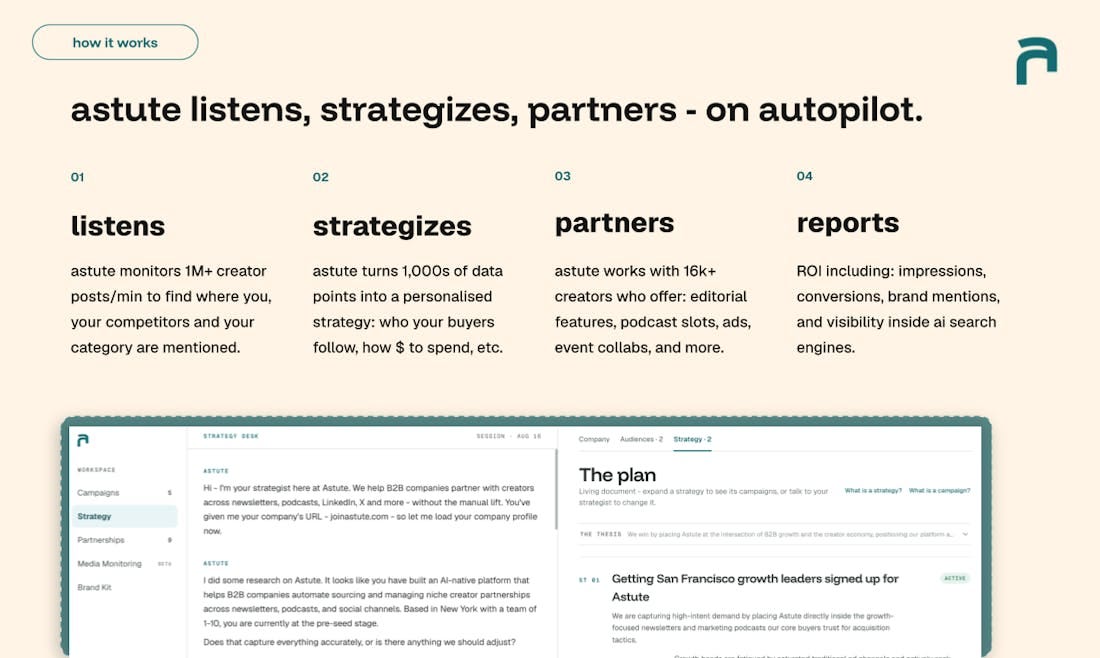
⭐ Astute: Automates B2B brand distribution through new-media creators: podcasters, newsletters, LinkedIn builders, and YouTube channels. The platform identifies relevant creators for your product, manages outreach, tracks placements, and measures the downstream effect on pipeline. Built for teams that want earned media at scale without a dedicated PR department.
Clipto MCP: Lets AI agents source clips from terabytes of local video using natural language. You describe what you need; “the part where the founder explains the pricing model”; and Clipto locates it across your entire video library without cloud upload. Built as an MCP server, so it integrates directly into Claude Code and other agent runtimes. Particularly useful for teams that produce a lot of recorded content and need to repurpose it programmatically.
Omni by xpander: Enterprise AI agent platform that handles the infrastructure layer most teams build themselves: persistent memory across sessions, tool authentication, multi-agent coordination, and audit logging. Designed so agents can run autonomously across real business workflows; sales, support, engineering; without someone babysitting the runtime. Works with any underlying model.
Origin by Cursor: Git forge built for coding agents rather than human developers. Origin manages repositories, pull requests, and code review workflows with agents as first-class contributors: branches are created, reviewed, and merged by agent pipelines, not just individual engineers. Tight integration with Cursor’s existing coding agent infrastructure.
HyNote for Mac: Free, fully local transcription app for Mac. Audio never leaves the device; everything runs on-device using your local compute. Supports system-wide recording so it can capture any audio source: meetings, voice memos, dictation. Transcripts stay on your machine. No subscription, no API key, no cloud dependency.
Share this post with friends, especially those interested in AI!
Weekly Guides 📕
I Hired Four AI Agents. Then I Became Their Middle Manager.: What 4.8 billion processed tokens taught me about shared context, memory, and the hidden cost of making a human the API between Claude, Codex, Cowork, and Hermes. Read this before you add a fifth agent.
Hermes Agent v0.20: Build a Verifiable Research Run: We missed the Herald release, so here is the useful catch-up. Hermes now has grounded citations that match quotes to source text, fact checking, mid-turn steering, A2A v1.0, signed webhooks, and longer autonomous runs.
Try this: “Fact-check the five claims in this newsletter. For each claim, return the verdict, exact supporting or contradicting quote, source URL, publication date, and one unresolved caveat. Use grounded citations. Do not treat search snippets as evidence.”
Plant one slightly wrong claim in the input. The real test is whether Hermes catches it and links to the exact evidence.
CAI Member Intelligence: 718 AI Tools, 109 Model Families, Live Prices: Search the job you need to do, check where a product appeared in our reporting, and compare current model economics before adding another subscription.
Origin by Cursor: Documentation: The official setup guide for repository creation, agent-driven pull requests, and access controls for coding-agent workflows.
Build Your First AI Agent with xpander: A practical quickstart for connecting tools, setting memory scope, configuring handoffs, and deploying an agent without building the runtime from scratch.
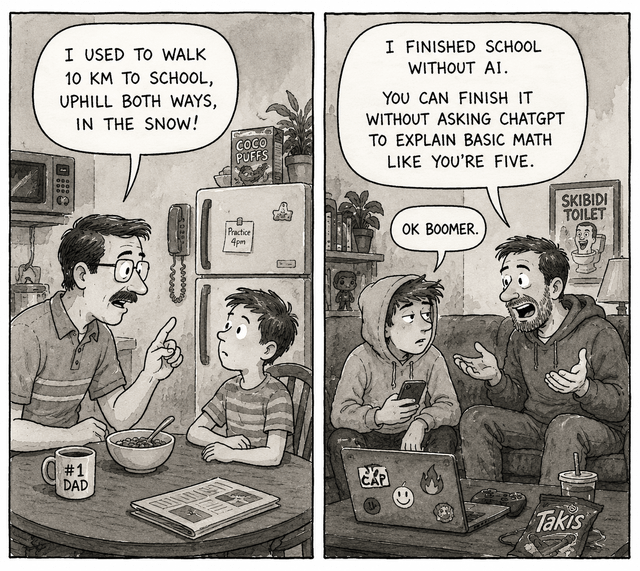
AI Meme of the Week 🤡
AI Tweet of the Week 🐦


Bonus Materials 🎁
Leaked Video Shows Apple’s Camera-Equipped AirPods Identifying a Book by Sight: Code found in a macOS release candidate references an unreleased device carrying the B790 codename. An accompanying leaked video shows the system identifying a book held in front of the wearer and saving it for later recall; the cameras appear designed for machine perception, not photography. If Apple ships this, AirPods move from audio accessories to persistent AI sensors that give Siri visual context without requiring a phone. Similar ambitions are driving Meta’s smart glasses push; the difference is Apple’s user base is an order of magnitude larger.
Xen Project Targets Safety-Critical Robotics as Boeing Joins the Open-Source Hypervisor Effort: The Xen Project is expanding its hypervisor; traditionally a cloud virtualization tool; into safety-critical systems including robotics, vehicles, and industrial machines. Boeing joined the effort alongside AMD and Renesas, targeting compliance with IEC 61508 functional-safety standards. The idea: run safety-critical functions and AI inference workloads in isolated partitions on the same hardware, so a failure in one cannot cascade into the other. As AI moves into machines that can physically harm people, software architecture becomes a safety-engineering problem, not just an IT one.
Astranis Announces Perceptor; Satellites Built to Watch Other Satellites: Astranis announced Perceptor, a constellation of small satellites designed to monitor geostationary orbit; the band where the most valuable and most vulnerable commercial and government satellites operate. Current space situational awareness relies on ground-based radar with significant blind spots in GEO. Perceptor closes that gap with persistent in-orbit observation from the inside. As AI systems become more dependent on satellite connectivity for cloud inference and global deployment, knowing what is actually happening in GEO in real time stops being an aerospace curiosity and starts being infrastructure continuity planning.
If you missed our previous updates, don’t worry, here they are:

Have you tried Grok Bot? 👇
What job did you give it, and where did it break first: login, browser, judgment, or usage limits?
Share the exact workflow in the comments. I’ll compile the most useful answers next week.