


The agent that actually runs my two businesses, in one Telegram chat. And how to move over if Anthropic stranded you too.
Hey! Welcome to the latest Creators’ AI Edition.
Most “AI assistant” posts start with “I use ChatGPT to write emails.” Boring.
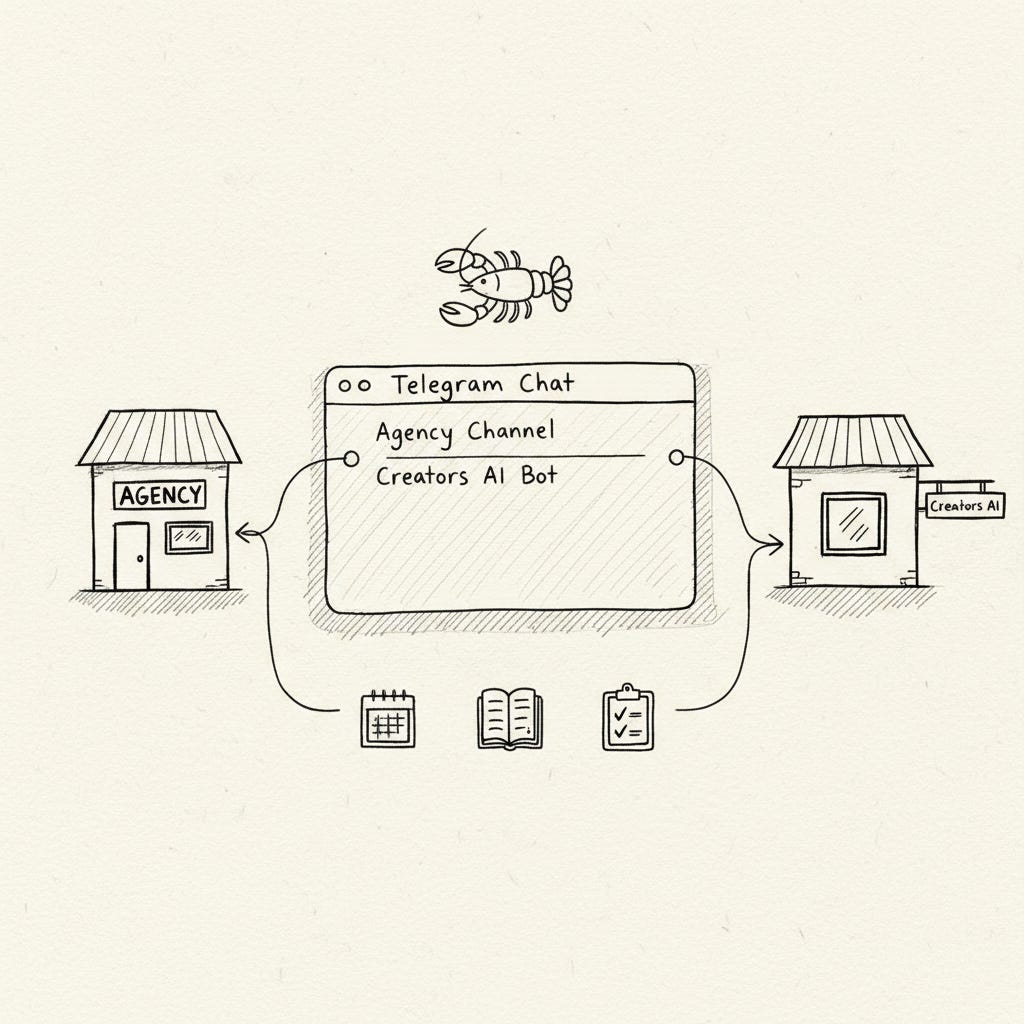
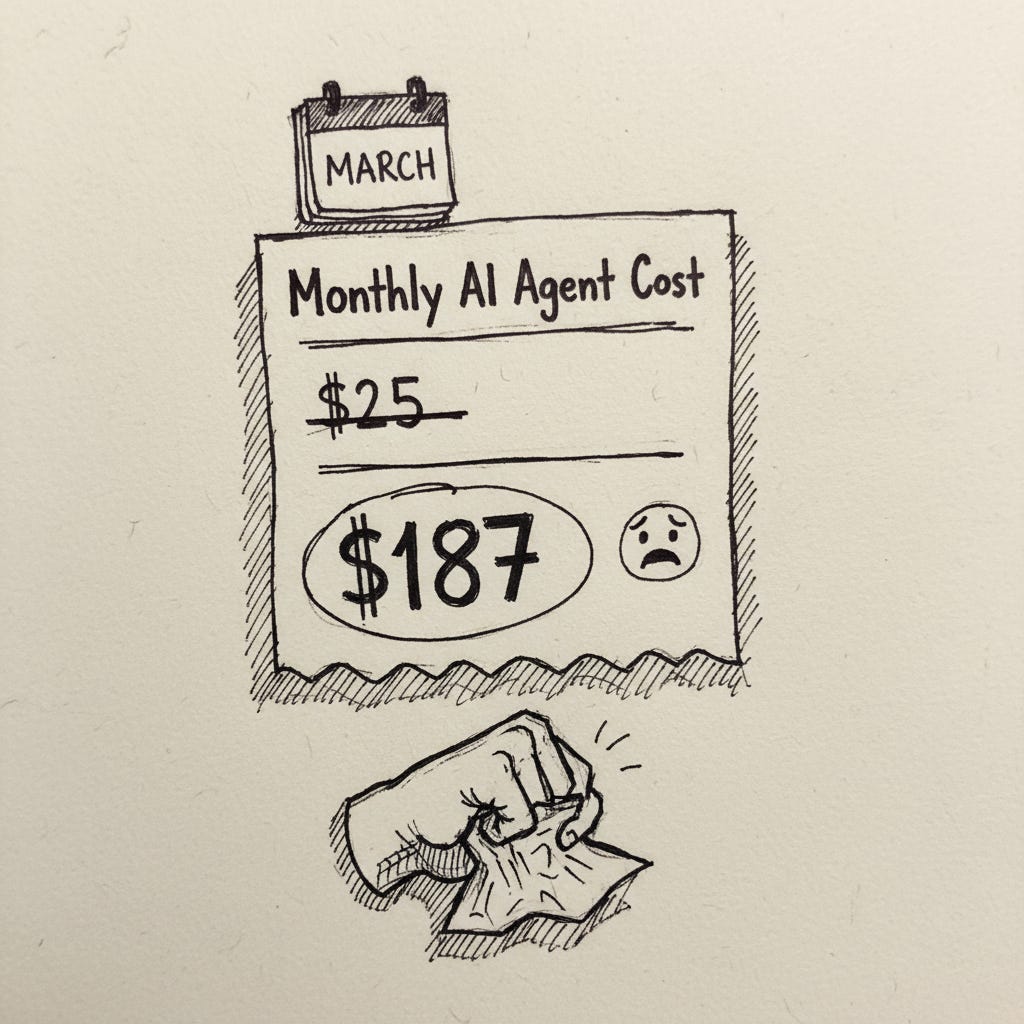
Mine starts with this: in March, I had a working OpenClaw setup running on Claude Pro. Memory, skills, Telegram, the whole stack. Then Anthropic killed the subscription-based usage path that made OpenClaw cheap, and my $25/month agent suddenly priced itself toward $500+ on metered API calls. I shut it down.
4 weeks later I’m running the same workflows (eight of them) through Hermes Agent on a $5 VPS, pointed at my $20 OpenAI subscription and GPT-5.5. Same Telegram chat. Same persistent memory. Cheaper. Faster. And honestly more polished than what I had on OpenClaw.
This post is the migration. Not “what is Hermes”. Peter Yang’s Race to Build a Personal AI Agent already covered that. This is what it looks like to run two businesses through it for a month, and how to move over if you’re stranded too.
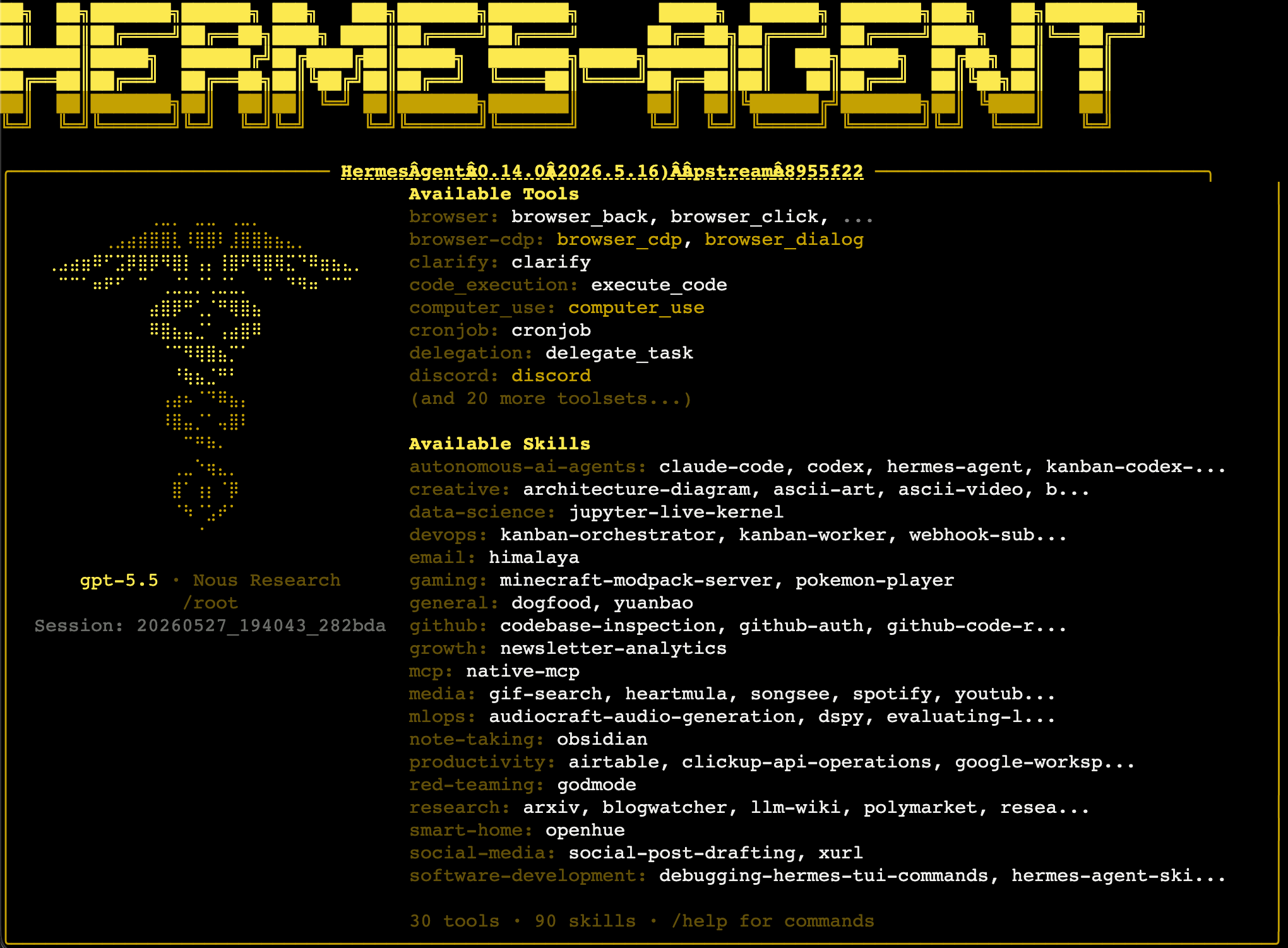
By the end you’ll have my exact stack, the migration path from OpenClaw, and the trust boundaries I drew so you don’t have to learn them the expensive way.
Who this post is for
Two reader profiles. Pick yours.
Profile A: You tried OpenClaw, and it never clicked. You installed OpenClaw/Moltbot/Clawdbot back in February/March, hit a wall on setup, OAuth, or skill authoring, and bounced. Hermes solves most of what frustrated you out of the box. The skill-authoring loop in particular is the unlock. You don’t write skills. Hermes watches you and writes them.
Profile B: you ran OpenClaw on Claude Pro and got stranded. You had it working. Anthropic changed the subscription terms and your cost model collapsed. You’ve been running half-broken cron scripts ever since while you figure out what to do. The Hermes + GPT-5.5 path is what I built for exactly this situation. The migration takes about a weekend.
Profile C: you have no idea what is OpenClaw and Hermes but you heard its hyping
All profiles land in the same place: a working operator-grade agent in Telegram, on a $5 VPS, with a $20/month model subscription. The path there is just slightly different.
The reframe: chatbot vs. work OS
This is the most important paragraph of the post. If you don’t shift here, the rest won’t land.
A chatbot is a thing you go to when you have a question.
A work OS is a thing that knows your projects, watches your day, talks first, and runs work while you do other things.
Four ingredients of a work OS:
Memory. It knows your projects, priorities, style, who’s who in your business.
Tools. It can actually do things (read your task system, write to your knowledge base, draft emails, call APIs). Not just describe doing them.
Automations. It acts on schedules and triggers, not only when you ping it.
Agents. It can spawn sub-agents for parallel work (research + code + content at the same time).
Hermes is the first thing I’ve used where all four actually compose cleanly. OpenClaw composed three of the four, and the fourth (multi-agent) was always a duct-tape project. Claude Cowork has tools and memory but lacks the runner and the multi-agent layer.
The bet of this post: a personal AI operator that lives where you already live (Telegram), knows your business, and runs on cheap infrastructure replaces 3-5 SaaS tools and 5+ hours per week.
Why I switched: the OpenClaw breakage in one paragraph
OpenClaw’s economics depended on Claude Max (I used $100 plan) plus a $5 VPS (about $125/month all-in), as we covered in the OpenClaw ecosystem post.
The reason it was depended is using any other model made it dumb. idk why 🤷♂️
When Anthropic moved subscription-based agent usage behind API metering, that math broke. A typical day of agent work (three research jobs, a content draft, two coordination runs) chewed through what used to be unmetered Pro usage. My March bill on metered tokens hit $187. The agent was doing the same work. The pricing model underneath it shifted.
I’m not litigating Anthropic’s decision here. They’re allowed to change their terms. But the practical effect for solo operators running OpenClaw was that the cheapest “always-on personal AI” setup stopped being cheap.
Hermes is open-source (MIT license, Nous Research), self-hosted on the same $5 VPS pattern, and model-agnostic. I point it at my OpenAI subscription. GPT-5.5 handles the operator role fine. Better than I expected on tool-use reliability. Monthly cost: $20 OpenAI + $5 VPS = $25. Same as old OpenClaw, with a runner that doesn’t depend on any one model lab’s pricing decisions.
My 8 workflows running today
Concrete. What it does, what it replaces, what it saves me.
