

Hey, it’s Daniil.
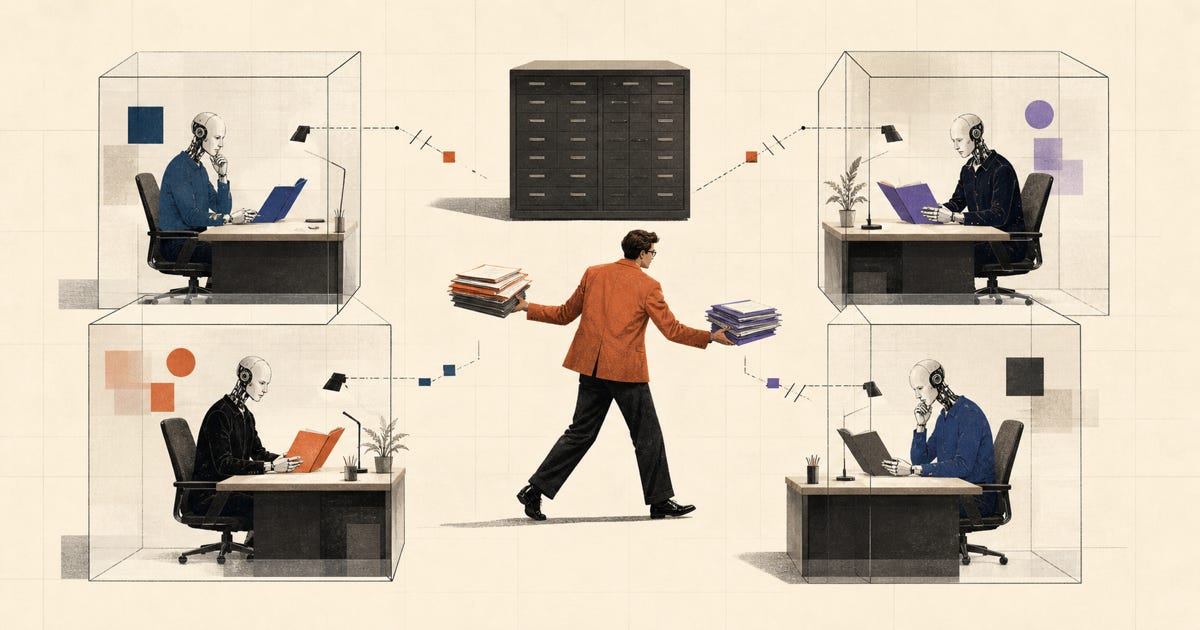
Imagine hiring the smartest person you know.
Now erase their memory every morning, move their desk to another building, hide half the company files, and get annoyed when they ask what the product does.
Congratulations. You have built my AI stack.
Claude Code. Codex. Cowork. Hermes. Together, they have processed roughly 4.8 billion tokens for me.
That number looked impressive for about eleven seconds.
Then I realized it might also be a receipt for explaining the same company four times.
If you're not subscribed yet — this is the kind of thing we write about every week.
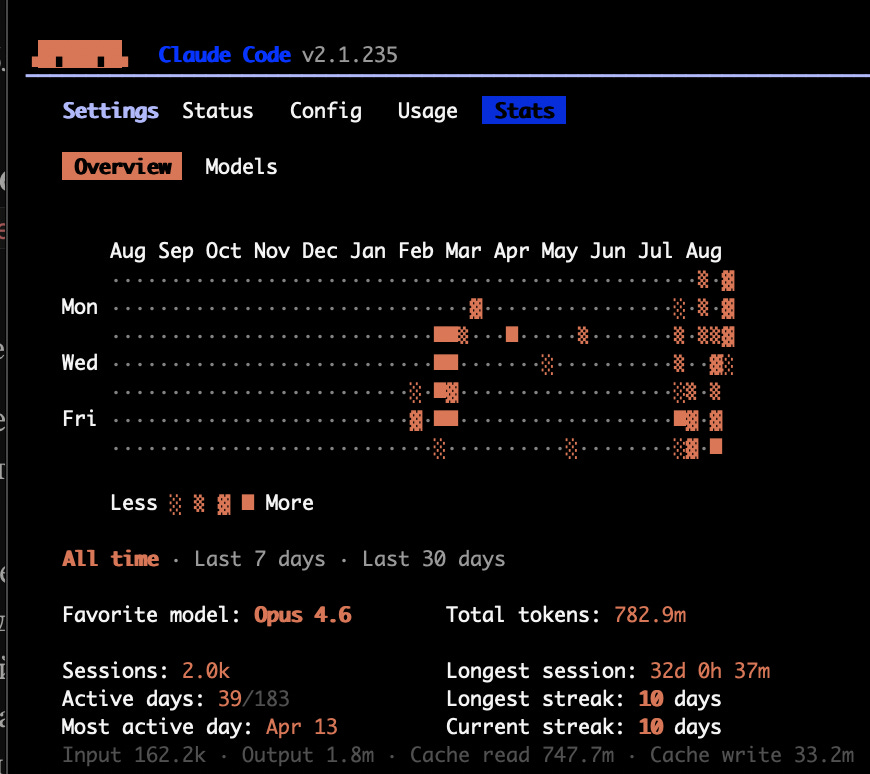
I cannot tell you what percentage of those tokens produced useful work and what percentage paid for agents to rediscover facts another agent already knew.
We broke down how Hermes and OpenClaw actually work in practice: I rebuilt my OpenClaw setup on Hermes + GPT-5.5
But I can tell you the pattern I kept seeing:
Claude learns something important inside one project.
Codex starts the next task without that lesson.
Hermes knows the operational history but not the publication rules.
I become the human API between all of them.
Very advanced technology. Very traditional middle management.
At first, I treated this as an annoying personal workflow problem.
Then I looked at it as a business owner.
The model subscriptions are the cheapest part. The expensive part is paying smart people to reconstruct company context, review contradictions, and fix work that was perfectly reasonable against the wrong version of reality.
My problem was not that I needed a smarter agent.
I had created a company where every employee was brilliant, fast, available 24/7—and permanently on their first day.
What “no context” actually costs
When an agent lacks context, it usually does not stop.
That would be convenient.
It fills the gap with the most plausible version of your company. The result can be polished, internally consistent, and completely wrong.
In practice, I see four kinds of waste.
1. You pay for the same discovery again
One agent maps the project, finds the relevant files, learns why a previous approach failed, and finally does the job.
A week later, another agent repeats the entire investigation.
This is not research anymore. It is an expensive onboarding ritual.
2. Two correct agents produce one wrong company
Claude can make a sensible product decision based on the product files it sees.
Codex can make a sensible review comment based on the diff it sees.
If neither sees the decision that connects the two, they can both be correct inside their own little universe—and still send the project backward.
Humans do this too. We call it a meeting.
3. Local corrections never become company knowledge
You tell Claude, “Never do X again.”
Claude apologizes. Claude fixes X. Everyone goes home happy.
Tomorrow, Codex does X with enormous confidence because nobody told Codex about yesterday.
The correction lived in a chat. The company learned nothing.
4. The human becomes the context router
This one is sneaky.
The agents look productive because they return work quickly. Meanwhile, you spend your day copying the brief into Claude, explaining the decision to Codex, forwarding the result to Hermes, and resolving the contradictions.
You did not remove coordination work.
You hired yourself as the dispatcher.
Share this with the person who keeps opening new AI chats and re-explaining the company from scratch.
For a business, this is a very dumb way to buy intelligence
For one person, fragmented context is annoying.
For a company, it is financially stupid.
Here is deliberately simple, illustrative math:
10 people × 30 minutes per day rebuilding context = 5 hours per day
5 hours × 5 days = 25 hours per week
25 hours × $80 fully loaded cost = $2,000 per week
≈ $104,000 per year
That is before the Claude and Codex bills. More importantly, it is before the cost of a bad launch, a duplicated experiment, a wrong customer answer, or a senior person discovering that two teams implemented opposite decisions.
And 30 minutes is conservative. Context gets rebuilt in prompts, kickoff calls, Slack threads, reviews, corrections, and the little “quick clarification” messages that eat an afternoon one bite at a time.
The stupid part is not paying for AI seats.
The stupid part is buying intelligence and then making every instance start from zero.
Every new agent seat should make the company memory more valuable. Without shared context, it can do the opposite: more parallel work, more conflicting assumptions, and more humans paid to reconcile the result.
