

Hey! Welcome to the latest Creators’ AI Edition.
Google I/O 2026 dropped 100 announcements in two hours on May 19 — two new model families, a personal AI agent, XR smart glasses, and an agentic dev platform that built a working operating system for under $1,000. Andrej Karpathy — OpenAI co-founder, former Tesla AI director, creator of Neural Networks: Zero to Hero — joined Anthropic on May 19 to lead a new pre-training research team. And on May 20 Meta announced 8,000 layoffs — about 10% of its workforce — citing AI-driven efficiency. Today we have:
Featured Materials 🎟️
News of the week 🌍
Useful tools ⚒️
Weekly Guides 📕
AI Meme of the Week 🤡
AI Tweet of the Week 🐦
(Bonus) Materials 🎁
Keep your mailbox updated with practical knowledge & key news from the AI industry!
Featured Materials 🎟️
Google I/O 2026: Welcome to the Agentic Gemini Era 🔮
Two new model families. A personal AI agent. Smart glasses launching this fall. An agentic dev platform that built a full OS with 96 agents in 12 hours for under $1K in token costs — and it runs Doom. Google I/O 2026 ran for nearly two hours on May 19 and delivered 100 announcements. Here’s what matters.
The two new model families:
Gemini 3.5 Flash — 4× faster than competing frontier models in output tokens per second, outperforms Gemini 3.1 Pro on key benchmarks. Now the default model powering the Gemini app and Google Search’s AI Mode. Gemini 3.5 Pro rolls out next month.
Gemini Omni — Google’s world model: multimodal in both input and output. Feed it text, audio, images, or video; it generates realistic, scientifically accurate content. Google DeepMind CEO Demis Hassabis called it a pivotal step toward AGI. Gemini Omni Flash is live today for paid subscribers and rolling out to YouTube Shorts free later this week.
The personal agent:
Gemini Spark is the most ambitious product announced. It’s a personal AI agent that integrates with Gmail, Calendar, Docs, and eventually 30+ third-party tools via MCP — Adobe, Dropbox, Uber, and others. Ask it to draft a status update for your boss and it pulls the relevant emails, files, and context without you opening a single app. Runs entirely in the cloud. Rolling out to Google AI Ultra subscribers in the US within the week.
The agentic development platform:
Google Antigravity 2.0 orchestrates multi-agent workflows from a desktop app. The demo shown at I/O: it created a full operating system from scratch using 96 parallel agents in 12 hours for under $1,000 in token costs. The OS runs Doom.
The hardware:
Android XR smart glasses arrive this fall. Built with Gentle Monster and Warby Parker frames. Directions, texts, photos — without taking out your phone.
Subscription pricing:
Google cut the AI Ultra price from $250/month to $200, and introduced a new $99/month tier. Both get Gemini Spark, Gemini Omni, and the full model stack.
Google announced 100 things in two hours. The pattern underneath all of it: Google is no longer shipping features. It’s shipping agents. Gemini Spark, Antigravity, Omni — each one replaces a workflow, not a button. The $99 Ultra tier is the trojan horse. At that price, Google doesn’t need enterprises. It needs individuals who run businesses.
Source: Google
Karpathy Left OpenAI’s Shadow. He Walked Into Its Biggest Rival. 🧠
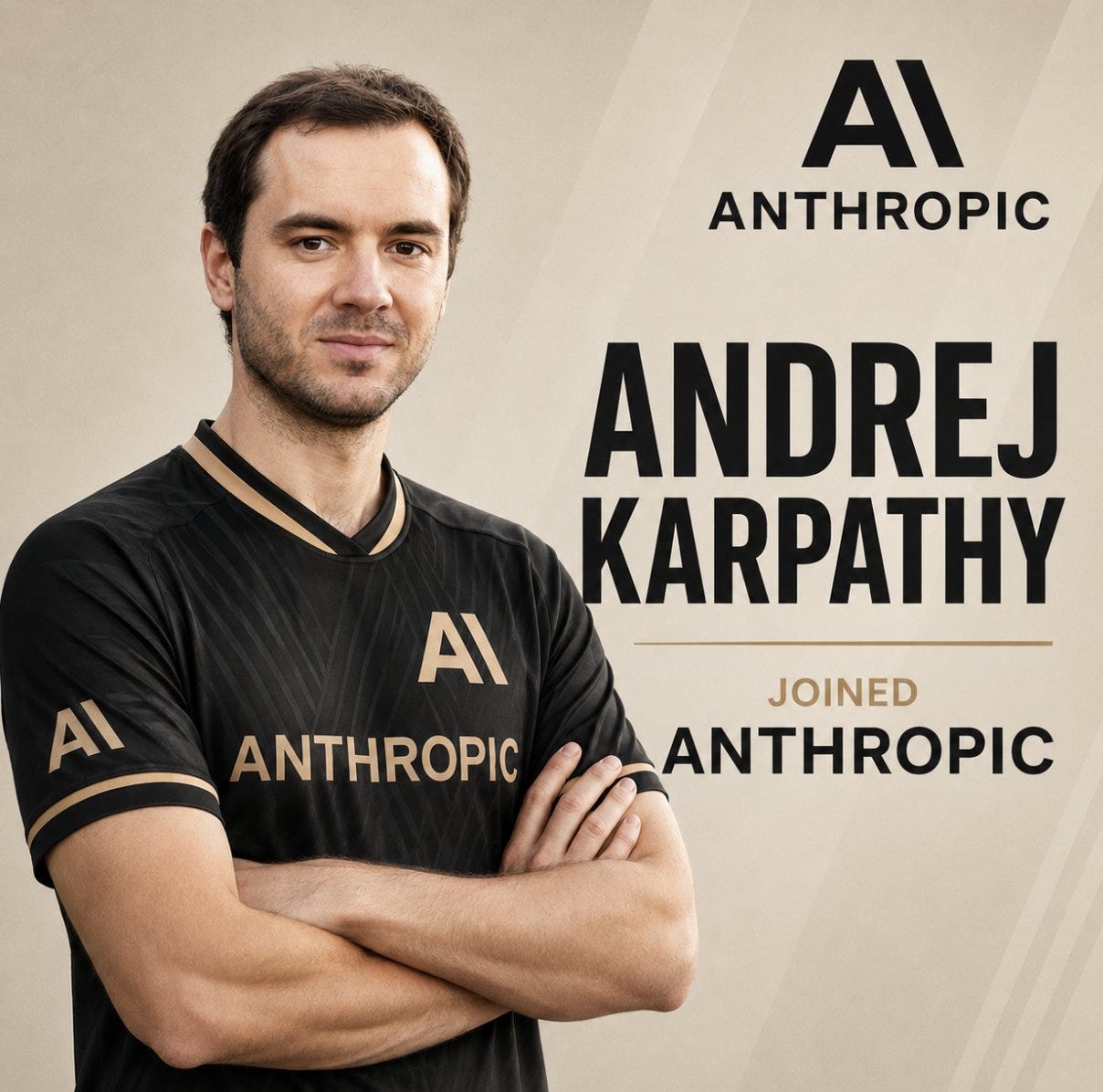
Andrej Karpathy joined Anthropic on May 19. He’ll work on pre-training under Nick Joseph — the most expensive, compute-intensive phase of building a frontier model. He’s also starting a new team focused on using Claude to accelerate pre-training research itself.
The résumé: OpenAI founding researcher. Tesla Autopilot lead. Creator of Neural Networks: Zero to Hero — the most-watched LLM education series on YouTube. After leaving OpenAI a second time in 2024, he founded Eureka Labs to apply AI to education. That’s now on pause.
Why Anthropic, why now:
Karpathy is one of the few researchers who can bridge LLM theory and the realities of large-scale training runs. His joining Anthropic to work on pre-training — and to use Claude to do it — is a direct signal about where Anthropic thinks its competitive edge lies. Not just raw compute. Not just bigger clusters. AI-assisted research as a multiplier on the research itself.
The OpenAI angle:
Karpathy didn’t just leave OpenAI — he co-founded it. His $38M in early work helped build the lab that Anthropic now competes with directly. The irony: the most credentialed endorsement of Anthropic’s research direction just came from one of the people most responsible for creating its biggest rival.
What it means for Claude:
Pre-training is where the base capabilities of a model come from — reasoning, knowledge, judgment. Post-training (RLHF, Constitutional AI) shapes behavior. Anthropic has been strong on the post-training side. Karpathy’s hire is a signal that they’re doubling down on the pre-training layer too, ahead of what is likely their largest training run yet.
Karpathy built the lab Anthropic is trying to beat, taught the internet how LLMs work, and just decided Anthropic is where the most interesting pre-training research is happening. That’s not a hiring win. That’s a statement about where the frontier is moving.
Source: X
Meta Cuts 8,000 Jobs — and Calls It an AI Strategy 📉
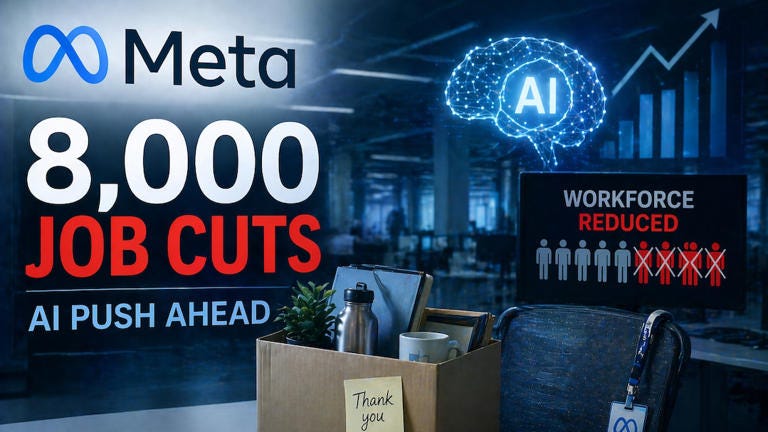
Meta announced the cuts on April 23. On May 20 it started executing them. Meta began notifying 8,000 employees — roughly 10% of its global workforce — that their positions were being eliminated. The cuts rolled out in three waves, starting with Singapore staff receiving emails at 4 AM local time. Teams across product, operations, and middle management were hit. Meta simultaneously cancelled plans to hire 6,000 people and announced it would shift 7,000 existing employees into AI workflow-related roles.
Zuckerberg framed the move as a deliberate shift toward an AI-native operating model. Capital expenditures for 2026 are forecast at $125–145 billion — more than double 2025’s figure. The integrity team, cybersecurity teams, and content design division were among the first to receive notices. US-based employees will receive 16 weeks of severance plus two additional weeks per year of tenure.
The layoffs landed the same week Google I/O showed what a 96-agent system can do in 12 hours. The Cloudflare signal from two weeks ago — 1,100 cuts after a 600% internal AI usage spike — now looks like a leading indicator, not an outlier.
Meta is not the only company running this math. Every organization that has spent the last two years deploying AI internally is now calculating how many headcount reductions those deployments justify. The 10% number is a data point. The question is which industry runs the same calculus next.
Source: Bloomberg
Share this post with friends, especially those interested in AI!
News of the week 🌍
Anthropic Is About to Post Its First-Ever Profitable Quarter 💰 — Anthropic disclosed to investors on May 20 that it expects $10.9 billion in revenue in Q2 2026 — more than doubling Q1's $4.8 billion in a single quarter. That puts it on track for its first operating profit, though the company may not stay profitable through the year due to compute costs from the SpaceX Colossus deal. For context: Anthropic posted $9 billion in full-year 2025. It's now on pace to generate more in one quarter than it did in all of last year.
SpaceX's IPO Filing Reveals xAI's Real Finances — and They're Ugly 📊 — SpaceX's S-1 filed May 20 is the first public look at xAI's actual numbers. The AI segment posted $3.2B in revenue in 2025 — but $6.36B in losses. In Q1 2026 alone: $818M revenue, $2.47B operating loss. SpaceX is spending $7.7B per quarter on AI capex. The filing also revealed that Anthropic is paying SpaceX $1.25B per month for Colossus 1 compute — meaning Musk's company is simultaneously losing billions on xAI while profiting from its biggest rival's infrastructure spend.
Pope Leo XIV Publishes First AI Encyclical — Co-Presented With Anthropic's Christopher Olah ✝️ — On May 19, the Vatican released its first encyclical on artificial intelligence. Anthropic co-founder Christopher Olah joined Pope Leo XIV at the ceremony in Rome. The document calls for AI development guided by human dignity and warns against systems that "replace human judgment in matters of conscience."
Musk v. OpenAI: Unanimous Verdict, IPO Path Cleared ⚖️ — A federal jury in Oakland ruled unanimously against Elon Musk on May 18, ending his three-year lawsuit against OpenAI. The verdict came after less than two hours of deliberation. The jury found Musk’s claims fell outside the statute of limitations — not a ruling on whether OpenAI betrayed its nonprofit mission, but a procedural finding that he waited too long to sue. Musk called it a “calendar technicality” and announced he will appeal. The practical result: the most significant legal obstacle to OpenAI’s October 2026 IPO is removed. OpenAI is currently raising at a $900B+ valuation. Altman stays. The IPO moves forward.
Altman Offered Every YC Startup $2M in OpenAI Tokens — For Equity 🎯 — At Demo Day on May 20, Altman offered all 169 startups in the current YC batch $2M worth of OpenAI tokens in exchange for equity. Uncapped SAFE, converts at Series A. The debate on X split instantly: some call it the cheapest infrastructure deal a founder can get; others warn OpenAI just bought a front-row seat to every idea in the batch. Either way — Altman locked in a generation of startups before they ever had a chance to default to Claude.
Share this post with friends, especially those interested in AI!
Useful tools ⚒
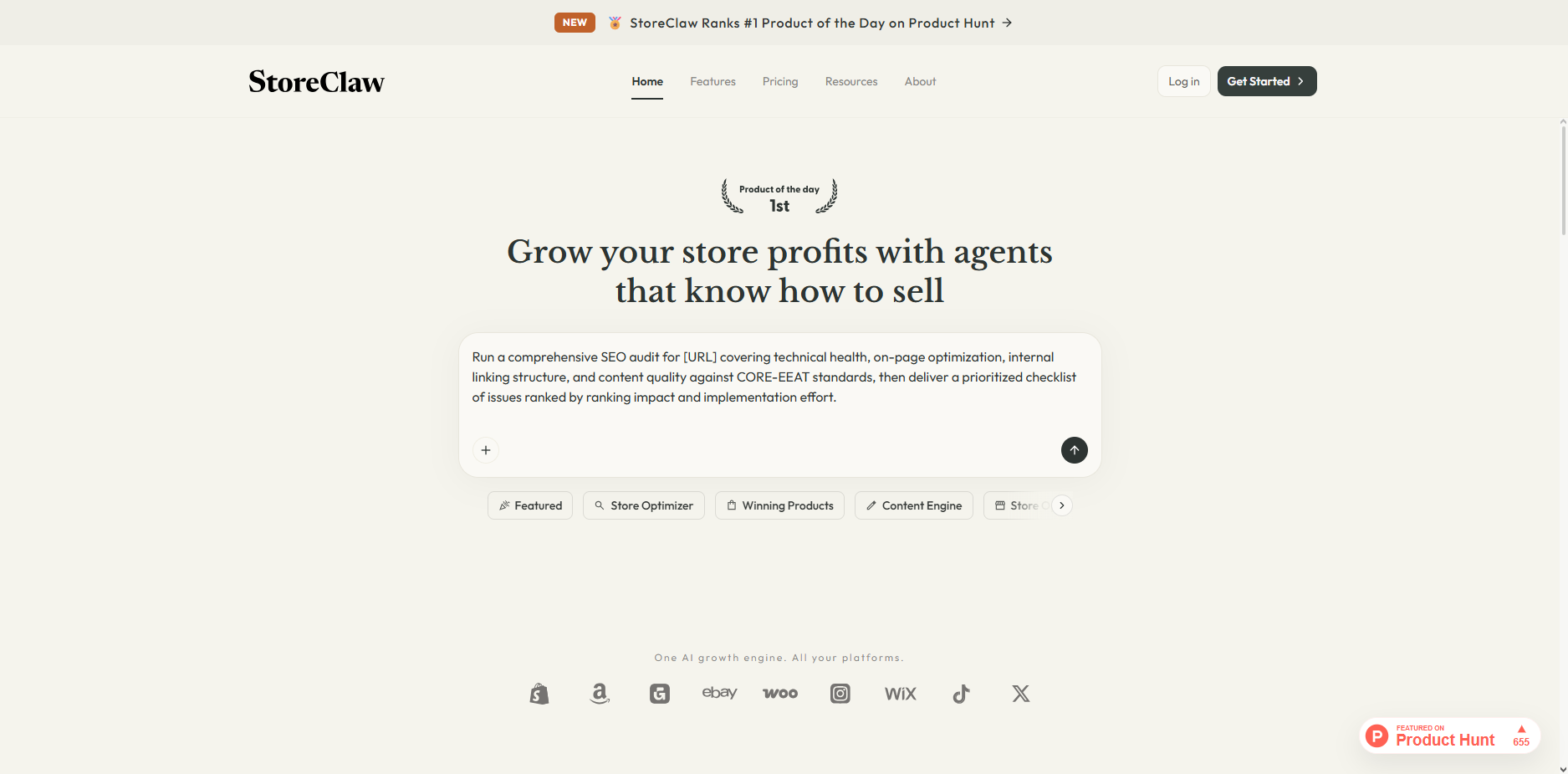
⭐ StoreClaw — AI agents built specifically for e-commerce revenue growth. Connect your store, set a goal (recover abandoned carts, upsell repeat buyers, re-engage churned customers), and StoreClaw’s agents run the campaigns autonomously. It reads your product catalog, customer history, and order data to personalize every outreach. Built for Shopify and WooCommerce merchants who don’t have a marketing team. Free to start.
PollyReach — Give your AI agent a real phone number and voice. PollyReach lets you deploy outbound calling agents that sound like humans — appointment reminders, lead follow-ups, customer surveys. You define the script and the triggers; the agent makes the calls. Works with your existing CRM and calendar tools. Usage-based pricing.
Composer 2.5 by Cursor — Cursor’s most powerful coding model yet, launched this week. Designed for complex, long-horizon coding tasks that previous Composer versions would abandon or hallucinate through. If you’re using Cursor for anything beyond single-file edits, this is a meaningful upgrade. Available now inside the Cursor editor.
Emdash — One app to manage all your coding agents — Claude Code, Codex, Cursor, Devin, and 25+ others — from a single open-source interface. Each agent runs in its own isolated Git worktree. Switch between agents, review diffs side-by-side, manage costs, and connect to Linear, Jira, or GitHub Issues without leaving the app. Apache 2.0, free, runs on Mac, Windows, and Linux.
LobeHub — Chief Agent Operator: you set the goal, LobeHub assembles an AI team, runs them 24/7, and reports back through Slack, Discord, or email. Hire agents from a marketplace of 312K+ skills, run them in parallel across Projects, Pages, and Schedules. Persistent memory, MCP support for 58K+ servers, and open-source with 77K GitHub stars. Free tier available.
Weekly Guides 📕
MCP for Creators: Engineering Content that Works — Creators AI's own deep-dive on how to wire up MCP servers for content workflows: practical setup, what to automate first, and why MCP changes the content creation stack more than any model release this year.
Google I/O 2026: Gemini 3.5 Flash, Spark & Antigravity — Everything Developers Need to Know — The most practical developer breakdown of I/O: API pricing ($1.50/M input), benchmark numbers vs. GPT-5.5 and Claude Opus 4.7, the silent thinking_level default change from high to medium that will break your prompts if you don’t catch it, and honest take on what actually changed vs. what’s marketing. Published May 20 by Build Fast with AI.
Gemini 3.5 Flash: More Expensive, But Worth It? — Simon Willison — Independent hands-on notes from May 19: exact API pricing ($1.50/$9 vs $2/$12 for 3.1 Pro), real benchmark cost comparisons against GPT-5.5 and Claude Opus 4.7, why the model is 6× more expensive than Flash-Lite, and what the Interactions API actually does. The most honest third-party take on the model released at I/O.
How to Build Your First AI Agent in 2026: A Practical Guide — Code-first walkthrough: how to wire up a Python agent with function calling, how to implement a self-correction loop, when to use MCP vs. direct API calls, and how to set guardrails before a looping agent burns through your token budget. Written by an ML engineer who built an agent marketplace.
Claude Code How-To: Visual, Example-Driven Guide from Basic to Advanced Agents — Community-maintained GitHub guide synced with every Claude Code release. Covers slash command templates, sub-agent patterns, AGENTS.md setup, and production-ready copy-paste workflows. Updated to v2.1.145 this week. If the official docs are a reference, this is the tutorial.
Cursor Composer 2.5 — What Changed and How to Use It — Cursor’s official changelog for Composer 2.5: what’s new in long-horizon task handling, how the model routes complex vs. simple edits, and which prompt patterns get the best results. If you’re using Cursor for anything beyond single-file work, this is the upgrade guide to read before your next session.
AI Meme of the Week 🤡
AI Tweet of the Week 🐦


Bonus Materials 🎁
Figure AI's Robots Sorted 100,000 Packages in 81 Hours — Fully Autonomous — Figure's Helix-02 humanoid robots ran a live 81-hour autonomous warehouse shift, handling 100K+ packages with no human intervention. Self-swapped for low battery, self-diagnosed failures, coordinated as a fleet. 10M views on the original livestream. One of the clearest public proofs of long-duration no-human-in-the-loop multi-robot orchestration.
NextEra-Dominion Deal Signals Era of AI Utility Mega-Mergers — Bloomberg's analysis of why $1.1 trillion in US grid investment over the next five years still isn't enough, why scale now matters more than efficiency in utilities, and what this means for AI companies whose biggest constraint is no longer GPUs — it's power.
Anthropic Acquires Stainless — Pulling the SDK Infrastructure Away From OpenAI and Google — Anthropic acquired Stainless on May 18 for a reported $300M+. Stainless automated the creation and maintenance of SDKs — the libraries developers use to interact with APIs — and its tools were used by OpenAI, Google, Cloudflare, Replicate, and Runway. Anthropic is now shutting down all hosted Stainless products. Competitors still own the SDKs they’ve already generated, but going forward, the infrastructure is Anthropic’s alone. The acquisition takes a piece of critical developer tooling off the open market right as the API wars are heating up.
If you missed our previous updates, don’t worry, here they are:
Your take: Karpathy left OpenAI's shadow to join Anthropic, Musk lost his case against OpenAI, and Google shipped 100 things in 2 hours. Who's actually winning the AI race right now — and does it even matter? Drop it in the comments 👇