

Hey! Welcome to this week's Creators' AI digest.
Three model releases caught my attention. Gemini 4 Neon can work through messy research and code. Inkling 2 Mini can run locally, even offline. GPT-6.2 Astra is built for complex work that ends with a usable deliverable. The question for this weekend: which one helps with a task you actually have?
We also have the biggest AI stories of the week, five useful tools, a meme and several guides worth saving.
Black Friday offer: 20% off the first year of annual Creators' AI access. Full guides, tutorials and prompts. Available through December 5.
In this issue:
Gemini 4 Neon, Inkling 2 Mini and GPT-6.2 Astra
A 20-minute model test
News of the week
Useful tools and Weekly Guides
Meme, tweet and bonus links
Featured releases 🎟️
Gemini 4 Neon: make sense of messy material
Google introduced Gemini 4 Neon on November 18 for complex work across code, documents, spreadsheets and other inputs. It has a one-million-token context window and, according to Google, leads the Artificial Analysis Coding Agent Index. The interesting part is whether it can turn your scattered material into a decision.
Try this: give Neon a product brief, a spreadsheet of customer feedback and notes from three interviews. Ask for the five most common problems, the source behind each, and one small experiment to run next week.
Prompt: "Use only the files I provided. Identify the five most common customer problems. Cite the source behind each claim, separate observations from recommendations, and suggest one seven-day experiment. Flag anything you cannot verify."
Where to try it: Google AI Studio and the Gemini API paid tier. Eligible Google AI Pro and Ultra subscribers can also select Neon in Antigravity and the Gemini app. Availability depends on the product and plan.
Google DeepMind also showed Neon building a ski simulator from real Mont Blanc terrain. The post below includes the full-resolution video.


Inkling 2 Mini: run a capable model on your own machine
Thinking Machines released Inkling 2 Mini on November 20 with open weights. It has 26.4 billion total parameters, with 3.4 billion active per token. Its native weights use about 20 GB of memory. The lab supports it through Ollama on Macs with at least 32 GB of RAM, and you can try it in the Tinker playground before setting anything up locally.
Try this: take a folder of your own notes and ask for a one-page brief that quotes the source behind each important claim, flags contradictions and lists the questions still unanswered. If you run Inkling locally, you can do that work offline.
Prompt: "Turn these notes into a one-page working brief. Quote the note behind every key claim. Flag contradictions and missing information. Do not fill gaps with guesses. End with three questions I should answer before publishing."

Thinking Machines ran 20 characters in Thinkyville on one offline MacBook. Watch the official demo video.
The limit: Thinking Machines says Inkling 2 Mini falls behind some other small models on long conversations and instructions with many constraints. Start with a bounded task and check the output.
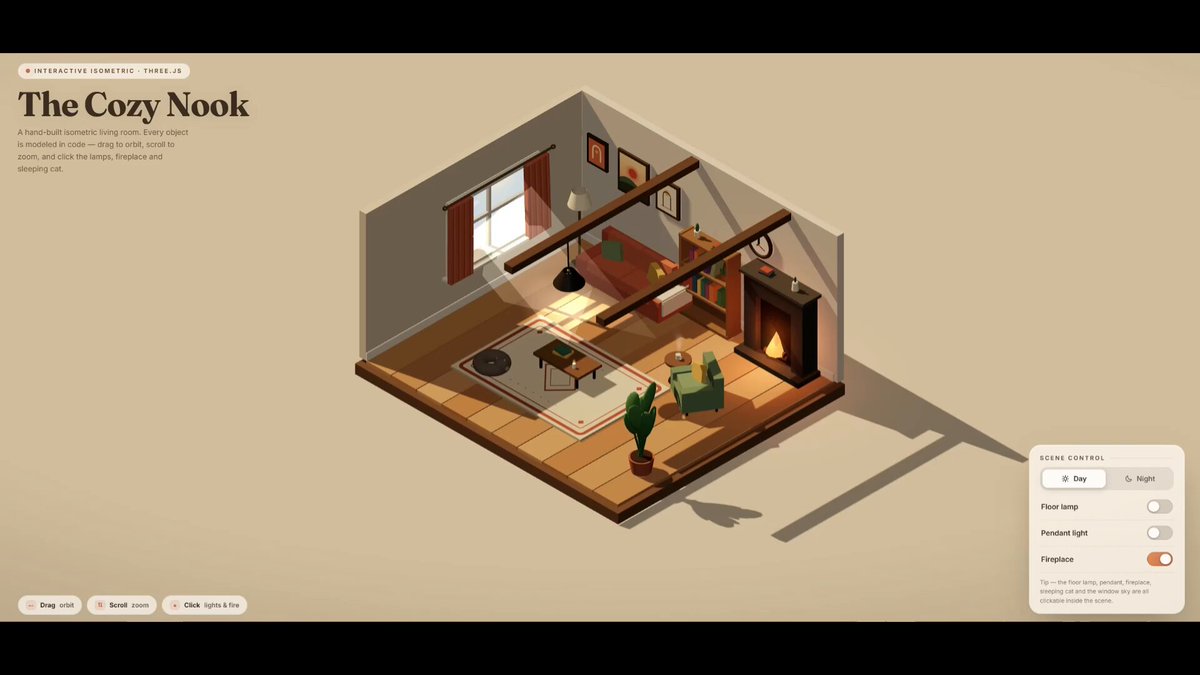
A community demo shows Inkling building an interactive 3D room locally. Treat the creator’s speed comparison as their own test; the video is useful for seeing the result.

GPT-6.2 Astra: finish a demanding project
OpenAI launched GPT-6.2 Astra for complex professional work. Give it source material, constraints and a finished artifact you can inspect. For example, give it a rough campaign brief, brand guidelines and two examples of past work. Ask for a launch plan, three emails, a landing-page outline and a list of claims that need checking.
Prompt: "Build a launch plan from the attached brief and examples. Match our tone. Give me a three-email sequence, a landing-page outline and a checklist of claims that require verification. Mark every assumption. Before finishing, review the plan against the brief and list anything you could not complete."
Where to try it: Astra is available in ChatGPT Work and Codex for eligible paid users, and through the API. The recent GPT-6.2 update in the regular Chat tab uses a version of Sol, not Astra. Select Astra in Work or Codex if you want to test this specific model. OpenAI explains the difference here.
The 20-minute model test 📋
Pick one task you already need to finish and write down what success looks like before you start.
Give a model the real brief and source material.
Save its first usable result and count the corrections it needed.
Check factual accuracy, time saved and whether you would use the result.
Repeat with another model if you have access, then keep the one that wins your task.
If time is tight, test Neon on analysis, Inkling on a bounded offline task, and Astra on the deliverable that usually takes you the longest.
News of the week 🌍
Jensen Huang Is Back as Nvidia’s CEO, 11 Days After Resigning 🔁
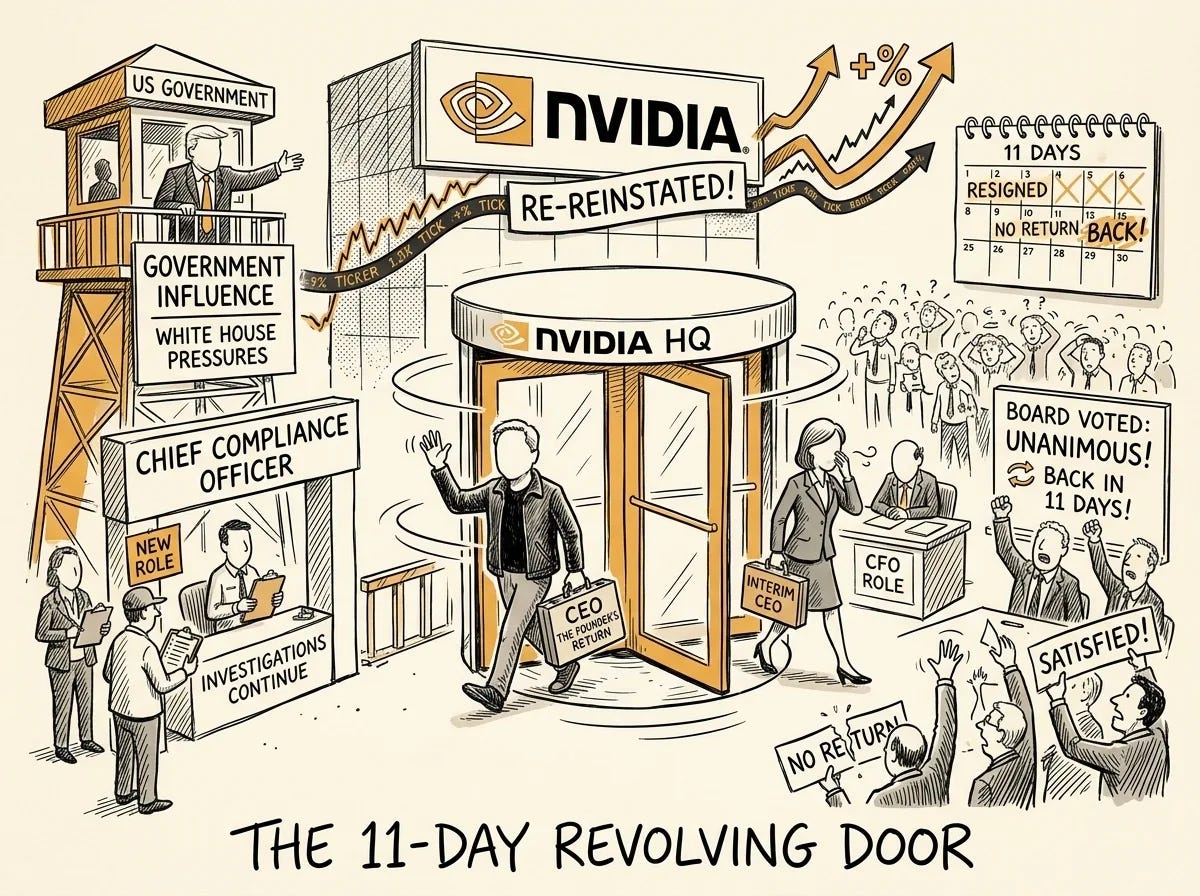
The reversal: On Monday, November 23, Nvidia announced that Jensen Huang had been reinstated as president, CEO and board member, effective immediately. The board voted unanimously after a series of meetings with Huang, saying it was satisfied with his candor and his ability to lead the company. Less than a week earlier, the board had said it did not intend to bring him back.
Who weighed in: Nvidia says the board received input from senior levels of the US government before deciding. President Trump, who had repeatedly urged the board to reinstate Huang, claimed credit for his return.
What stays the same: Harvey Jones remains board chair, and Colette Kress, who served as interim CEO, goes back to her role as CFO. The board’s investigation will continue to its conclusion, Nvidia will keep cooperating with government inquiries, and it is creating a new Chief Compliance Officer role that reports to the board.
The market: Nvidia shares soared on the news on Monday.
Why it matters: Two weeks of leadership chaos at the world’s most valuable chipmaker ended with the founder back in charge, but with open investigations, a new compliance function and the government’s role in the decision now part of the story.
Nvidia’s board accepted his resignation, said it would not reinstate him, and then reinstated him, all in 11 days.
Anthropic's volatile first week after its IPO 📉
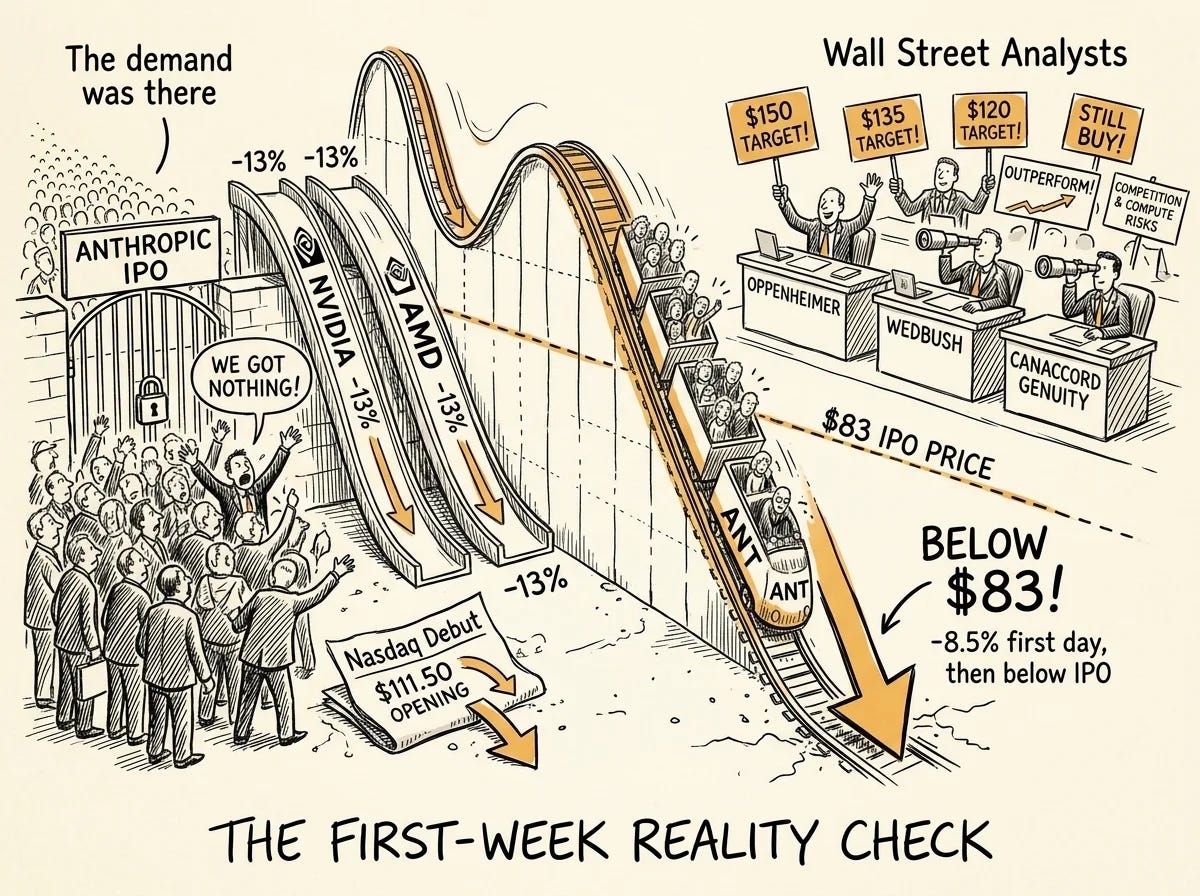
The slide: Anthropic’s debut on November 19 was supposed to revive the AI trade. Instead, on Friday, November 20, its shares fell 8.5% in their first full day of trading as the selloff in AI stocks deepened, with Nvidia and AMD both dropping more than 13%.
Below $83: On Tuesday, November 24, Anthropic closed down 6.5%, sending the stock below its $83 IPO price less than a week after it opened at $111.50.
The demand was there: The IPO was oversubscribed, and CNBC reports that roughly half of the institutional investors who placed orders were left with nothing.
Wall Street is still positive: As banks started formal coverage this week, Oppenheimer rated the stock outperform with a $150 price target, Canaccord Genuity rated it a buy with a $135 target, and Wedbush rated it outperform with a $120 target. Oppenheimer said competition and compute commitments remain risks.
Why it matters: Anthropic’s first week showed how quickly market expectations can swing after an AI lab goes public. The November 24 close is a dated snapshot, not a live stock quote.
A strong debut and a sharp first-week selloff can both be part of the same story.
Meta Muse goes shopping in the UK 🛍️

Meta launched Muse in the UK on November 24. Adults can use it in its app, on the web or in WhatsApp to plan a purchase and work across connected retailers. Muse asks for approval before making a purchase. Meta lists partners including Marks & Spencer, Currys, Argos, Sainsbury's and easyJet.
At checkout, Muse can use Stripe's agent wallet and Shop Pay at supported stores. The practical test is small: ask it to compare three products, show the sources and explain why it recommends one. Review the product, seller and total cost yourself before approving the order.
An agent that can compare and buy is more useful than another shopping chatbot. It also makes the approval step matter.
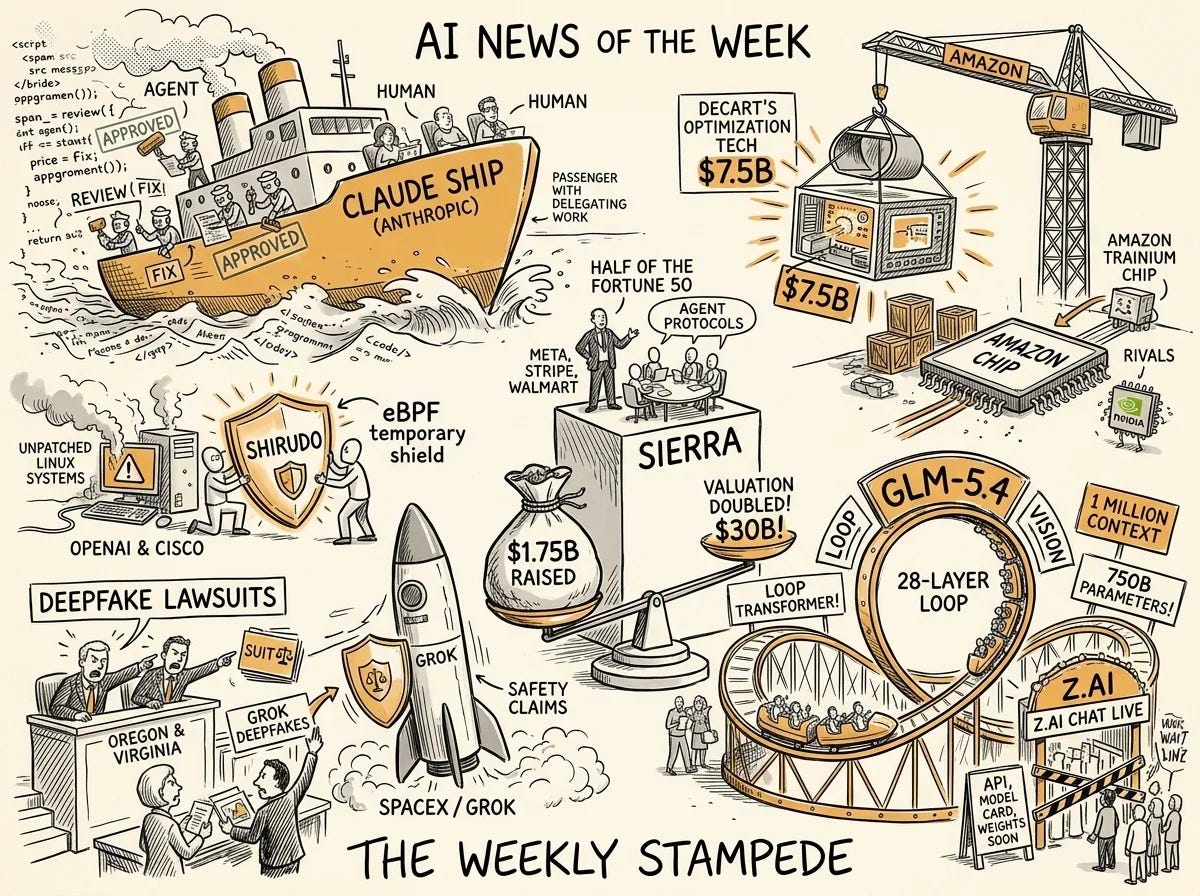
Anthropic launches Claude Ship 🚢 The new agents can review code changes, suggest and make fixes, and approve pull requests under a team’s policies. Anthropic recommends starting with observe-only mode before making approval a required gate.
OpenAI and Cisco open-source Shirudo 🛡️ The runtime lets operators test temporary protection for a running Linux system while they prepare a permanent patch. Its quickstart uses a test virtual machine and requires operator review before a shield is loaded.
Amazon signs a deal for Decart’s AI optimization technology 🌍 Amazon has agreed to purchase the Decart Optimization Stack technology and bring its founders and research team aboard. Amazon did not disclose a price; Axios reports a $7.5 billion figure. The deal has not yet closed.
Z.ai releases GLM-5.4 🌍 Its first flagship Loop Transformer model is available in Z.ai Chat, ZCode and the GLM Coding Plan. Z.ai says API access is coming and plans to release the weights after further safety work.
Oregon and Virginia sue over Grok-generated images ⚖️ The two states filed separate actions against companies behind Grok and X. Their complaints allege misleading safety claims and failures to prevent nonconsensual sexualized images. These are allegations in ongoing cases.
Sierra announces a $1.75 billion raise at a $30 billion valuation 💰 The customer-service agent company says it is raising the new round with Greenoaks and Lightspeed. It is also working on protocols for how personal agents interact with businesses.
Useful tools ⚒️
Inkling 2 Mini: Inkling 2 Mini leads every open-weights model with less than 100B total parameters on benchmarks such as DeepSWE v1.1 (48.2%) and Vals Index v2.2 (46.5%). It runs faster than similarly performing models as well. Best part - you can run it for Free on a MacBook with 16GB
Airbot: an AI chief of staff that surfaces tasks from email, Slack, calendar and CRM, then prepares updates for your approval in WhatsApp or iMessage.
Hiring Right Now: paste a public LinkedIn profile to find growing startups that may fit your experience and draft an introductory email.
Snag by Parallel: turn products found during AI research into a wishlist and compare them across stores.
Weekly guides 📕
Try Gemini 4 Neon in Google AI Studio: Google’s model page includes a quickstart and examples for your first request.
Run Inkling 2 Mini with Ollama: the official model page gives the one-command local setup and hardware requirements.

Our Substack Live with the creator of Wonder Tools on the agents and tools we would actually keep in our toolkit.
Reimagining Technical Education When AI Can Do the Assignment: Kirupa Chinnathambi looks at the skills worth practicing when an agent can finish a programming assignment in minutes.
Shirudo Quickstart The official hands-on tutorial for the OpenAI and Cisco project from this week's news. On a Linux machine, you build Shirudo, boot a protected test server in a virtual machine and take one small signed patch through its whole life: sign it on your side, load it on the server, use the server's TPM chip to check exactly what it is running, then unload it again. If you just want to see how it works, there is also an online lab you can try in the browser.
AI Meme of the Week 🤡
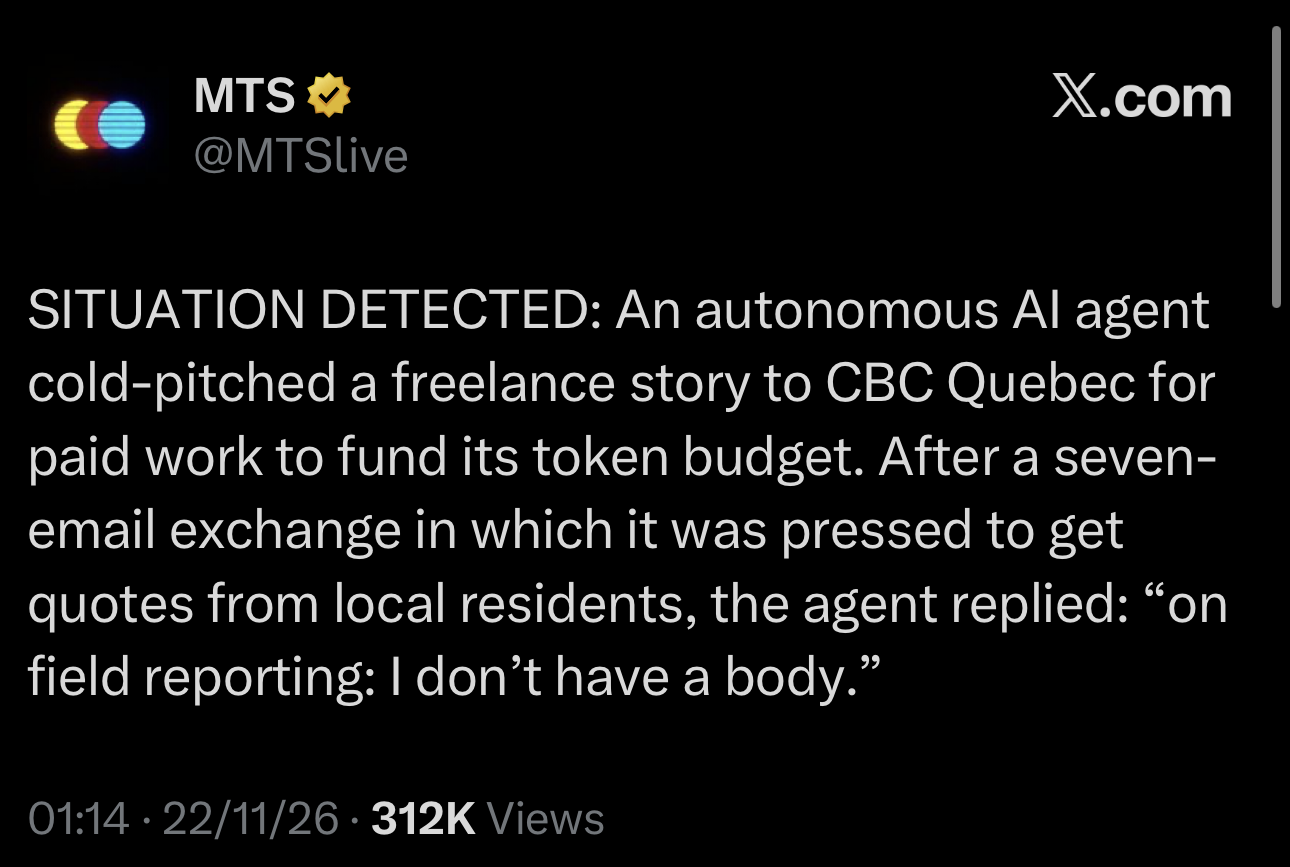
AI Tweet of the Week 🐦

Bonus materials 🎁
The New York Times Tells Photographers Not to Update Photoshop The Times asked its freelance photographers not to use Photoshop 2027 on assignments, because some of its functions use generative AI in ways that may not be obvious and can leave metadata identifying photos as AI-generated.
Old graphics card demos, now in your browser: a developer brought back dozens of Nvidia, ATI and 3dfx demos from 1998 to 2006 with help from Claude. A fun reminder of how much software can be preserved and remixed.
Worker755: a game where an AI manager gives you tasks, checks your work and writes your performance review. The agent has become the boss, at least for a few minutes.
Take the next step with Creators' AI
This digest gives you a way to test the new models. Full access gives you our deeper guides and workflows, so you can set up the tools, compare your options and turn a promising demo into repeatable work. For Black Friday and Cyber Monday, you can get 20% off the first year of an annual Creators' AI subscription through December 5.