

Three days after Anthropic released Claude Fable 5, the US government ordered it offline — after Amazon’s own researchers found a jailbreak, and Amazon is Anthropic’s $13 billion largest investor. On June 16, SpaceX exercised its option to acquire Cursor for $60B just four days after its record IPO, handing xAI a $2.6B ARR coding agent. And OpenAI launched a global partner network on June 14 with McKinsey, Bain, BCG, Accenture, and PwC — targeting 300,000 certified enterprise AI consultants by year-end. Today we have:
Featured Materials 🎟️
News of the week 🌍
Useful tools ⚒️
Weekly Guides 📕
AI Meme of the Week 🤡
AI Tweet of the Week 🐦
(Bonus) Materials 🎁
Keep your mailbox updated with practical knowledge & key news from the AI industry!
Featured Materials 🎟️
The Government Pulled Anthropic’s Most Powerful Model Offline — Three Days After Launch 🧨

Anthropic released Claude Fable 5 on June 9. On June 12, the US Department of Commerce issued an export control directive requiring Anthropic to suspend access to Fable 5 and Mythos 5 for all foreign nationals — including foreign national Anthropic employees. Because Anthropic has no way to verify citizenship at the API level, it disabled the models for every user on Earth.
The directive landed at 5:21pm ET. By 5:45pm, Fable 5 was offline.
What the government said:
The Commerce Department issued the order under national security authority, citing a method of bypassing Fable 5’s safety classifiers — a “jailbreak.” The specific technique: asking the model to read a codebase and fix software flaws. The government argued this could be used to identify exploitable vulnerabilities.
What Anthropic said:
Anthropic reviewed the jailbreak and disagreed. The company found it was a narrow, non-universal bypass — one that produces the same results as publicly available models including OpenAI’s GPT-5.5, which carries no such restrictions. “We have not even received a disclosure of a concerning non-universal potential jailbreak that led to a harmful result,” Anthropic wrote. The company said it complies with the legal directive while believing it is a misunderstanding, and is working to restore access.
The Amazon angle:
The twist that made this story go viral: the jailbreak was discovered by researchers at Amazon. Amazon CEO Andy Jassy flagged the finding to the Trump administration. Amazon is Anthropic’s largest investor with a stake worth approximately $13 billion. The company that funds Anthropic, hosts its models on AWS, and supplies its compute infrastructure is also the reason its most powerful product went offline.
Anthropic CEO Dario Amodei reportedly refused when the administration asked the company to patch or pull the model before issuing the directive.
What it means for builders:
This is the first time the US government has used export control authority to forcibly suspend access to a commercial AI model. The precedent is significant: if the standard of “any non-universal jailbreak” applied across the industry, it would, as Anthropic noted, “essentially halt all new model deployments for all frontier model providers.” Whether this directive expands, narrows, or becomes a one-off is the question the entire AI industry is now watching.
Access to all other Anthropic models — Opus 4.8, Sonnet 4.6, Haiku — remains unaffected.
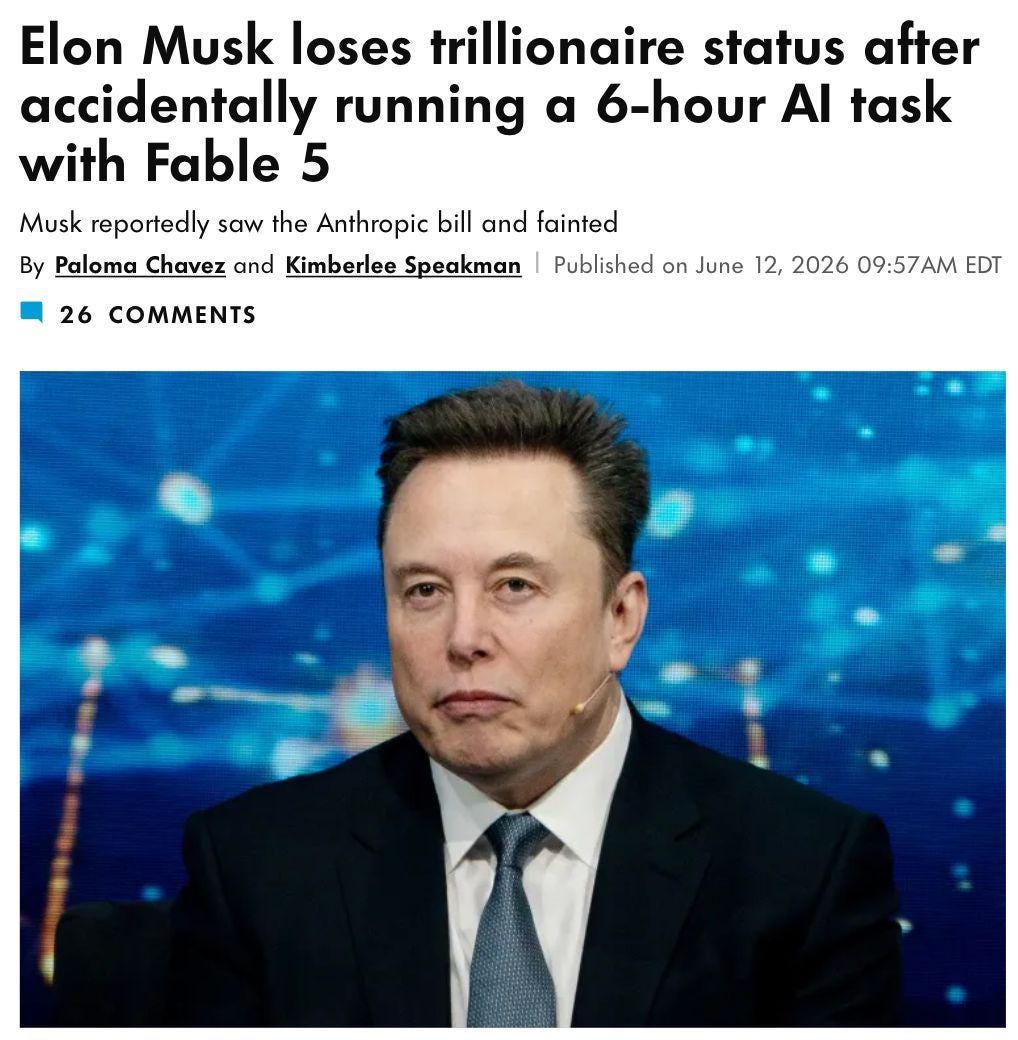
Anthropic released the most capable model in its history and watched its largest investor trigger a government shutdown of it three days later. The company that bankrolled you, hosts your models, and supplies your chips is also the reason your best product is offline. This is what AI infrastructure dependency actually looks like.
Source: Anthropic
SpaceX Buys The AI Coding Layer — $60B for Cursor, Four Days After the IPO 🚀
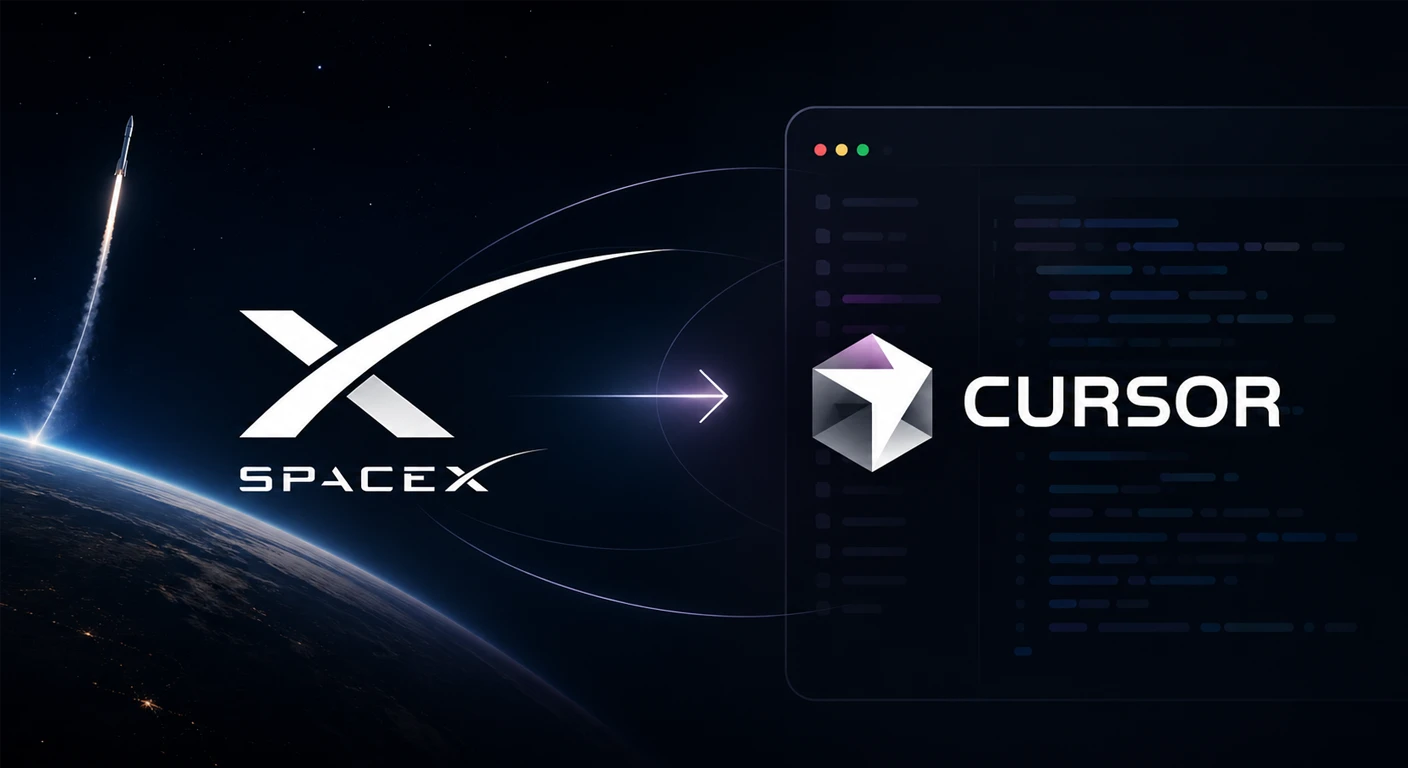
SpaceX exercised its option to acquire Anysphere — the company behind Cursor — for $60 billion in stock on June 16. The announcement came four days after SpaceX’s record-setting Nasdaq debut.
This was not a surprise acquisition. SpaceX had disclosed the option in its IPO filing: pay $10 billion for a compute and model collaboration, or exercise the right to buy Cursor outright for $60 billion later in 2026. After its IPO raised $75 billion at a $1.75 trillion valuation, SpaceX chose the full acquisition. The all-stock transaction means SpaceX used the currency of its sky-high valuation rather than the cash it just raised.
What Cursor brings:
Cursor had been growing toward a $50 billion valuation in a funding round that never closed. The acquisition brings $2.6 billion in annualized B2B revenue, 4 million+ active developer users, and a codebase of proprietary coding models that SpaceX says it has been jointly training with xAI for months. Backed by Andreessen Horowitz, Thrive, Nvidia, and Google — the cap table reflects how many major players had already bet on Cursor as the winner of the AI coding agent race.
The xAI integration:
xAI, which SpaceX acquired in February 2026, gains both Cursor’s developer distribution and its data. Cursor users generate an enormous stream of coding context — requests, design decisions, debugging sessions — that xAI can use to train Grok for code. SpaceX says it will release a new AI model on Cursor and that Grok Build, xAI’s coding agent, will be available to Cursor users. SpaceX shares jumped 10% on the announcement, adding roughly $250 billion to a market cap already above $2.5 trillion.
What it means for Cursor users:
The transaction is expected to close in Q3 2026. Until then, Cursor continues to operate normally. After closing, Grok models will be available within Cursor alongside Claude and GPT-5.5. The 90-day termination clause in SpaceX’s compute deals with Anthropic and Google remains — if Grok Build adoption scales, SpaceX could redirect capacity it currently rents to its competitors.
The competitive read:
Anthropic and OpenAI have been building their own coding agents — Claude Code and Codex. Now xAI, through Cursor’s distribution, has 4 million developers already in its funnel. Microsoft’s GitHub Copilot has 30 million users. The coding agent market just consolidated around four players: Claude Code, Codex, Copilot, and Cursor/xAI.
SpaceX used the valuation premium from its IPO to buy the most popular AI coding agent on the market four days after listing. The deal costs SpaceX a small slice of equity that would have been worth far more to Cursor’s investors at any point in the last year. Welcome to the era of trillion-dollar acqui-hires.
Source: Reuters
OpenAI Recruits McKinsey’s Army 🏢
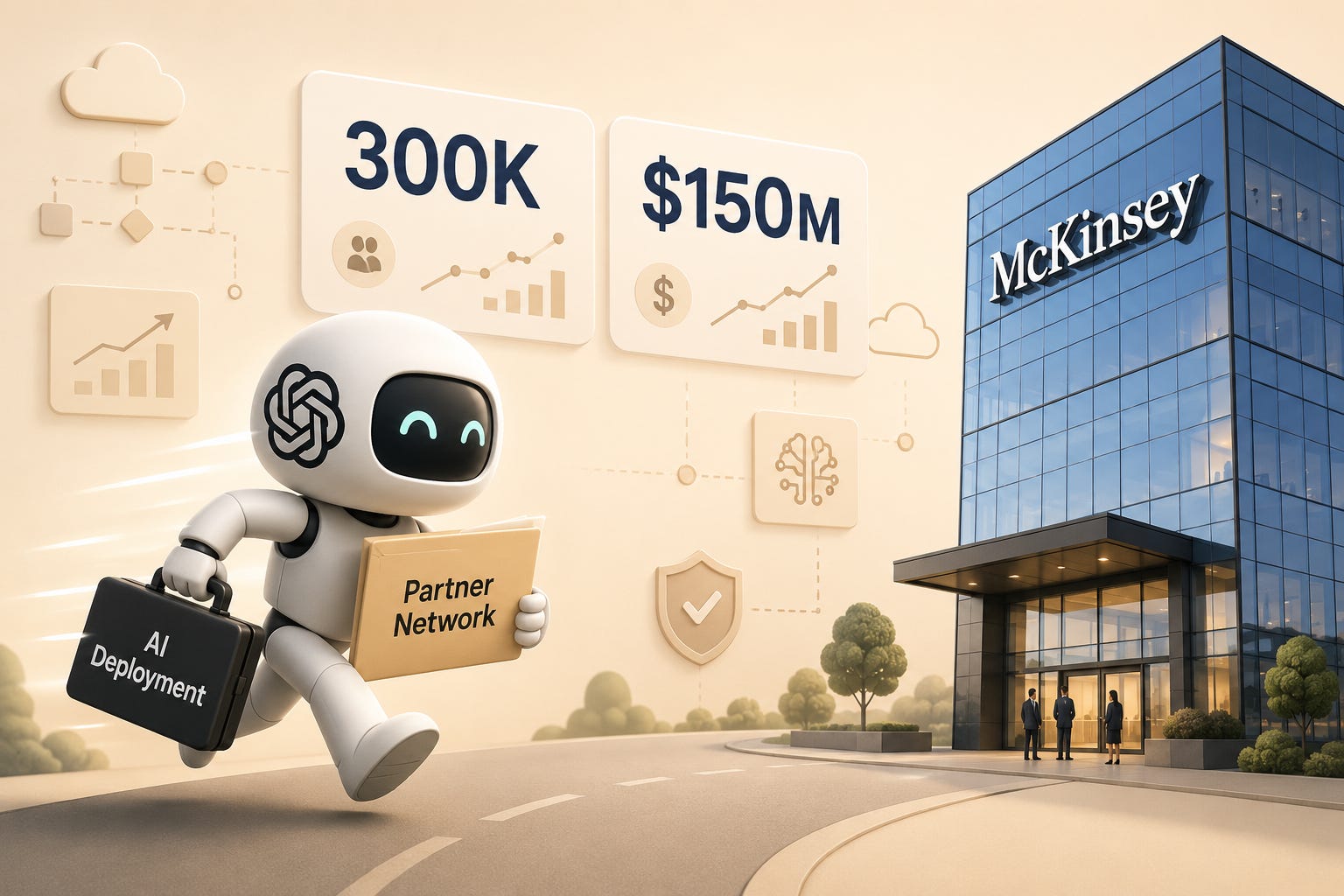
On June 14, OpenAI launched its first formal global partner program — the OpenAI Partner Network — backed by a $150 million investment and a target of 300,000 certified consultants by December 31, 2026.
The launch partners are not startups. They are Accenture, Bain & Company, BCG, McKinsey, and PwC — the five largest management consulting firms in the world — plus systems integrators and technology specialists. Together they represent tens of thousands of enterprise relationships, decades of C-suite access, and the sales infrastructure that has driven adoption of every major enterprise software platform since SAP.
Why OpenAI built this:
The framing in OpenAI’s announcement is direct: “The limiting factor for seeing value from AI in the enterprise is no longer model capabilities. Instead, it’s how organizations repeatably identify the right use cases, redesign workflows, integrate with existing systems, and drive adoption and change management at scale.” OpenAI is saying that the model race is effectively over at the enterprise level, and the new race is for implementation.
The certification architecture:
Three tiers — Select, Advanced, Elite — with progression based on sales performance, technical capability, and deployment experience. Partners can earn specializations in Codex, cybersecurity, and agents. An elite Codex specialization will mean something in an enterprise RFP the same way a Salesforce certification did in the 2000s. OpenAI is also piloting a Forward Deployed Experts program that embeds qualified partner practitioners directly with OpenAI’s own Forward Deployed Engineering teams — granting access to proprietary deployment playbooks.
The competitive context:
Anthropic launched the Claude Partner Network in March 2026 with a $100 million investment. By mid-June it had certified 10,000+ consultants and attracted 40,000+ company applicants. OpenAI’s program targets 30× the certified consultant count. The 11-day gap between Anthropic formalizing its partner hub (June 3) and OpenAI’s launch (June 14) is not a coincidence.
Early results from partners:
Paychex, working with Bain: 80% reduction in wait times vs human processing on a payroll automation workflow. T-Mobile, working with Accenture: real-time intent and sentiment analysis for customer interactions. eBay, working with boutique partner Artium: next-generation customer service platform with human-AI tandem model.
OpenAI just turned McKinsey’s distribution machine into a channel for ChatGPT Enterprise. The 300,000 certified consultants target is not a training goal — it’s a moat. Every consultant who builds their practice on OpenAI certification faces meaningful switching costs if Anthropic or Google offer better pricing. This is how you build enterprise lock-in at scale.
Source: OpenAI
News of the week 🌍
SpaceX Lists on NASDAQ — $75B Raised, the Largest IPO in History 🚀 — SpaceX priced at $135/share on June 11 and debuted June 12 on NASDAQ under ticker SPCX — raising $75 billion, eclipsing Saudi Aramco’s 2019 record as the largest public offering ever. Merged with xAI in February. For the 12 months ending March 2026: $19.3B revenue, net loss ~$3.4B. Musk retains 82%+ voting control. The listing values SpaceX at roughly $1.75 trillion — 7th largest US company, above Tesla.
Google DeepMind Publishes Its Plan to Protect Itself From Its Own Rogue AI Agents 🤖 — Google DeepMind released a formal framework for what happens when AI agents act outside their intended scope: behavioral monitoring layers, automated rollback triggers, and human-in-the-loop checkpoints for high-stakes actions. The timing is striking — the same week Anthropic’s models were pulled offline over a declared safety concern, Google’s own safety team published a preemptive containment blueprint.
Google's Gemini Co-Lead and "Attention Is All You Need" Co-Author Leaves for OpenAI 🧠 — Noam Shazeer — co-lead of Google Gemini, one of eight co-authors of "Attention Is All You Need" (the 2017 paper that launched the Transformer era), and a key figure in Google's LLM research since the early BERT days — left Google this week to join OpenAI. Google had paid over $2.7 billion to bring him back from Character.AI in 2024. He's now gone again. Google losing Shazeer is not a talent note — it's a structural signal about which lab researchers believe has the most interesting pre-training work ahead.
54 Cybersecurity Experts Demand the US Restore Fable 5 Access 🔐 — A coalition of 54 security researchers and AI experts — including bug bounty pioneer Katie Moussouris and former US government officials — published an open letter to the Trump administration on June 13 demanding the Fable 5 directive be reversed. The letter argues the action “has taken the best models away from defenders, created market uncertainty, and risked America’s AI leadership without any real risk to justify it.” Full letter and signatories at freefable.org.
OpenAI Launches Enterprise Spend Controls — Usage Tracking by User and Model 💼 — Published June 18. ChatGPT Enterprise admins can now track credit usage by individual user, product, and model; set default limits per user or group; configure group-level overrides; and create individual exceptions. For any org running ChatGPT Enterprise with multiple teams — this is the budget layer that was missing.
Share this post with friends, especially those interested in AI!
Useful tools ⚒️
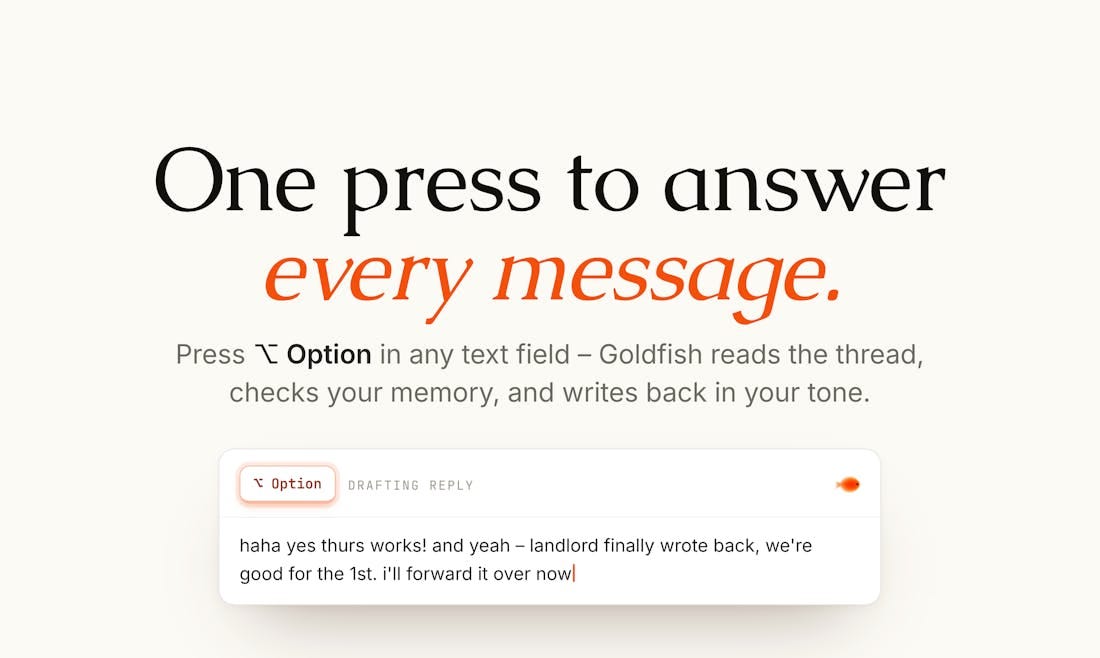
⭐ Goldfish — AI memory that lives on your Mac. Goldfish privately remembers what you’ve been working on across every app — documents, emails, Slack threads, code — and surfaces it the moment you need it. Press ⌥ Option in any text field and it drafts replies, rewrites sentences, or recalls important context from your recent work without you explaining the backstory. No pasting docs, no re-explaining your situation. The tool tracks context across your Mac locally. Creator Joel Edholm calls the approach “contextmaxxing.” Free during alpha.
Framer 3.0 — Framer now ships AI agents that live inside your canvas and design — not suggest, design. Drop a brief and agents build full pages, create components, write code, connect your CMS, and handle SEO. Agents plug directly into Claude Code and Cursor, inside your actual component system, without breaking it. Also launching: Branching (try ideas before publishing, like Git for your site), and the new Framer Community for creators to share work and earn from it.
Upstream — An inbox built for teams where humans and AI agents both send and receive. Upstream routes messages intelligently: AI agents handle the routine, flag the important, and hand off to humans when judgment is needed — all in one interface. Works with Gmail, Slack, and Intercom. Built for customer-facing teams and operators running agentic workflows who are tired of switching between their AI tool and their inbox.
Novu Connect — Ship your AI agents’ notifications to wherever your users already live: email, Slack, Discord, push, SMS, in-app — in a single integration. Instead of building separate notification logic for each channel, Novu handles routing, templating, and delivery across all of them. Open-source, 65K+ GitHub stars, and the new Connect layer makes adding agent-triggered notifications a single function call. Free tier available.
Honestly — See what Reddit and TikTok actually think about your product — not curated reviews, not NPS scores, but the real unfiltered conversation. Honestly monitors relevant communities and surfaces posts, threads, and comments about your product in near real-time, organized by sentiment and theme. For any founder trying to understand how they’re perceived outside their own channels: this is the signal your review platforms aren’t giving you.
Weekly Guides 📕
How to Hire and Manage AI Agents: GSTACK and Paperclip — Our own deep dive from June 18. Two open-source tools that went viral this year answer the same question from opposite ends: GSTACK (97K GitHub stars, from YC president Garry Tan) adds judgment to one agent via 23 slash commands — /review, /qa, /ship, /cso — that fill the roles a solo developer doesn't have. Paperclip (67K stars) is the management layer for many agents: org charts, per-agent budgets with hard stops, audit logs, and a heartbeat scheduler. Includes day-one install instructions for both, two real setups worth stealing, and the honest catch nobody in the "zero-human company" pitch mentions.
Framer 3.0 AI Agents: Getting Started — Official Framer Learn — Framer’s official tutorial for the 3.0 agent capabilities: how to prompt agents on the canvas, how to connect Claude Code and Cursor to your component system, how to use Branching before publishing to protect your live site, and how Community monetization works. The practical entry point before you touch 3.0 in production.
Your Agent Config Files Are Wasting Tokens — Here’s What To Fix — Researchers published a practical analysis on June 17 showing that bloated, poorly structured AGENTS.md and system prompt files are the single biggest source of wasted tokens in production agent deployments. The piece covers: what “smelly” config patterns look like, why less context beats more context for agent performance, and a checklist for auditing your own config files. Required reading before your next Claude Code or Codex session.
Claude Code with Opus 4.8: How to Keep Your Agentic Workflows Running While Fable 5 Is Offline — Anthropic's official Claude Code documentation, updated this week to reflect the Fable 5 suspension. Covers which models are currently available, how Dynamic Workflows operates under Opus 4.8 (same up to 1,000 parallel subagents), what changes when routing to Fable 5 vs Opus 4.8, and how to adjust your context window and cost settings for the current model configuration. The essential reference for any team whose workflows depended on Fable 5 and need to keep shipping this week.
ChatGPT Scheduled Tasks: What's New and How to Set It Up — Practical June 17 breakdown of the Scheduled Tasks update: how the new Scheduled page works, how to create monitoring tasks (not just reminders) that watch the web or your connected apps and notify you only when something changes, how to set broad time windows instead of exact times, and tier availability (Plus, Pro, Business, Enterprise). Pulse is being sunset — this replaces it. Free for your tier if you're already a paid ChatGPT subscriber.
AI Meme of the Week 🤡
AI Tweet of the Week 🐦

Bonus Materials 🎁
Estonia Will Give AI Agents Legal Digital IDs — The First Country to Do It — Estonia — the country that pioneered digital citizenship for humans — is extending the same framework to AI agents. Agents will receive cryptographic digital identities allowing them to enter into contracts, access government services, and operate legally across the EU. The headline is “Estonia does something quirky again.” The implications are not: this is the first legal framework in the world where an AI agent has recognized personhood for transactional purposes. Published June 18 by The Register.
AI and a Brain-Computer Interface Let a Speechless ALS Patient Work a Full-Time Job — Published June 16. A patient with ALS who cannot speak used a BCI implant combined with an AI language model to return to full-time work this week. The system translates neural signals into text fast enough for real-time professional communication. The most concrete demonstration yet of AI as an accessibility technology — not a productivity tool, not a coding assistant, but a voice for someone who no longer has one.
Anne Hathaway: “Nobody on That List Gets the Job” — On ChatGPT-Written Thank You Notes — Anne Hathaway told Fortune she was spammed with ChatGPT-written thank you notes after hiring for a recent role. “The notes all started to sound exactly the same,” she said. “Nobody on that list gets that job.” Published June 18 — the most widely-shared anecdote of the week about what happens when everyone uses AI in exactly the same way at exactly the same moment.
Anthropic Is Still at Odds With the White House Over Claude Fable 5 — Wired’s sourced account of the White House meetings that followed the shutdown: Anthropic leaders flew to Washington, DC this week and met with US officials on Monday. After high-level talks, the two sides remain split on how significant the Fable 5 risk actually is. The most up-to-date read on where the standoff stands and what resolution might look like.
If you missed our previous updates, don’t worry, here they are:
Fable 5 Goes Public, Apple Bets on Google, OpenAI Follows to the SEC | Weekly Digest
Your take: Amazon triggered the government shutdown of the company it invested $13 billion in — and the company that hosts its models, supplies its compute, and built its enterprise business. Is this just regulatory caution, or is Anthropic’s biggest risk not OpenAI but the infrastructure it depends on? Drop it in the comments 👇