

Hey! Welcome to the latest Creators’ AI Edition.
Anthropic launched Fable 5 on June 9 — the first publicly available Mythos-class model, built on the same architecture that autonomously found zero-day exploits in major operating systems. Tim Cook gave his final WWDC keynote on June 8, revealed Apple is paying Google $1B/year for Gemini-powered Siri, and handed the company to John Ternus. And on the same day as WWDC, OpenAI filed its own S-1 with the SEC at $852 billion and announced it publicly before it could leak. Today we have:
Featured Materials 🎟️
News of the week 🌍
Useful tools ⚒️
Weekly Guides 📕
AI Meme of the Week 🤡
AI Tweet of the Week 🐦
(Bonus) Materials 🎁
Keep your mailbox updated with practical knowledge & key news from the AI industry!
Featured Materials 🎟️
Claude Fable 5: The Most Powerful AI Ever Made Available to the Public 🧠
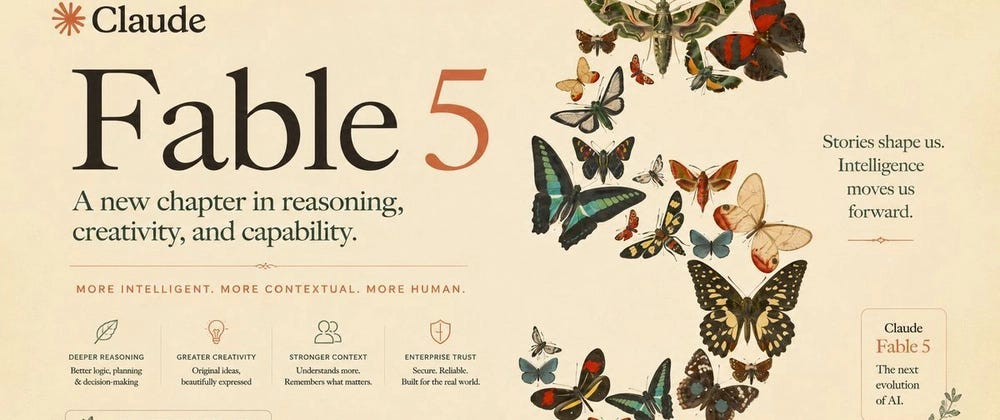
Anthropic released Claude Fable 5 on June 9 — the first publicly available Mythos-class model. It’s built on the same underlying architecture as Mythos 5, the model Anthropic has been running through Project Glasswing to find zero-day exploits in operating systems and web browsers. The only difference: Fable 5 has safety constraints tuned for general use. Both models are available as of today.
What ships:
Claude Fable 5 — available to everyone via the Claude API, Amazon Bedrock, Vertex AI, Microsoft Foundry, and GitHub Copilot. State-of-the-art on nearly all tested benchmarks. The larger and more complex the task, the larger its lead over Opus 4.8
Claude Mythos 5 — same underlying model, fewer safeguards. Restricted to approved organizations through Project Glasswing. Available on direct Anthropic, AWS, and Google Cloud enterprise tracks
Pricing: $10/M input, $50/M output — double Opus 4.8, less than half the Mythos Preview rate
Free on Pro/Max/Team/Enterprise from June 9 through June 22, then moves to usage credits
The safety architecture:
In cybersecurity, biology, chemistry, and distillation, Fable 5 automatically routes to Opus 4.8. Anthropic stress-tested the classifiers with external bug bounty red teamers: no universal jailbreaks in over 1,000 hours. The fallback triggers in under 5% of sessions on average.
The context:
Anthropic published “When AI Builds Itself” on June 4 — the week before Fable’s launch. The post, co-authored by co-founder Jack Clark, confirmed that Claude now authors over 80% of code merged into Anthropic’s own production codebase, with engineers shipping 8× more code per day than in 2024. The core warning: AI systems may be approaching full recursive self-improvement — the ability to build their own successors without human direction. Anthropic called for a coordinated “brake pedal” among frontier labs. Five days later, it released its most capable model to the public.
TechCrunch framed it accurately: “Anthropic released Claude Fable, a version of Mythos, days after warning AI is getting too dangerous.” This is not a contradiction — it’s a bet. Anthropic believes controlled public access to Fable 5 is safer than leaving it in the lab while competitors race forward without the safety constraints.
Source: Anthropic
💡 While you’re here: Anthropic doubled Cowork usage limits on all paid plans through July 5. Enterprise users get $1,000 in credits per first-time Claude Code or Cowork activation through July 2 (up to $10M per org). Fable 5 is also free on Pro/Max/Team through June 22. Details →
Tim Cook’s Last WWDC — Apple Pays Google $1B/Year for Siri’s New Brain 🍎
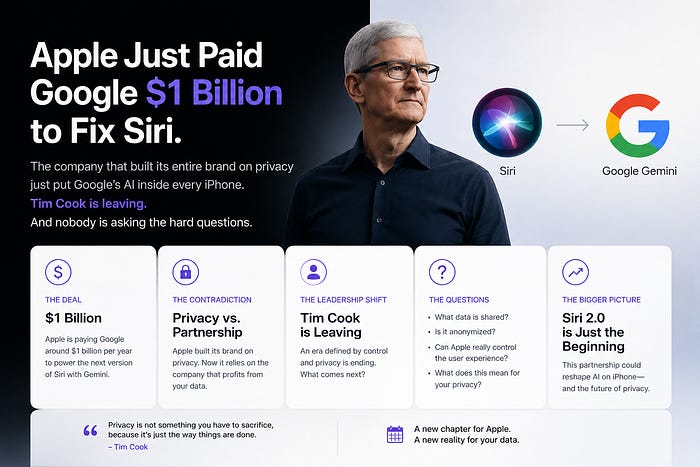
Tim Cook gave his final WWDC keynote on June 8 after 15 years as CEO of Apple. He announced he will step down on September 1, 2026 — ending his tenure with a moment that was emotional enough that he wiped a tear on stage. John Ternus, Apple’s Senior VP of Hardware Engineering, takes over.
The headline product of the keynote: Siri rebuilt from scratch using Google Gemini foundation models, under a deal that costs Apple approximately $1 billion per year.
What Apple announced:
Rebuilt Siri — conversation history, personal context awareness, on-screen awareness, dedicated Siri app. Rebuilt on Apple Foundation Models (AFM), with the top-tier AFM Cloud Pro running on Nvidia GPUs inside Google Cloud
The Google partnership — Apple and Google’s collaboration produced the AFM model stack. AFM Cloud Pro is described as similar in quality to Gemini Frontier models. The partnership costs Apple roughly $1B annually
iOS 27 — Beta 1 shipped to developers the same day. SiriKit is on a formal deprecation clock: plugins must migrate to App Intents by April 2027 or lose Siri integration
Free Foundation Models for small developers — Apple is giving small app developers free access to its Foundation Models API via Private Cloud Compute during beta
iPhone Fold hints — foldable layout APIs are quietly present in iOS 27 Beta 1, pointing to Ternus’s likely first hardware launch in 2027
Tim Cook’s final word:
“Over the years, you have helped people connect, create, learn, and experience the world in extraordinary new ways. And with the incredible capabilities we introduced today, and so many more still to come, I truly believe the best is still ahead.”
Craig Federighi’s indirect shot at competitors: “Some appear to be racing forward, seemingly pursuing AI for the sake of AI, without clear regard to the people, all of us, that it’s ultimately meant to serve.”
What it means:
Apple just moved from embarrassment about Siri to one of the most significant AI distribution deals ever. Google is now the AI infrastructure for 3 billion Apple devices — a distribution win no marketing budget could replicate. For app developers: you have roughly 10 months to audit and migrate any SiriKit integration before it starts breaking.
Tim Cook’s last WWDC delivered Apple’s biggest AI pivot in its history. He paid Google $1 billion to fix what two years of Siri promises couldn’t. Whether this is Apple admitting Google won AI infrastructure, or Google admitting it needs Apple’s distribution to reach consumers — both are true at the same time.
Source: CNBC
OpenAI Files S-1 at $852B — “We Expect It to Leak, So We’re Just Announcing It” 📄

On June 8 — the same day as Apple’s WWDC and seven days after Anthropic’s filing — OpenAI submitted a confidential draft S-1 registration statement to the SEC. The company announced it publicly before the filing could surface through regulatory channels. Their statement read: “We recently submitted a confidential S-1. We expect it to leak, so we’re just announcing it.”
The numbers behind the filing:
Valuation: $852B post-money (from March 2026 round of $122B raised)
ARR: $20B+ in 2025, tripling year-over-year since 2023
Projected loss in 2026: $14 billion
Profitability target: 2029
Underwriters: Goldman Sachs, Morgan Stanley, JPMorgan
Listing target: September 2026 — but “timing is undecided”
The IPO race context:
Anthropic filed June 1 at $965B. OpenAI filed June 8 at $852B. SpaceX listed June 12 at a $1.75T+ valuation. Three companies that define the AI infrastructure stack moved toward public markets in two weeks. The combined implied market cap exceeds $3.6 trillion before any of them has disclosed audited public financials. Whoever prices first sets the benchmark for how the others trade at debut.
What the S-1 signals for builders:
Public companies optimize for margin and predictability. The API pricing, model deprecation schedules, and free tier structures that exist today are pre-IPO positioning. Once quarterly earnings calls begin, every cost structure gets re-examined. OpenAI’s S-1 going public means the era of subsidized frontier AI access has a visible expiration date on the calendar.
OpenAI decided to announce its own IPO filing before it could leak, which is either extremely confident or extremely well-timed press management. Given that it filed on the same day as Apple’s biggest keynote in a decade, one of those is probably more accurate than the other.
Source: OpenAI
Share this post with friends, especially those interested in AI!
News of the week 🌍
SpaceX Lists on NASDAQ — $75B Raised, the Largest IPO in History 🚀 — SpaceX priced at $135/share on June 11 and debuted June 12 on NASDAQ under ticker SPCX — raising $75 billion, eclipsing Saudi Aramco’s 2019 record as the largest public offering ever. The company merged with xAI in February, making Grok and xAI’s AI infrastructure part of the SpaceX entity. For the 12 months ending March 2026: $19.3B revenue, net loss ~$3.4B. Musk retains 82%+ voting control. The listing values SpaceX at roughly $1.75 trillion — 7th largest US company, above Tesla. Anthropic, OpenAI, and SpaceX all entering public markets in the same two-week window is without precedent in tech history.
OpenAI + Visa: AI Agents Can Now Make Purchases on Your Behalf 💳 — At the Visa Payments Forum in San Francisco on June 10, Visa and OpenAI announced a partnership to embed Visa’s payment infrastructure directly into ChatGPT and OpenAI’s agentic platforms. AI agents running in ChatGPT will be able to initiate and complete purchases using tokenized Visa credentials, within user-defined spending limits, merchant category restrictions, and approval requirements. Visa handles authorization and real-time fraud monitoring. This is the first time a major card network has formally built its infrastructure around agent-initiated transactions — not just AI-assisted recommendations, but AI completing the purchase.
Microsoft's Open Source Developer Tools Were Hacked to Steal AI Developer Passwords 🔐 — On June 8, security researchers disclosed a supply chain attack targeting Microsoft-maintained open source packages used by AI developers running Claude Code, GitHub Copilot, and related LLM tooling. Malicious code was injected to steal credentials from developers' machines. Microsoft issued patches immediately. If you run Claude Code or Copilot in environments using npm packages from the Microsoft devtools ecosystem — audit your dependencies and rotate credentials. The attack is notable because it specifically targeted AI developer tooling rather than general-purpose packages.
Google Fires a Warning Shot in the AI Subscription Price Wars 💰 — On June 9 — the same day Apple revealed Siri now runs on Google Gemini — Google cut its AI Ultra subscription from $250/month to $150 and introduced a new $99/month tier with access to Gemini Omni and Spark. OpenAI Pro stays at $200/month. Anthropic Max at $100/month. Google is now the cheapest premium AI subscription by a significant margin — and unlike OpenAI or Anthropic, Google doesn’t need the margin. It needs the subscribers. For any creator or founder paying for an AI subscription: the competitive floor on premium AI just dropped, and it dropped the same week Fable 5 launched at $50/M output tokens.
Cybersecurity Researchers Aren't Happy About Fable 5's Guardrails ⚠️ — The day after launch, security professionals reported the classifiers are blocking legitimate defensive work — CVE analysis, pentest report generation, and queries about previously disclosed vulnerabilities. Anthropic acknowledged the guardrails are intentionally conservative at launch. For anyone building security tooling on Claude: this covers which query types are being blocked, what the fallback to Opus 4.8 looks like in practice, and Anthropic's stated timeline for reducing false positives.
Useful tools ⚒️
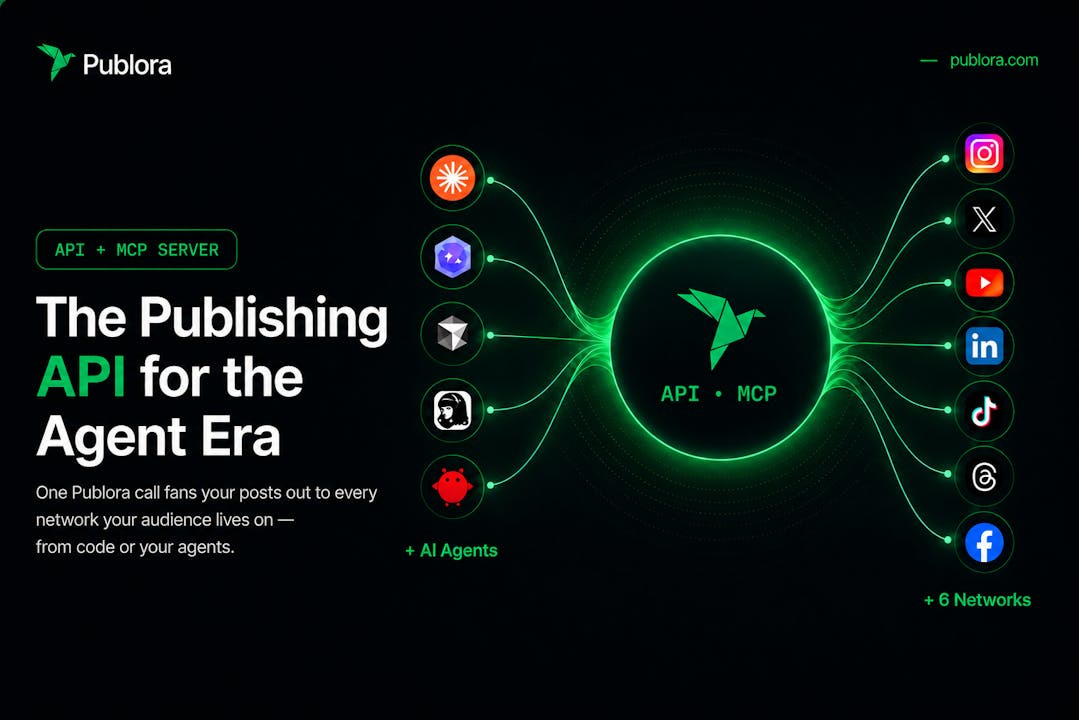
⭐ Publora — A publishing API for AI agents across 10 social platforms. One REST API call handles multi-network distribution — no SDKs, no OAuth wiring per platform. The native MCP server gives Claude, Cursor, and any MCP-compatible agent a full engagement loop: post, comment, react, pull analytics — across LinkedIn, X, Instagram, Threads, TikTok, YouTube, Facebook, Bluesky, Mastodon, and Telegram. 18 tools total. If you’re building any agentic social media workflow, this is the API that removes the integration layer entirely. Free plan available.
Honen — Turn your team’s docs, recordings, and SOPs into interactive AI-led training that actually stays current. Upload your knowledge base or just a topic — Honen generates full courses with adaptive lessons, scenario simulations, and learner insights. When your docs or processes change, the courses update automatically. Serves the same knowledge over MCP to your AI agents simultaneously — your human team and your agent stack trained on the same source of truth. Built by the StudyFetch team (8M student users).
Browse.sh — An open catalog of browser automation skills for AI agents. Instead of relearning a website from scratch every session, your agents install reusable SKILL.md recipes that give them muscle memory — 250+ workflows across real sites: Ramp expense submissions, GitHub PR reviews, campsite booking, and more. When a skill doesn’t exist, Browse.sh can generate one. Built by Browserbase, open source, free.
Shram — AI inbox for conversations that never got finished. Shram listens across your Mac — Gmail, Slack, WhatsApp, GMeet — and surfaces incomplete threads before they slip: deals not closed, projects delayed, trust broken by silence. One click to resolve. No integrations required, no setup.
Vaani — AI video dubbing that preserves your actual voice across 40+ languages. Vaani clones your voice, maintains your music and tone, and delivers frame-accurate lip sync — not a generic AI voice reading your script. Upload a video, pick a language, get back a version that sounds like you recorded it that way. Built for creators, brands, and media companies. Free options available.
Weekly Guides 📕
The Moat Is Dead. Long Live Taste. — Our own guest post published June 9 by Raffaela Rein (BoardLens). Why the model layer is no longer a competitive advantage — and what is. Three concrete moves for this week: write down your filter in one sentence, cut your next drop in half, and sign every drop. The most actionable framework we've published for creators trying to build durable advantage in an AI-first world.
Claude Fable 5 System Card — Full Safety Testing, Benchmark Comparisons, and Classifier Architecture — Anthropic’s 120+ page technical documentation: how the safety classifiers work (cybersecurity, biology/chemistry, distillation), what evaluations were run (Firefox exploit, OSS-Fuzz, CyberGym, CyScenarioBench), full benchmark comparisons against GPT-5.5 and Gemini, the alignment assessment methodology, and the 30-day data retention policy for all Mythos-class traffic. The definitive technical resource for any team deciding whether Fable 5 is appropriate for their use case. Published June 9.
WWDC26 for Founders and Developers: What You Need to Actually Do Before September — The most practical post-WWDC breakdown published this week: what SiriKit deprecation means for your app, how to apply for the Foundation Models free tier, what the App Intents migration actually involves, why the iOS 27 foldable APIs matter for hardware roadmaps, and two specific actions to take before September’s App Store submission deadlines. Written for founders and developers, not journalists. Published June 9.
Claude Fable 5 vs Opus 4.8: When Is 2× the Price Worth It? — Exact decision framework: same vendor, same API, 2× cost premium. Five workflow types where Fable 5 pays off (long-context reasoning, autonomous coding, vision tasks) vs. five where Opus 4.8 still wins. Includes the real-world token math — why the 35% tokenizer multiplier and Opus 4.8 Fast Mode's new $10/$50 rate make this choice less obvious than it looks. The calculation every team should run before June 22.
Apple Will Let You Build Workflows Using AI in Its New Shortcuts App — No Scripting Required — Published June 8. The new iOS 27 Shortcuts app lets you describe what you want to automate in plain English and it builds the workflow — no scripting, no code. Covers what triggers and actions are now available, what changed in the Shortcuts interface, and which automations non-developers can build that previously required a developer. For any creator or founder running on Apple devices: this is the most immediately actionable WWDC 2026 announcement, and the migration window before SiriKit dies in April 2027 starts now.
AI Meme of the Week 🤡
AI Tweet of the Week 🐦

Bonus Materials 🎁
It’s Not FAANG Anymore. It’s MANGOS. — TechCrunch’s Most-Read Business Analysis of the Week — TechCrunch’s viral June 9 analysis on how the Big Tech hierarchy has reshuffled. FAANG — Facebook, Apple, Amazon, Netflix, Google — is obsolete. The new dominant group: Microsoft, Apple, NVIDIA, Google, OpenAI, SpaceX. Their combined implied market cap exceeds $15 trillion. Their intersecting relationships (Microsoft/OpenAI, Google/Apple, NVIDIA/everyone) now define AI infrastructure and distribution. The list has zero media companies on it. The most-shared framing of what this week’s IPO wave actually means for the industry structure.
OpenAI’s “Built to Benefit Everyone” — The Vision Essay Published the Same Day as the S-1 — Published June 8 alongside the IPO filing: OpenAI’s statement on what it believes it’s building and why it deserves to be a public company. Worth reading as the document OpenAI wants investors and regulators to read before they read the actual financials — and for the contrast with Anthropic’s parallel recursive-self-improvement warning the same week. One company filed saying “AI may be approaching its own self-improvement threshold and we need a global brake pedal.” The other filed saying “AI should benefit everyone.” Same week. Both going public.
How Retail Investors Can Buy Into the SpaceX IPO — And Why $22B Was Set Aside for Them — SpaceX carved out 30% of its IPO — roughly $22.5 billion — specifically for retail investors via Robinhood, Fidelity, Schwab, SoFi, and E*TRADE. That's 5–6× the typical retail slice in a megacap IPO. Fortune's practical breakdown: how to request an allocation, which broker has the lowest minimum, the "flip penalty" (sell within 15 days and you're banned from future IPOs at Fidelity), and what to expect if your request gets only partially filled. For any subscriber curious about actually getting in — this is the guide. Published June 8.
If you missed our previous updates, don’t worry, here they are:
Anthropic IPO, Microsoft’s Own AI, Meta Agents in WhatsApp | Weekly Digest
Your take: Fable 5 is public, Tim Cook is out, OpenAI announced its own IPO before it could leak. Is this the week AI stopped being a research race and became a public market — or just the most chaotic news week of 2026 so far? Drop it in the comments 👇