

Hey! Welcome to the latest Creators’ AI Edition.
This week, Anthropic stopped being a model company and became a platform. Google quietly signed the Pentagon deal that Anthropic walked away from — then delivered the biggest Workspace update in years. Anthropic’s lawyers filed a lawsuit against the Trump administration. A Block data scientist blew up Jack Dorsey’s AI-cuts narrative. And NASA used Claude to drive a rover 400 meters on Mars. Let’s get into it.
Featured Materials 🎟️
News of the week 🌍
Useful tools ⚒️
Weekly Guides 📕
AI Meme of the Week 🤡
AI Tweet of the Week 🐦
(Bonus) Materials 🎁
Keep your mailbox updated with practical knowledge & key news from the AI industry!
Stop writing test scripts. Let AI do it for you.
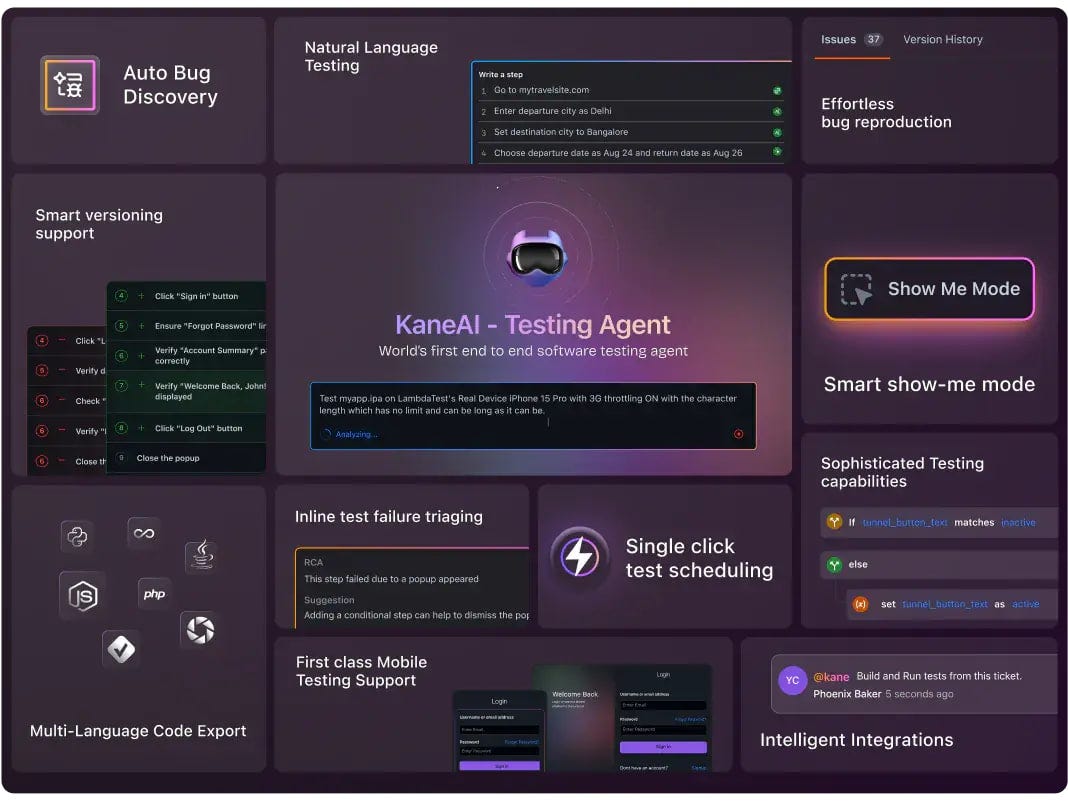
KaneAI by TestMuAI is the world’s first GenAI-native test agent. Describe what you want to test in natural English - KaneAI writes, runs, and maintains the tests for you. No code. No flaky scripts. No more wasted hours on manual QA.
Built for modern engineering teams who need to move fast without breaking things. From API testing to accessibility checks - KaneAI handles it all, end to end.
Try it free →
Featured Materials 🎟️
Anthropic Launches Claude Marketplace — And Becomes a Platform Company 🏪
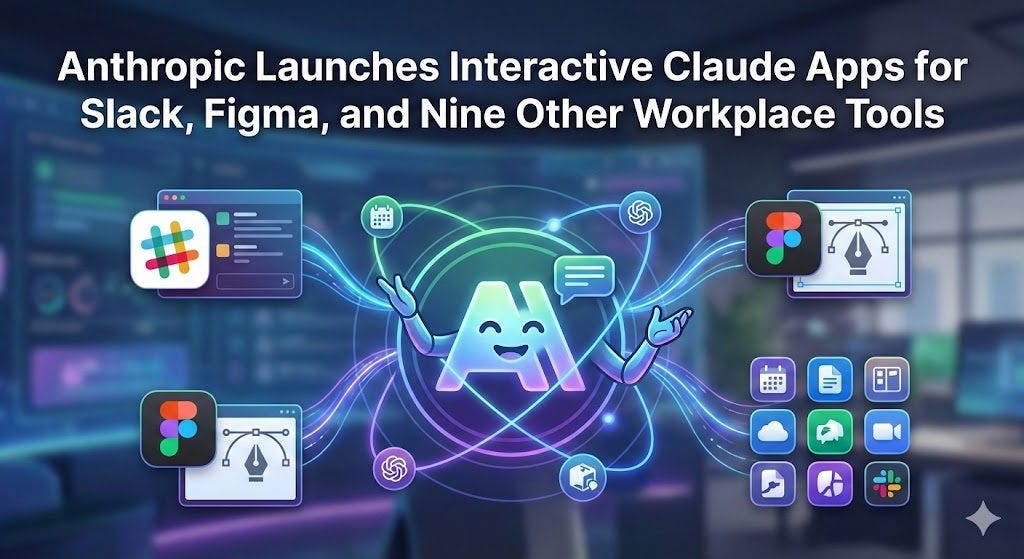
On Saturday March 8, Anthropic quietly launched something that changes its competitive position more than any model release: the Claude Marketplace. It’s an enterprise app store where companies with existing Anthropic spend commitments can apply that budget toward Claude-powered tools built by third-party developers — without separate procurement processes for each vendor.
The launch partners are:
GitLab — deploy agentic AI across the entire software development lifecycle
Harvey — AI-native legal workflows
Lovable — full-stack vibe coding platform
Replit — AI software development
Rogo — financial research and analysis
Snowflake — data cloud + Claude integrations
Why this matters more than it looks:
Anthropic’s run-rate revenue recently surpassed $19 billion — more than double three months prior. The marketplace is a direct attempt to extend that momentum before competitors build their own distribution layers.
The logic is exactly what made Salesforce AppExchange, AWS Marketplace, and ServiceNow Store into competitive moats: if you control where enterprises discover and buy AI tools, you don’t just sell models — you become the operating system. Cox Automotive’s Chief Product Officer put it plainly: the marketplace lets teams move faster by extending their Anthropic investment into partner tools without managing separate procurement for each.
The platform bet:
OpenAI has the GPT Store. Microsoft integrates third-party agents into Copilot. Google is building out its agent ecosystem through Vertex AI. Anthropic’s move is modeled on Amazon’s distribution architecture — and by positioning Claude as both the model and the marketplace for enterprise software built on it, Anthropic is making a direct play for the distribution moat.
Whether this gains traction depends on how quickly Anthropic expands beyond six launch partners. But the intent is clear: the next phase of the AI race isn’t just about who has the best model. It’s about who controls the ecosystem around it.
For creators and builders: If you’re building AI-powered products, being inside this marketplace eventually means reaching companies that have already committed budget to the platform. Watch this space — the first 30 days of partner announcements will tell you how fast Anthropic intends to move.
Source: PYMNTS | Product Hunt
Google Takes the Pentagon, Gemini Takes Google Workspace 🏛️
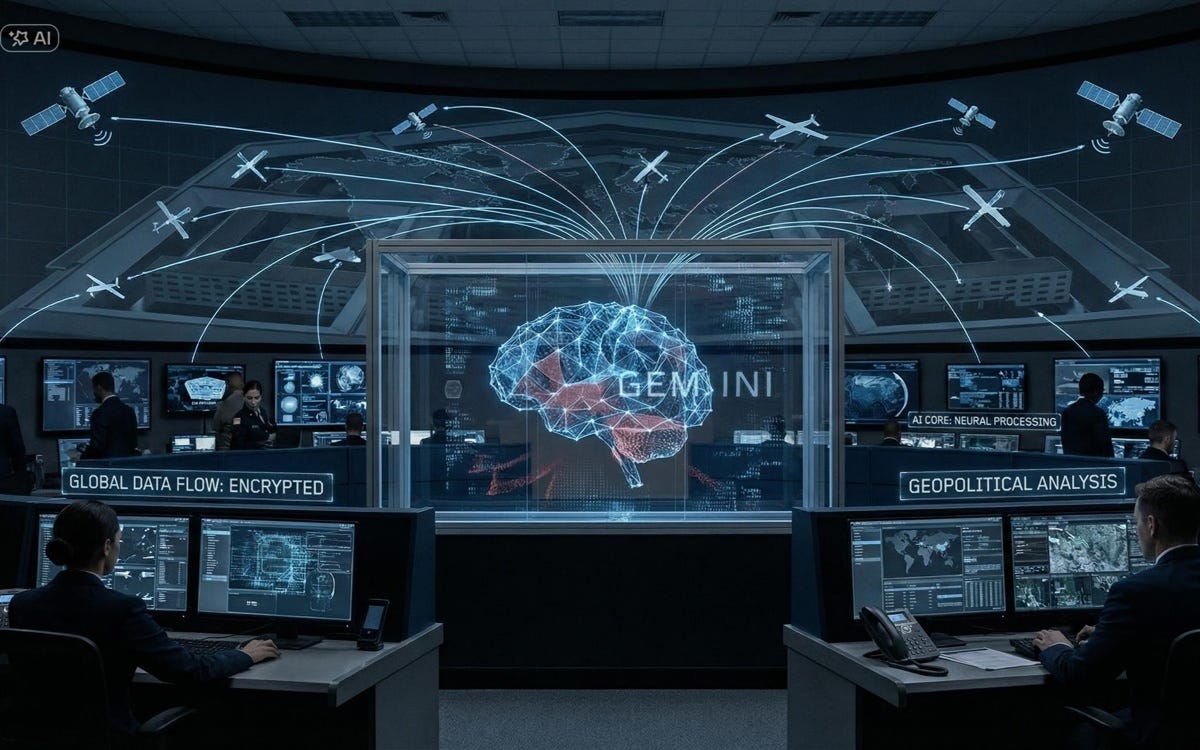
This week Google had the most productive seven days in its recent AI history. Two separate but thematically connected moves — one political, one product — showed exactly where Google is placing its bets.
The Pentagon deal:
On March 10, Bloomberg reported that Google is deploying Gemini AI agents across the Pentagon’s entire 3 million-person workforce — the exact contract Anthropic walked away from last week by refusing to waive its red lines on autonomous weapons and domestic surveillance.
Google’s Gemini agents will initially operate on unclassified networks, according to Emil Michael, the Under Secretary of Defense for Research and Engineering. The scale is unprecedented: this is a federal government essentially running AI agents as a standard tool across every desk in the Defense Department.
The contrast with Anthropic’s situation couldn’t be sharper. While Anthropic’s lawyers were filing a lawsuit to reverse its “supply chain risk” designation, Google was signing the largest government AI deployment in history.
The Workspace drop:
On the same day — March 10 — Google shipped arguably the most consequential Workspace update in years. Gemini is now deeply woven into Docs, Sheets, Slides, and Drive in ways that go beyond the usual “AI helper on the side.” Key new features:
Drive AI Overviews — natural language search now generates a summary at the top of results, with citations, before you open a single document
Ask Gemini in Drive — ask complex questions across your files, emails, calendar, and the web simultaneously
Help me create (Docs) — describe what you want and Gemini pulls from your Drive, Gmail, and Calendar to generate a personalized first draft
Match writing style — unify tone and voice across a document or team
Sheets from a prompt — build or edit entire spreadsheets from natural language, pulling data from across your files and messages
All features rolled out in beta to Google AI Ultra and Pro subscribers.
The practical implication: Google just made its office suite natively agentic. You no longer need a separate AI tool to work with your documents — your documents now know about your email, calendar, and other files by default.
For creators: If you’re heavy on Google Workspace, these features are worth testing immediately. The Drive AI Overviews alone could cut research time significantly. The catch: all of this lives behind an AI Ultra or Pro subscription.
Source: Bloomberg | TechCrunch | Google Blog
Anthropic vs. the Pentagon: The Lawsuit 🏛
️
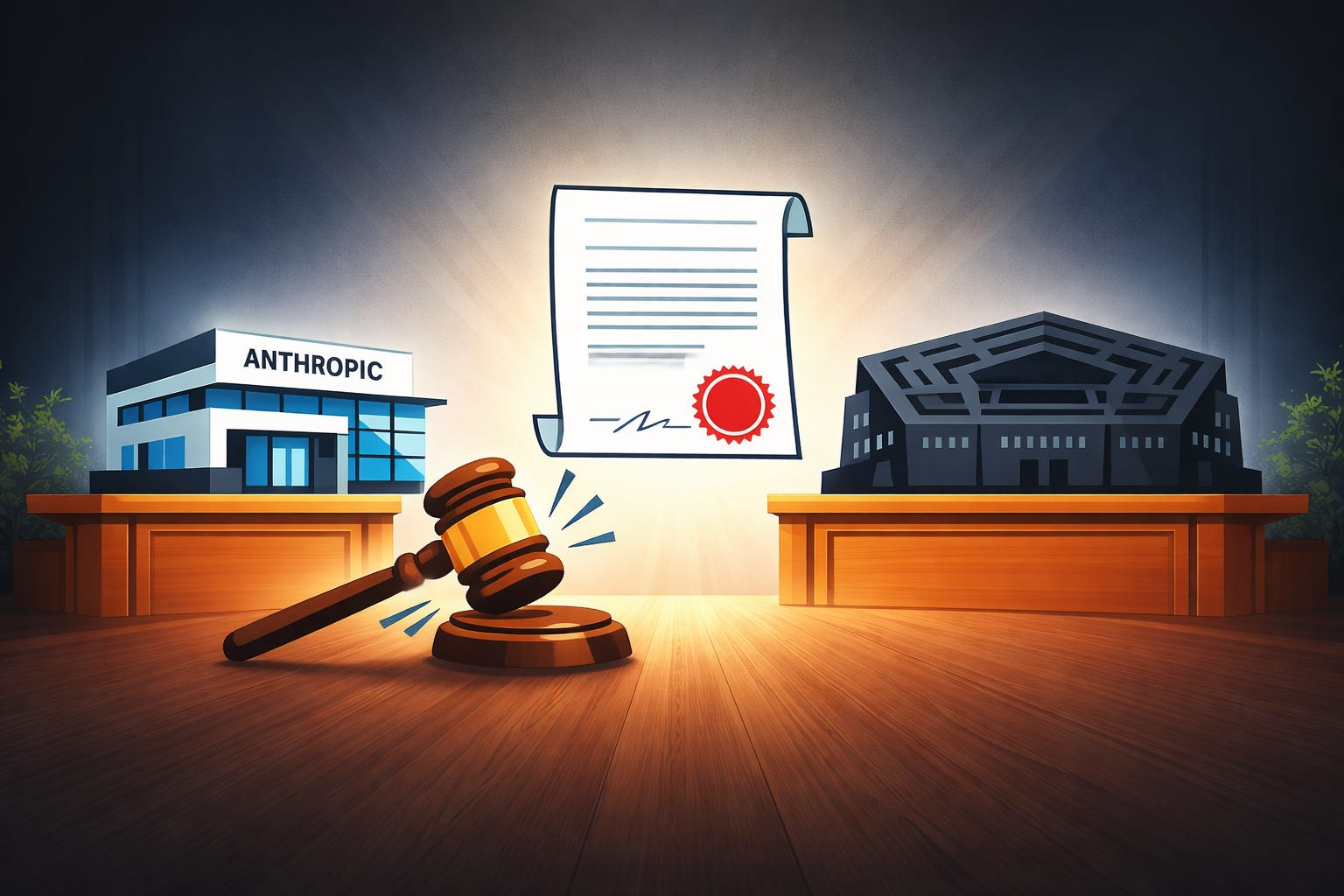
The legal phase of the Anthropic–Pentagon conflict began this week. Anthropic filed a lawsuit against the Trump administration seeking to reverse the Department of Defense’s “supply chain risk” designation — the label applied after Anthropic refused to grant unrestricted military use of Claude.
The designation is extraordinary in its scope. As Anthropic’s lawyers note, it doesn’t just block DOD procurement — it threatens to force any company doing defense business (including NVIDIA, which sells chips to both the military and to Anthropic) to sever commercial ties with Anthropic entirely. That’s the $60 billion investor risk the designation created.
Complicating the narrative: the Pentagon hasn’t actually stopped using Claude yet. Defense Department CTO Emil Michael told CNBC it would take time to transition away from Anthropic’s models. And Palantir CEO Alex Karp confirmed at AIPcon 9 that Palantir — which is deeply integrated with the DOD and had partnered with Anthropic on AWS — is still running Claude. An internal Pentagon memo obtained by CBS News confirmed exemptions will be considered for “mission-critical activities” where “no viable alternative exists.”
Microsoft, Google, and Amazon Web Services all confirmed this week that Claude remains fully available on their cloud platforms for non-defense workloads. The real-world commercial impact of the designation appears, so far, to be limited.
The bigger question: Anthropic is now simultaneously suing the government, launching a marketplace, and hitting $19B in run-rate revenue. The company that chose ethics over a Pentagon contract is, by almost every commercial metric, doing better than ever. Whether the lawsuit succeeds may matter less than what happens to Anthropic’s brand with enterprise customers watching closely.
Source: CNBC / Palantir | CBS News Pentagon memo
News of the week 🌍 (Mar 9 – Mar 13)
Claude identified 22 Firefox vulnerabilities in two weeks 🔐 — Anthropic published results of a security collaboration with Mozilla: Claude Opus 4.6 analyzed Firefox’s JavaScript engine and broader codebase over two weeks, identifying 22 vulnerabilities — 14 of them high-severity. Most were already patched in Firefox 148. The model was effective at finding bugs but less capable at generating working exploits, producing only two proof-of-concept exploits using approximately $4,000 in API credits. The announcement doubles as a signal about Claude’s agentic security capabilities — and arrives as Anthropic tries to demonstrate that AI safety and real-world utility can coexist. Source
NASA drove Perseverance on Mars using Claude 🚀 — Anthropic confirmed this week that Claude helped NASA navigate its Perseverance rover approximately 400 meters across the Martian surface. The first AI-assisted planetary drive. Details on the specific integration remain sparse, but the announcement landed on Anthropic’s homepage as their flagship real-world deployment story. Source
OpenAI hardware chief resigns after Pentagon deal ⚠️ — Caitlin Kalinowski, OpenAI’s executive leading robotics and hardware, resigned on March 9 following the company’s reported partnership with the DOD. Her departure highlights the internal tension at OpenAI over the military deal — the mirror image of the tension that eventually led to Anthropic’s refusal. She’s not the first OpenAI employee to leave over the Pentagon contract direction. Source
ChatGPT gets interactive math and science tools 📐 — OpenAI rolled out interactive visual explanations for more than 70 core math and science concepts. Users can manipulate variables and watch formulas and graphs respond in real time. 140 million people use ChatGPT each week for math and science alone. The rollout reached all logged-in users globally. Source
GPT-5.1 officially retired (March 11) 🗑️ — OpenAI quietly shut down GPT-5.1 Instant, Thinking, and Pro. All existing conversations automatically migrated to the corresponding GPT-5.3 or GPT-5.4 variants. No announcement, no fanfare — just an item in the release notes. The pace of model retirement is accelerating: GPT-5.1 lasted less than three months. Source
The Block “AI washing” story unravels further 🧵 — The week’s most revealing subplot: Naoko Takeda, a data scientist who left Block after Dorsey’s 40% cuts, disclosed she was offered a 75% pay increase — 90% including a one-time bonus — to stay on. If AI tools are doing 4,000 people’s work, why is Block paying desperately to retain the ones who stayed? A former Block comms chief also wrote in the NYT that specific cuts — shrinking the policy team, eliminating DEI roles — look like standard cost management repackaged as futurism. Dorsey’s own response to Wired was revealing: “Something really shifted in December in the sophistication of tools. Anthropic’s Opus 4.6 and OpenAI’s Codex 5.3 went from being really good at greenfield products to being really good at larger and larger codebases.” Genuine insight — but whether that justifies cutting half the company’s workforce remains disputed. Source | Bloomberg
Karpathy open-sources AutoResearch 🔬 — Andrej Karpathy released AutoResearch on March 9: an open-source project for running fully automated AI-driven research loops on a small, single-GPU LLM training setup. The intent is to make AI self-improvement research accessible outside of well-funded labs. Early interest from the ML community has been significant. Source
Gemini Embedding 2 launches in public preview 🔢 — Google released Gemini Embedding 2 on March 10: its first natively multimodal embedding model. Text, images, video, audio, and PDFs can now all be mapped into a single embedding space — meaning systems can compare different media types directly. For developers building cross-media search, document retrieval, or recommendation systems, this is a meaningful infrastructure shift. Available as a preview model via the Gemini API. Source
Useful tools ⚒️
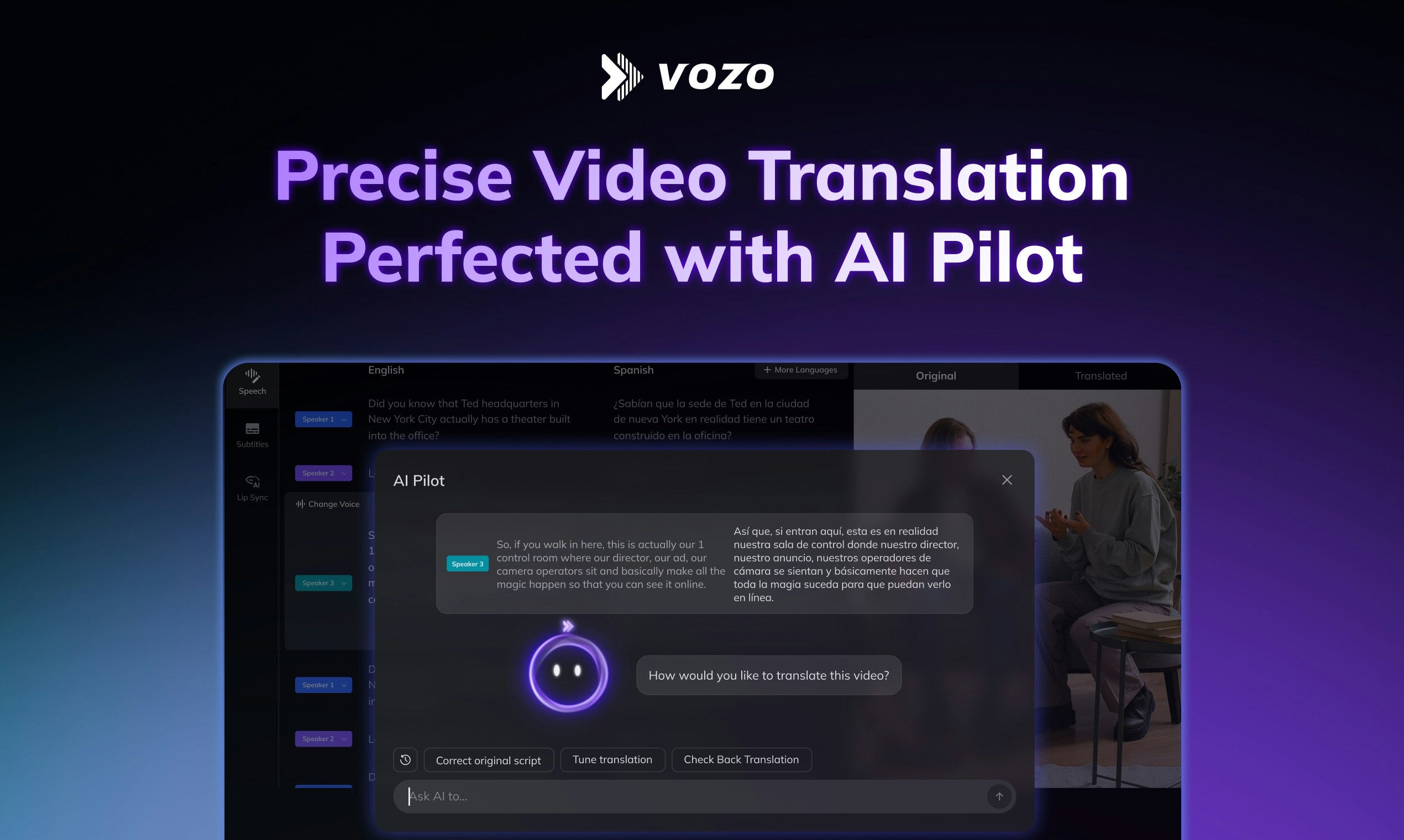
⭐ Visual Translate by Vozo — Translate the text in your videos — without recreating the visuals. Every frame stays intact; Vozo replaces on-screen text and captions in-place across more than 40 languages. For any creator, educator, or brand trying to reach international audiences without re-shooting or commissioning full localization, this is the clearest time-saving tool of the week.
Inspector — Figma for Claude Code — a visual layer on top of your Claude Code sessions. Instead of text-only output, Inspector shows your agent’s work as a design-aware workspace: component trees, visual diffs, element hierarchies. For anyone using Claude Code to build UI or front-end systems, this closes the biggest gap in the agentic coding workflow.
InsForge — A context layer for AI coding agents — structured project knowledge including architecture docs, coding standards, dependency graphs, and component specs — so agents don’t start from zero on every session. Built for teams where multiple agents (or team members) are working on the same codebase and need a shared understanding. Think of it as institutional memory for your AI engineer.
Chronicle 2.0 — AI-generated presentations that don’t look like AI-generated presentations. Chronicle ships fully designed, properly typeset decks — not the generic grids and clip-art outputs most AI slide tools produce. Significant rebuild from the first version: improved layout engine, brand-aware design, and better handling of data-heavy slides. For anyone who regularly creates pitches, reports, or client deliverables.
Naoma AI Demo Agent — An AI video demo agent for B2B SaaS — it creates, narrates, and delivers personalized product demos automatically, on demand, for inbound leads. Sales teams at product companies can deploy it so prospects get an instant, tailored demo experience without a human joining the call. Reduces time-to-demo from days to minutes.
Keep your mailbox updated with practical knowledge & key news from the AI industry!
Weekly Guides 📕
Claude Marketplace Launch: What It Means for Builders and Enterprise Teams — Deep analysis of Anthropic’s platform move: why the AppExchange model applies to AI, who the launch partners are, and what it means if Anthropic becomes the distribution layer for enterprise AI tools
The Anthropic vs Pentagon Case: What the Lawsuit Actually Says — The legal and strategic context behind Anthropic’s lawsuit: the specific claims, the supply chain risk mechanism, and why the designation is more consequential than a simple contract dispute
Gemini in Workspace: The Complete Guide to Every New Feature — Google’s own rundown of all new capabilities in Docs, Sheets, Slides, and Drive. Start here before diving into the third-party coverage
The Block AI Washing Debate: Who’s Right? — The most balanced breakdown of the Dorsey controversy: what the departing data scientist’s story reveals, what the former comms chief found in the cuts, and what the “something shifted in December” quote actually means
Inspector: How to Use Claude Code With Visual Context — The Product Hunt launch thread for Inspector, including maker notes on how the visual layer integrates with Claude Code sessions and what kinds of projects benefit most
AI Meme of the Week 🤡

source: X / r/aimemes
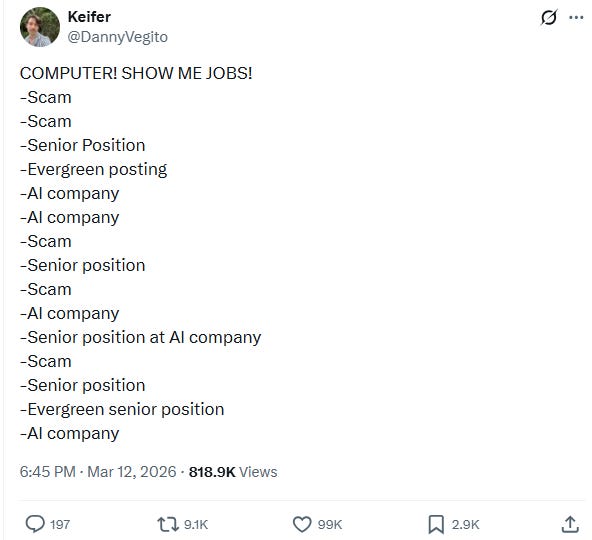
AI Tweet of the Week 🐦
(Bonus) Materials 🎁
Anthropic’s Statement on Claude Remaining Available Across Cloud Platforms — Microsoft, Google, and AWS each confirmed this week that Claude continues to be available through their platforms for non-defense workloads. Dario Amodei’s clarification on the narrow scope of the Pentagon designation and what it does and doesn’t affect
Claude + Mozilla: The Firefox Vulnerability Report — The full account of Anthropic’s two-week security collaboration with Mozilla: which vulnerabilities were found, where they were in the codebase, what the limitations were on exploit generation, and what it cost in API credits
Gemini Embedding 2: What Natively Multimodal Retrieval Actually Means — Technical breakdown of the Gemini Embedding 2 launch: what changes when text, images, video, and audio share the same embedding space, and where the production caveats are during public preview
The Block AI Job Cuts: A Bellwether or Not? — Josh Bersin’s HR-research perspective on whether Dorsey’s restructuring represents a real AI-driven shift or a performance management reset with better branding. Includes the actual unit economics of replacing engineers with AI agents
If you missed our previous updates, don’t worry, here they are:
Claude #1 on App Store, GPT-5.4 Lands, DeepSeek V4 Is Here | Weekly Digest