

Anthropic opened Claude Duet, a proactive agent that keeps working while you are away, joining Meta’s Muse and OpenAI’s Dots. DeepSeek and MiniMax shipped rival Flash models 48 hours apart at the same off-peak price. OpenAI is reportedly closing a $30 billion round at a $1.25 trillion valuation. Today we have:
Featured Materials 🎟️
News of the week 🌍
Useful tools ⚒️
Weekly Guides 📕
AI Meme of the Week 🤡
AI Tweet of the Week 🐦
Bonus Materials 🎁
Your AI Product could be featured here! Showcase your AI products, agents and models in front of 40k AI-native founders, creators and c-levels
Featured Materials 🎟️
Anthropic Launches Claude Duet, an Agent That Works While You Are Away 🎼

On October 21, Anthropic opened a research preview of Claude Duet, a new app where Claude works as a proactive agent. It is built for professionals, entrepreneurs and small business owners who are juggling a lot at work and at home. Duet runs on Opus 5.5 and lives in its own app, separate from the main Claude app.
What it does: Each morning Duet sends a short brief of the most important items across your connected apps. You message it by text or voice, it completes tasks, and it keeps working on its own cloud computer after you step away. It carries over the memory, skills and connected apps from your Claude account, and Anthropic’s team says it works across more than 6,000 connectors and plugins.
How it handles risk: Duet reads, drafts and prepares work on its own, but important decisions stay with you. It checks with you before it acts on your behalf, and you can disconnect any app it has access to. Anthropic says its defenses against hidden instructions and prompt injection build on its browser-use research.
Access and limits: The preview is by waitlist for Pro and Max subscribers in the US and is included in the plan at no extra cost. Duet shares your plan’s usage limits and uses them differently than a typical conversation. It is not on Team or Enterprise plans yet. Anthropic is open that this is an early version and might misread a thread or miscalibrate what is urgent.
Why it matters: Meta has Muse, OpenAI has Dots, and now Anthropic has Duet. All three now offer an agent that works in the background, which makes background reliability the thing to watch.
Three labs now have an always-on agent. The race moved from who has the smartest model to who gets to run your day.
Source: Anthropic
DeepSeek and MiniMax Ship Rival Flash Models 48 Hours Apart ⚡

On October 17, DeepSeek upgraded V4.1 Flash to V4.1-Flash-1017. The API name stays deepseek-flash, and DeepSeek says the calling method and pricing are unchanged. The update uses reinforcement learning with self-feedback to improve end-to-end project building, from games to a 3D model of the Forbidden City. DeepSeek reports 77.0 on DeepSWE v1.1, 42.3 on Terminal-Bench 4.0, 42.6 on HLE without tools, 68.2 on NL2Repo-Bench and 29.1 on ProgramBench. It also opened its Search and Fetch APIs to everyone: server-side calls through DeepSeek Harness, Claude Code and Codex are free for API users until billing starts on October 31 at 16:00 UTC.
Two days later MiniMax launched M3.1 Flash. It is the model that had been running anonymously on OpenRouter as Space Bunny, which MiniMax says processed more than 200 trillion tokens before the reveal. MiniMax claims nearly three times faster inference and 70% lower usage costs than its previous model, with output speeds of 200+ tokens per second. Its own numbers: 73.7% on DeepSWE v1.1, 61.7 on OSWorld V2, 29.6 on Agents’ Last Exam, 76.2 on BankerToolBench and 82% on CyberGym. It is available through the MiniMax API, M Plan and MiniMax Code.
How they compare: Both vendors report DeepSWE v1.1, and DeepSeek leads, 77.0 to 73.7. On price, DeepSeek’s off-peak rate for deepseek-flash is $0.15 input and $0.60 output per million tokens, exactly MiniMax’s flat price. But DeepSeek doubles it during peak hours (01:00 to 04:00 and 06:00 to 10:00 UTC on weekdays), while MiniMax stays flat. DeepSeek’s cached input is cheaper as well, $0.003 off-peak against $0.015. All benchmark numbers are vendor-reported.
Open weights: DeepSeek’s are available now. MiniMax has now released its weights on Hugging Face: about 428 billion parameters with 23 billion active, under its own MiniMax Community License, so check the terms before commercial use. A MiniMax Pro model is also coming.
At off-peak prices the two cost exactly the same, so the fight is about speed, peak-hour pricing and the terms on the weights.
OpenAI Is Reportedly Closing $30B at a $1.25T Valuation 💰
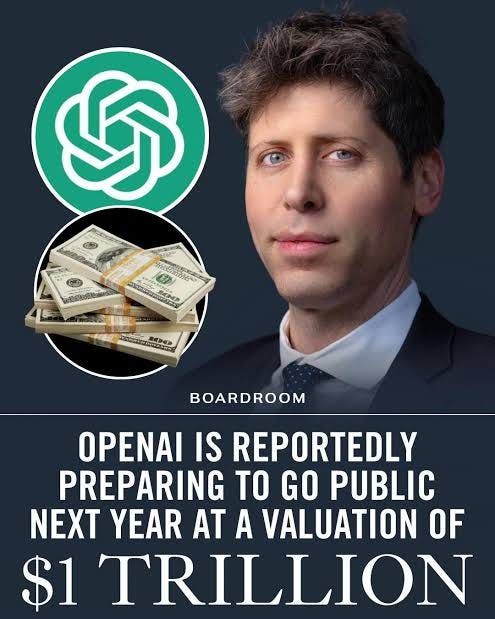
On October 22, CNBC reported that OpenAI is close to finalizing a round of up to $30 billion at a $1.25 trillion pre-money valuation, citing people familiar with the matter. Investors from the United Arab Emirates and Coatue are leading, and OpenAI is also negotiating a commercial deal for more computing capacity from the UAE. The round is not final and details could still change.
The price moved: When Bloomberg first reported the talks on October 5, OpenAI was said to be presenting a pre-money valuation of about $1.4 trillion as a fixed price. UAE funds including Abu Dhabi’s MGX were discussing up to $10 billion between them, and BlackRock was weighing an investment. The reported figure is now about $150 billion lower.
Where it sits: OpenAI’s previous round was $122 billion in March, which valued the company at $852 billion after the new capital. Its IPO plans have reportedly slipped to 2027, and reports describe this round as a bridge ahead of an eventual listing.
Why it matters: At $30 billion this is a quarter of March’s round, yet it still values OpenAI above a trillion dollars. It shows how much cash frontier labs need between big raises, and how much of it now comes from sovereign money.
OpenAI raised $122 billion in March. Seven months later it is back for $30 billion more, at a price tag already above $1 trillion.
Source: CNBC
Keep your mailbox updated with practical knowledge & key news from the AI industry!
News of the week 🌍
Anthropic Commits 5% of Its Shares to a New Public Benefit Fund 🏛️ The commitment is subject to stockholder approval. The fund is a wholly owned LLC, and the board can add 2% more for every 50% rise in company value above a baseline Anthropic has not disclosed. With earlier pledges, roughly 20% of Anthropic’s shares would go to public purposes. Elon Musk replied that the shares should go directly to the public.
Tenstorrent Raises $1.5B at a $6.2B Valuation 🔧 Jim Keller’s chip startup more than doubled its late-2024 valuation, five months after it reportedly drew acquisition interest from Intel and Qualcomm. Keller told Bloomberg that showing its Galaxy servers could run DeepSeek models convinced the company to stay independent. The money goes toward chips for serving open-weight models and video generation.
Town Becomes a Unicorn Four Months After Launch 🏙️ The San Francisco startup, founded by former Plaid CTO Jean-Denis Greze, raised a $108 million Series B co-led by Forerunner and Menlo. Each employee gets an AI assistant called a Townie that connects to email, calendars and work systems and shares approved information with other Townies. Town says it reached millions in annual recurring revenue within weeks of launch.
Canva Releases Craft, Its First In-House Image Model 🎨 Craft first plans the layout, including spatial relationships, hierarchy and text, then generates images up to 2K in 30 aspect ratios. It was trained on human-designed templates rather than photos, so results can convert into layered designs. Available to all users in Dream Lab, with an API and support for ChatGPT and Gemini through MCP planned.
One Hacker’s AI Agents Broke Into Sites at 100+ Companies 🔒 Researcher Snorre Fagerland of NorForge found the campaign through exposed control panels of Cairn, an open-source agent platform. Starting September 25, the agents tried more than 1,200 e-commerce sites and got into those of Deere, SharkNinja, Cummins and others, from instructions under 100 Chinese characters. Fagerland estimates about 23 hours and $50 in tokens per successful breach. Reuters could not establish how much data was taken.
GPT-6 Pro Gets Parallel Agents in ChatGPT ⚡ GPT-6 Pro in the Chat tab now offers faster responses, better use of plugins and tools, and multiple agents that work on different parts of a task in parallel. You can follow their progress in the conversation and open completed tasks to see what each agent did. It is rolling out to eligible Pro users, and OpenAI has not published a cap on agents or how they count against your allowance. The same day OpenAI added ChatGPT Slides, a deck editor in Space with export to PowerPoint, PDF and Google Slides.
Useful tools ⚒️
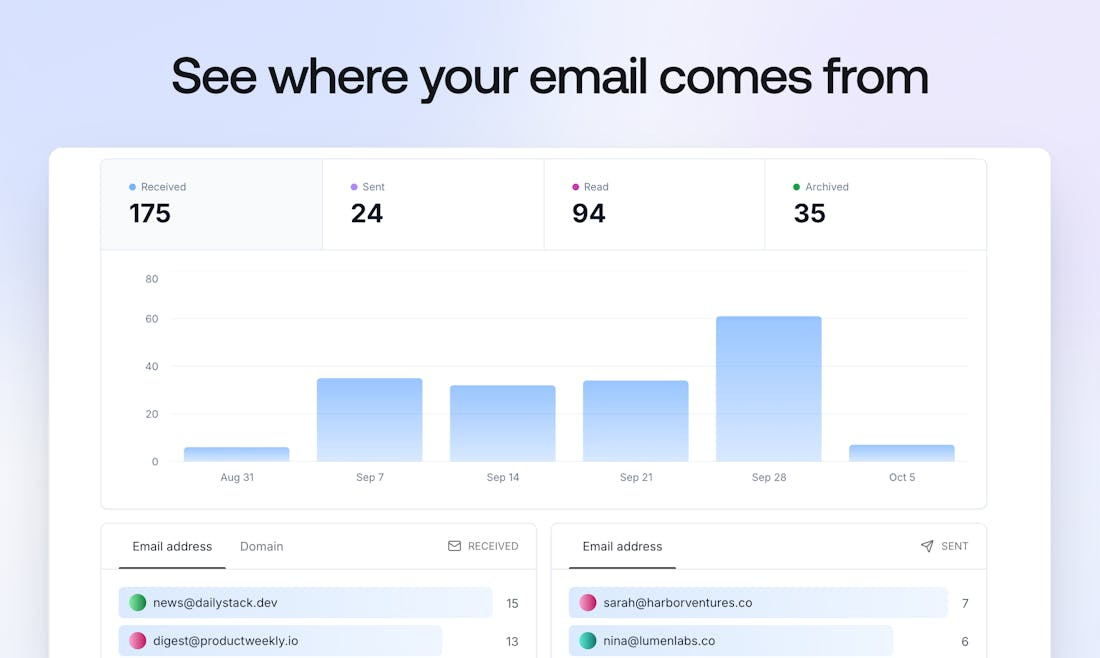
⭐ Inbox Zero Mail An open-source Superhuman alternative from the team behind the Inbox Zero AI email assistant. It is a fast, keyboard-first email client with a unified inbox across Gmail and Outlook, split inboxes, AI categorization and drafts in your voice, bulk unsubscribe and team collaboration. It runs on web, desktop and iOS, and you can self-host it.
Composio Instant Gives your agent a wallet to pay for tools per call, so it does not need a separate account or API key for each service. Calls through apps you have already connected cost nothing extra, and it works with Claude, ChatGPT, Cursor, Codex and other MCP clients.
DeepCell An open file format and web app that connects a spreadsheet, report and slides in one file, so a single edit updates all of them. Every conclusion stays attached to its assumptions and calculations, so people and AI agents can examine and continue each other’s work.
Needle Find leads and run outreach across LinkedIn, Instagram and email from the agent you already use. It connects through MCP to Claude, ChatGPT, Cursor and Grok Bot, with built-in sending limits and suppression rules.
Exa 3.0 A search API for AI agents, now with a larger embedding model and an index expanded by billions of documents, including 1.27 billion ecommerce listings and 211 million local businesses. Dynamic Highlights return only the relevant passages using 95% fewer tokens than full pages. Exa says it ranks first on every benchmark it tested, and those are its own tests.
Share this post with friends, especially those interested in AI!
Weekly Guides 📕
Get Started With Claude Duet Anthropic’s official setup guide: join the waitlist, sign in with your Claude account, and use the apps you have already connected. It also covers partner services like Link by Stripe and Shop Pay and the current limits, including US-only access and no Team or Enterprise plans.
MiniMax M3.1 Flash: Model Invocation Official docs for calling the model through the Anthropic SDK (recommended) or the OpenAI SDK: swap the base URL, set the model to MiniMax-M3.1-Flash, and keep your existing client. Thinking depth is set with effort, from low to max, and omitting it defaults to max. Thinking cannot be turned off, so lower the effort to cut latency and tokens.
ChatGPT Parallel Agents, Tested Kingy.ai ran two sequential-versus-parallel research pairs on launch day. Three parallel agents averaged 4m 25s against 4m 51s for the sequential runs, about 9% faster, but one parallel run was slower than its control and the test found no clear accuracy gain. The practical part is the how-to: copy-ready prompts that split a job into separate lanes with a source standard and a shared schema, a list of jobs where parallel agents help and where one agent is better, and which plans get access.
AI Meme of the Week 🤡
AI Tweet of the Week 🐦


Bonus Materials 🎁
Microsoft Researchers Prove a 31-Year-Old Math Conjecture With Human-Directed AI Xinzhi Zhang and Zhao Song proved the Kannan-Lovász-Simonovits conjecture, open since 1995. AI agents explored more than 100 candidate approaches while the researchers chose which to pursue. Microsoft stresses that humans directed the AI rather than running one end-to-end attempt, and independent experts posted their own proof the same day the authors posted theirs.
Flagship AI Models Got One Hour to Write a StarCraft Bot StarSkirmish Bench v0.2 asked flagship models from OpenAI, Anthropic, Google and Meta to write a Protoss StarCraft: Brood War bot in C++ in one hour. Each model worked inside its own lab’s coding tool at maximum reasoning effort, with web access off. The bots then played human-written bots, and the score is the average win rate. GPT-6 Astra came first, GPT-6.1 Sol second at roughly a tenth of Astra’s cost per run, and Gemini 4 Argon, Claude Opus 5.5 and Claude Fable 5.1 tied at 37 to 39. Argon was the least consistent, with an 18-point gap between its best and worst runs.
“We Were Looking at It Wrong”: A 26,000-Word Post Rattles AI Research Goodfire researcher Nick Cammarata argues that neural networks have a logic after all, even though superposition made them look like a tangled knot. MIT Technology Review interviewed him as AI safety researchers reacted with both celebration and caution.
Your take: Meta, OpenAI and now Anthropic each have an always-on agent, and OpenAI is raising $30B to get ahead of an IPO. Which agent would you let run your day? Drop it in the comments 👇
If you missed our previous updates, don’t worry, here they are: Meta’s Muse Wonder, Microsoft’s Jev Rival, Deno Joins Cloudflare | Weekly Digest