

Hey! Welcome to the latest Creators’ AI Edition.
Anthropic is weighing a $50B raise at a $900B valuation that would make it the most valuable AI startup in the world — more than doubling its February figure in under three months. Big Tech dropped Q1 earnings on April 29 and raised AI capex to a combined $700 billion for 2026 — only Google convinced investors the bill is already paying off. Then Anthropic's next model family leaked: internal red teaming logs spotted Claude Jupiter V1 on April 30, pointing at a launch at the May 6 Code with Claude conference. Today we have:
Featured Materials 🎟️
News of the week 🌍
Useful tools ⚒️
Weekly Guides 📕
AI Meme of the Week 🤡
AI Tweet of the Week 🐦
(Bonus) Materials 🎁
Keep your mailbox updated with practical knowledge & key news from the AI industry!
Featured Materials 🎟️
Anthropic Is Weighing a $900B Valuation. Claude Code Built It. 💰
Anthropic wants to raise $50 billion at a $900 billion valuation. Multiple preemptive offers at $850–900B have landed on the table. The board meets in May to decide. If it closes at the high end, Anthropic becomes the most valuable private AI company in the world — ahead of OpenAI’s $852B post-money from March.
How they got here:
Anthropic’s annual revenue run rate crossed $30B in early April — up from $9B at the end of 2025. The actual current rate, per sources close to the company’s financials, is closer to $40B. That’s a 4x jump in under five months. For context: OpenAI went from $20B to $25B annualized in the same window. The growth slopes are no longer close.
The engine behind it is Claude Code. Cowork and Claude Code together account for the majority of Anthropic’s revenue acceleration, driven by enterprise teams replacing developer headcount with agent-based workflows. The company now has more than 300,000 business customers on Claude Code, with an annualized run rate TechCrunch sources peg at $2.5B for that product line alone.
The timeline:
February 2026: Raised at $380B valuation
April 29: Bloomberg breaks $900B story
April 30: TechCrunch reports 48-hour investor allocation window
May: Board meeting to finalize
The IPO angle:
This is likely Anthropic’s last private round. Early backers from 2024 and earlier are sitting this one out — waiting to cash in at IPO. A $900B private valuation puts the IPO price discovery in trillion-dollar territory. For comparison: Google went public at a $23B valuation in 2004. Anthropic is approaching the public markets at 40x that figure, still in private hands.
The $900B headline is the output. Claude Code is the input. Every AI lab is now racing to own the same developer workflow — and Anthropic got there first.
Source: X
Big Tech Q1 Earnings: The $700B Bill, and Only One Company Justified It 📊
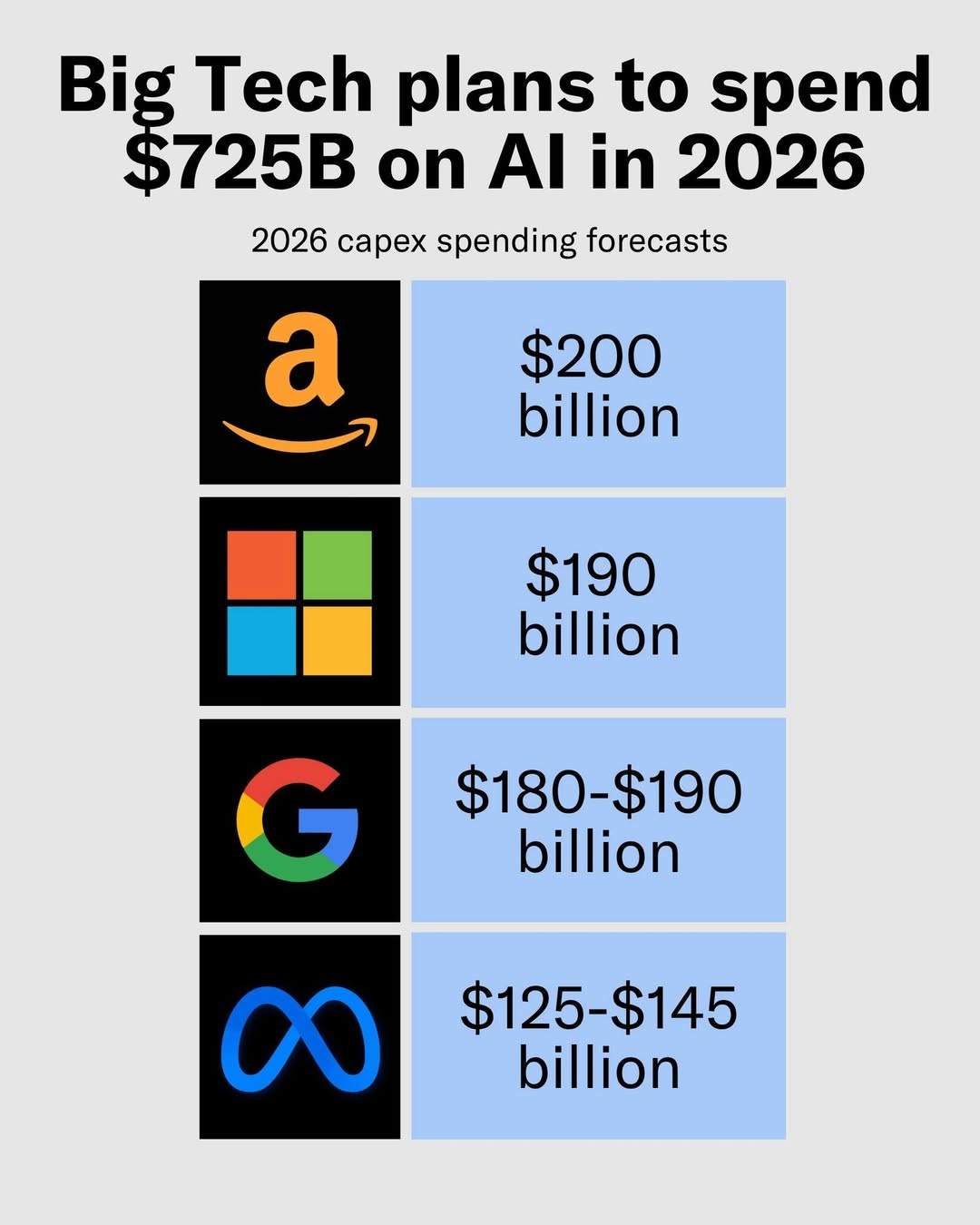
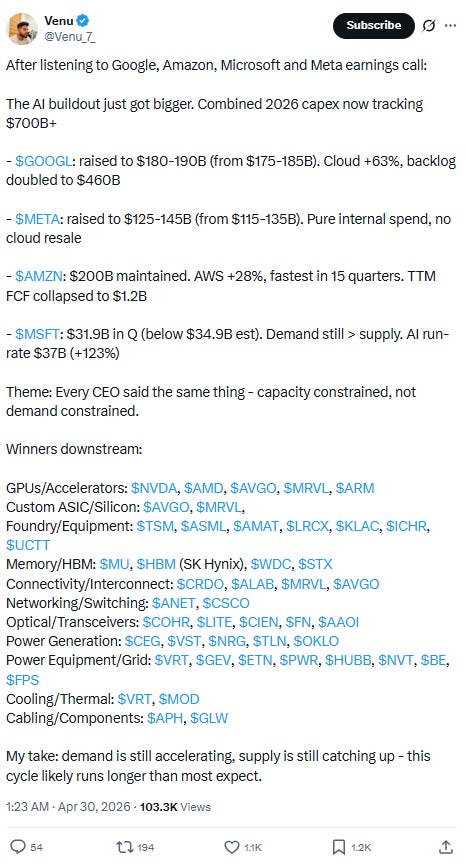
Microsoft, Alphabet, Meta, and Amazon reported Q1 2026 earnings on April 29. All four beat revenue estimates. All four raised AI infrastructure spending. Combined 2026 capex is now tracking $650–700 billion — the largest concentrated infrastructure cycle in tech history. Then the market reacted, and the verdict was unambiguous: only Google convinced investors the spend is working.
The numbers by company:
Alphabet: $109.9B revenue (+22% YoY, beat by $2.7B). Google Cloud +63% to $20B — fastest growth in years, and $2B above estimates. Backlog hit $462B, nearly doubling quarter-over-quarter. Capex raised to $180–190B for 2026. Stock up 6%+ pre-market.
Microsoft: $82.9B revenue (+18% YoY). AI business now at $37B annualized run rate, up 123% YoY. Azure guided 37–38% growth. Copilot crossed 20M paid seats. Capex raised to $190B — $35B above analyst consensus. Gross margin shrank to lowest since 2022.
Meta: $56.3B revenue (+33% YoY — fastest growth in 4 years). Capex raised to $125–145B, up $10B. Stock fell 6% after hours. Free cash flow dropped to $1.2B from $26B a year ago.
Amazon: $181.5B revenue (+17% YoY). AWS grew 28% to $37.6B — fastest in 15 quarters. Bedrock processed more tokens in Q1 2026 than in all prior years combined. Capex: $200B for 2026. EPS at $2.78 crushed $1.62 estimate.
The market’s verdict:
Google’s Cloud growing 63% — more than doubling its previous growth rate — was enough. Azure and AWS showed strong signals but with margin concerns. Meta’s capex hike ($10B surprise increase for “higher component costs, particularly memory pricing”) spooked investors who wanted payback before more bets. The implicit message: $700B in capex requires 63% Cloud growth to justify. Anything less and investors wait for proof.
Four companies are spending the equivalent of Sweden’s GDP on AI infrastructure this year. Three of them couldn’t convince their investors it was working. One showed 63% Cloud growth. The bar is now 63%.
Source: Alphabet IR
Anthropic’s Next Model Is Already in Red Teaming — Codename: Jupiter 🪐
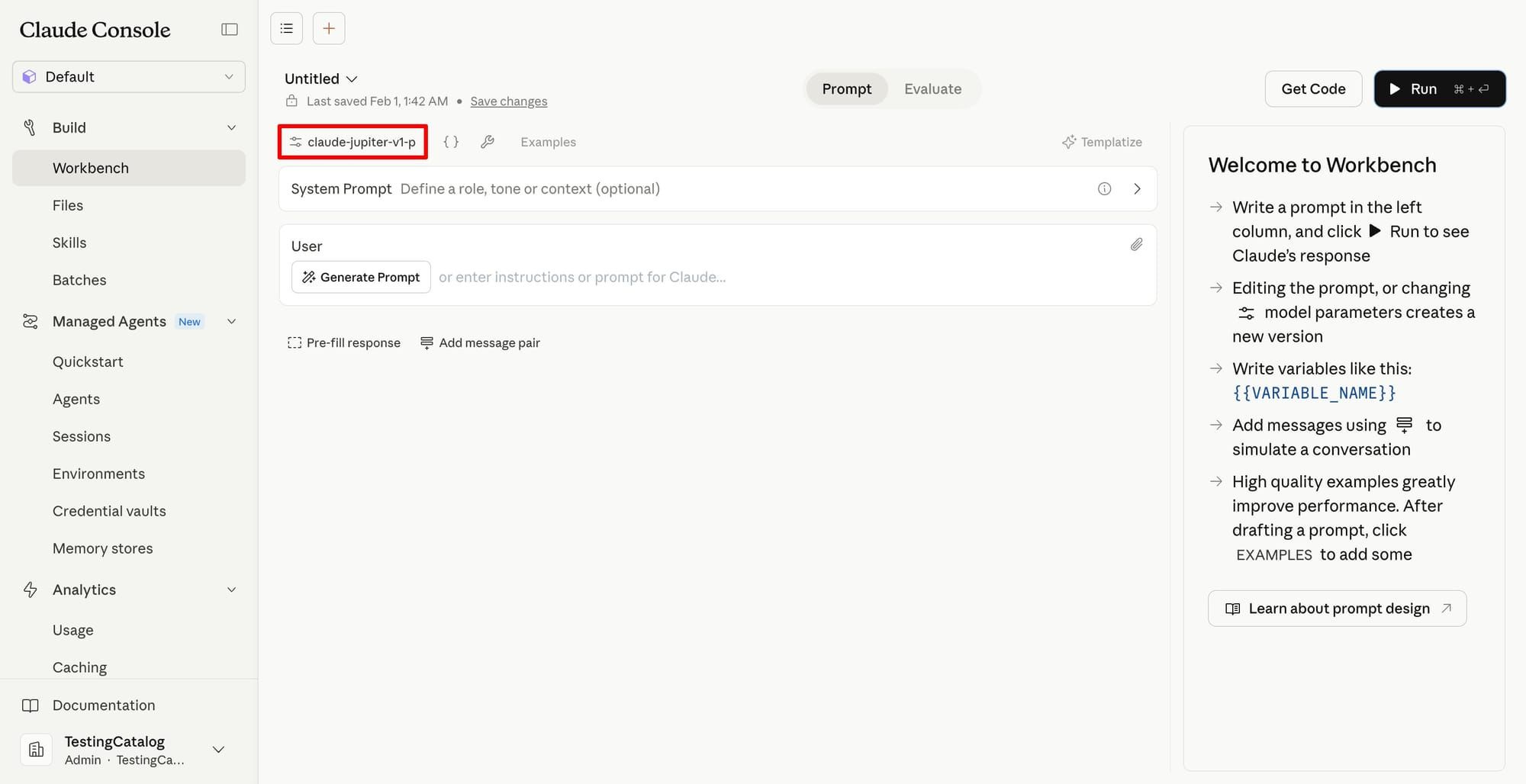
Anthropic has begun red teaming a new internal model build codenamed Claude Jupiter V1, spotted in internal test logs on April 30. The codename follows the company’s established pattern: pre-release safety probes are tagged with planet names, not final product names. Last year the equivalent exercise was called Neptune — and it preceded the Claude 4 family launch by a few weeks.
The timing is significant. Anthropic is hosting its Code with Claude developer conference in San Francisco on May 6, followed by London and Tokyo dates. At the previous Code with Claude event (May 22, 2025), Anthropic announced the Claude 4 series. If the pattern holds, Jupiter V1 is being hardened for an announcement timed to the SF event.
What Jupiter V1 appears to be: not a minor update. Internal model naming at Anthropic separates the planet-codename safety probes (which reference genuinely new model families) from incremental Opus/Sonnet/Haiku point releases. Jupiter suggests a Claude 5-class model — the first new base model family since Claude 4 launched a year ago.
The $900B fundraising round, the IPO timeline, and the Jupiter red teaming all land in the same week. Anthropic is not slowing down.
Anthropic is red teaming its next model family while simultaneously racing to close its last private round before IPO. The two things are connected: If Jupiter is the next base family, the $50B raise starts to look less like vanity pricing and more like compute prepayment.
Source: Testing Catalog
News of the week 🌍
Meta Plans 8,000 Job Cuts Starting May 20 — AI Is Explicit in the Memo 📉 Meta confirmed this week it plans to cut approximately 8,000 jobs beginning May 20, with a large portion in mid-level management. The internal framing is direct: the company is redirecting $135B toward AI infrastructure and expects smaller teams to achieve the same output. This is the largest single-round reduction Meta has announced since its 2022 “Year of Efficiency” cuts. It follows Snap’s 1,000-person cut two weeks ago where the CEO explicitly cited AI — the pattern of major consumer tech companies attributing headcount reduction directly to AI capability is now established, not anecdotal.
SoftBank plans Roze IPO at $100B 🏗️ — SoftBank is spinning out a new AI and robotics company called Roze, targeting a $100B valuation in what would be one of the largest AI IPOs to date. Roze focuses on physical AI infrastructure: using robotics to build data centers and bundling SoftBank’s bets in energy, land, and digital infrastructure. CEO Masayoshi Son is doubling down on “physical AI” as the next frontier. IPO timing: second half of 2026.
White House Opposes Anthropic's Mythos Expansion ⚠️ — The WSJ reported on April 30 that the White House is formally opposing Anthropic's plan to expand access to Claude Mythos, citing security concerns over a model capable of carrying out autonomous cyberattacks. This comes the same week Anthropic is weighing a $900B valuation. The tension is explicit: investors are racing to fund the company; the US government is trying to contain its most capable product.
OpenAI Open-Sources Symphony — Every Linear Ticket Gets Its Own Coding Agent 🎵 — On April 27, OpenAI published Symphony: an open-source orchestration spec that turns your issue tracker into a control plane for coding agents. Every open ticket automatically gets a dedicated Codex agent running until the task is done. Engineers review output, not supervise sessions. OpenAI’s own teams saw a 500% increase in landed pull requests in the first three weeks.
Useful tools ⚒️
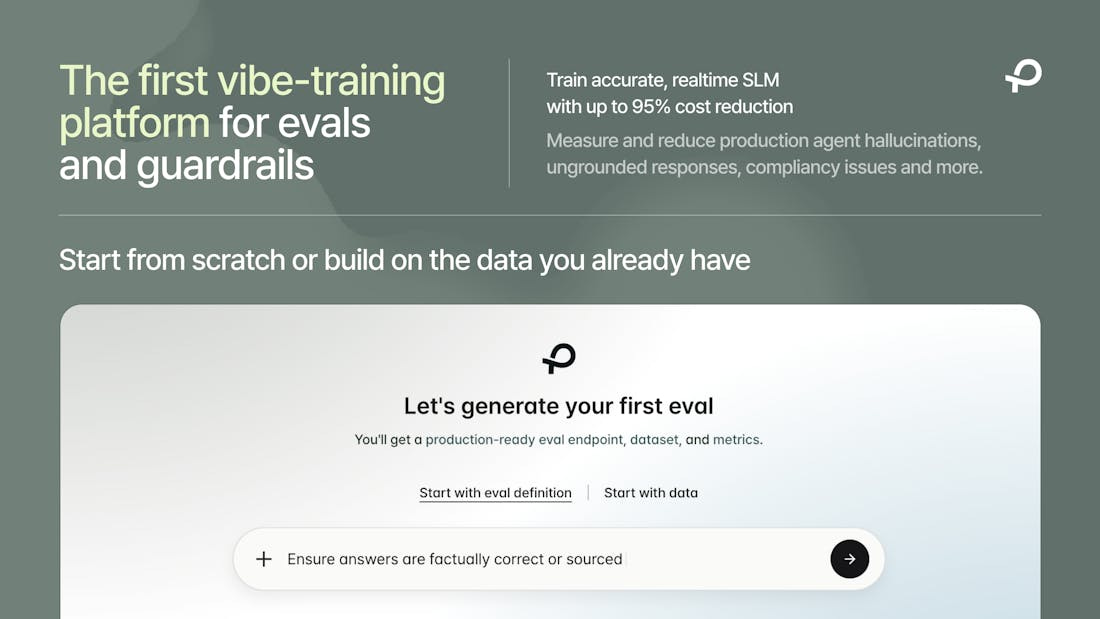
⭐ Plurai — Vibe-train your AI evals and guardrails by example, not by writing complex test cases. Show Plurai what good and bad outputs look like, and it builds and maintains evaluation logic automatically. #1 on Product Hunt April 29 with 673 upvotes. For any team running Claude, GPT-5.5, or DeepSeek V4 in production who wants evals that don’t require a dedicated ML engineer. Free trial available.
Wonder — AI design agent that works directly on your canvas in real time. Describe what you want, Wonder generates and iterates without leaving your design file. #4 on Product Hunt April 30 with 260 upvotes. Works with Figma components. Free public alpha.
KarmaBox — Run your own Claude Code instance on mobile. Full agentic coding sessions from your phone — same capabilities as desktop Claude Code, sandboxed on-device. #3 on Product Hunt April 29 with 321 upvotes. Free during beta, iOS.
Orange Slice — Automate any sales task with a plain English description: prospecting, follow-up sequences, CRM updates, outreach. No workflow builder, no integrations to configure. #1 on Product Hunt April 27 with 460 upvotes. Free trial, paid plans from $49/mo.
Gemini Deep Research Agent — Web and MCP research agents now available in the Gemini API. Run multi-step research tasks, pull from web sources and connected MCP tools, get structured output. #5 on Product Hunt April 30 with 206 upvotes. Available via Gemini API, usage-based pricing.
Share this post with friends, especially those interested in AI!
Weekly Guides 📕
How to Use Mistral Medium 3.5 for Self-Hosted AI: Hardware Guide & Setup — Official Mistral Docs: exact VRAM requirements, FP8 vs BF16 tradeoffs, vLLM and SGLang setup commands. If you’re evaluating self-hosting instead of API, start here.
How Big Tech Q1 Earnings Should Change Your AI Infrastructure Decisions — Bedrock +170% QoQ, Google Cloud backlog $462B, Azure supply-constrained. Which cloud to build on in H2 2026 based on this week's numbers.
Dark Factory: How to Build a Codebase Where AI Agents Ship Without Human Review — What it takes to move from "AI helps me code" to "AI ships code autonomously." Seven production requirements every team needs before removing humans from the review loop.
DeepSeek V4 API Migration Guide: Everything Before the July 24 Deadline — Legacy model names deepseek-chat and deepseek-reasoner retire July 24. One-line code change, same endpoint, same API key — but the deadline is real. Audit your codebase now.
New Claude Connectors: Official Setup Guide — Spotify, Uber, Instacart & 12 More — How to connect the 15 new lifestyle apps to Claude, what each can do inside a conversation, and how confirmation works before Claude takes action.
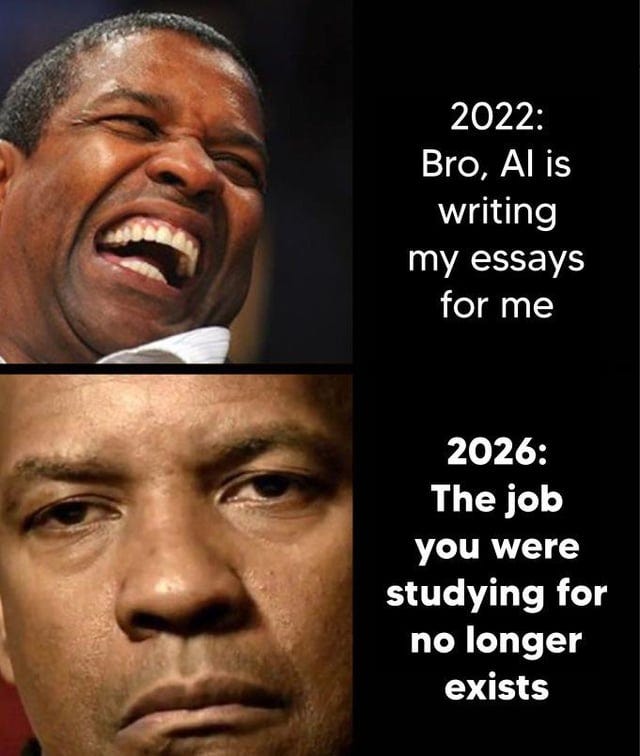
AI Meme of the Week 🤡
AI Tweet of the Week 🐦
Bonus Materials 🎁
Andrej Karpathy: From Vibe Coding to Agentic Engineering — Karpathy’s fireside chat with Sequoia’s Stephanie Zhan at AI Ascent 2026. He explains why vibe coding raised the floor, why “agentic engineering” is now becoming the serious discipline on top of it, and why building with agents still requires taste, judgment, and technical understanding.
Microsoft and OpenAI Restructure Their Partnership — Cloud Exclusivity Ends — On April 27, Microsoft and OpenAI restructured their deal: Azure remains primary cloud partner but exclusivity is over, and AGI-linked deal terms are removed. Quietly significant for every company building on Azure-hosted OpenAI APIs.
Behind the Curtain: We've Been Warned — Axios's rare long-form piece on pace, not products: Anthropic is the fastest-growing company in American business history ($1B to $30B ARR in 16 months). The most capable models are now the least transparent. AI agents erased $2 trillion from public software company valuations in 10 weeks.
Stripe Builds Wallets for AI Agents — Stripe launched Link wallets for agents and its Agentic Commerce Suite, letting businesses sell inside AI apps while agents get spending controls, approval flows, and transaction visibility. The boring payments layer just became the most important part of agentic commerce.
If you missed our previous updates, don’t worry, here they are:
GPT-5.5 Doubles the Price, Google Goes Full Agent, DeepSeek V4 Resets the Floor | Weekly Digest