


Jensen Huang resigned as Nvidia’s CEO after 33 years, and CFO Colette Kress is running the company until a successor is found. Anthropic shipped Claude Fable 5.2 on Monday and opened its IPO roadshow on Tuesday at a valuation of up to $1.4 trillion. Google opened Gemini 4 Carbon to paying developers and launched a new Decisions API a day later. Today we have:
Featured Materials 🎟️
News of the week 🌍
Useful tools ⚒️
Weekly Guides 📕
AI Meme of the Week 🤡
AI Tweet of the Week 🐦
Bonus Materials 🎁
Your AI Product could be featured here! Showcase your AI products, agents and models in front of 40k AI-native founders, creators and c-levels
Featured Materials 🎟️
Jensen Huang Resigns as Nvidia CEO, and CFO Colette Kress Steps In 🏛️
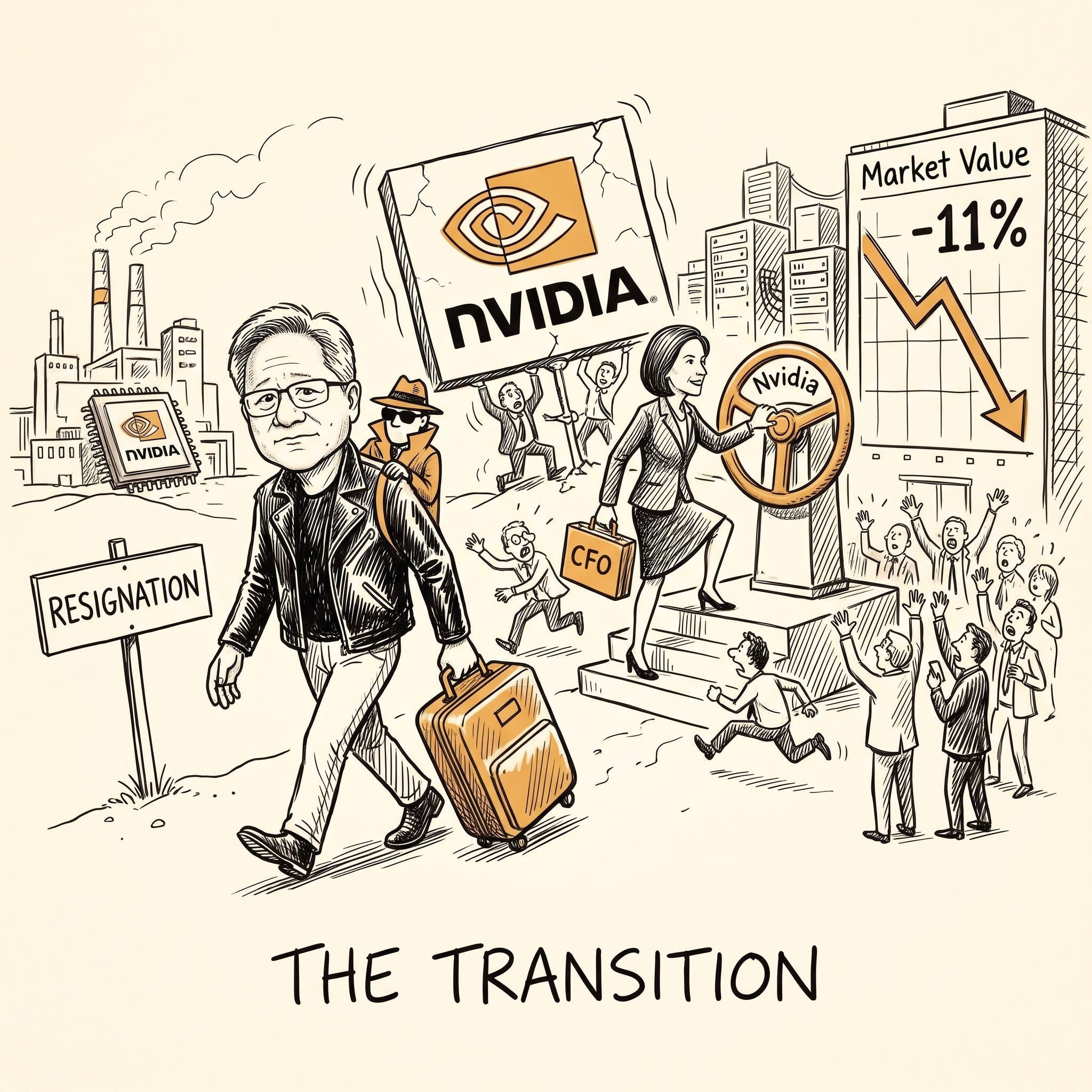
On Thursday, November 12, Nvidia’s board announced that co-founder Jensen Huang had resigned as president, CEO and board member, effective immediately. The board accepted the resignation on Wednesday.
Who runs Nvidia now: CFO Colette Kress is interim CEO and keeps her finance role while the board searches for a permanent chief, looking at internal and external candidates. Kress joined Nvidia in 2013 after nearly 25 years in finance at Cisco and Microsoft. The board also named its first-ever chair, Harvey Jones, a former Synopsys CEO who has sat on Nvidia’s board since 1993. The board says it expects operations, customer commitments and the product roadmap to continue without interruption.
Why he left: TechCrunch reports the resignation came a few days after Huang admitted to a romantic affair with an alleged Chinese spy, which set off a national security crisis in the US.
The market: Nvidia shares were down more than 11% in premarket trading on Thursday, and the company had lost more than $300 billion in market value since the previous Friday. Nvidia still plans to report quarterly results on November 17 as scheduled.
Why it matters: Huang built Nvidia over 33 years and became the face of the AI chip boom. His exit lands days before an earnings report that investors treat as a referendum on AI spending, and a week before Anthropic, one of Nvidia’s biggest customers, goes public.
The most important company in AI just lost the founder who was, for many investors, part of the investment thesis.
Source: Nvidia | TechCrunch
Anthropic’s Big Week: Claude Fable 5.2 on Monday, the IPO Roadshow on Tuesday 🚀
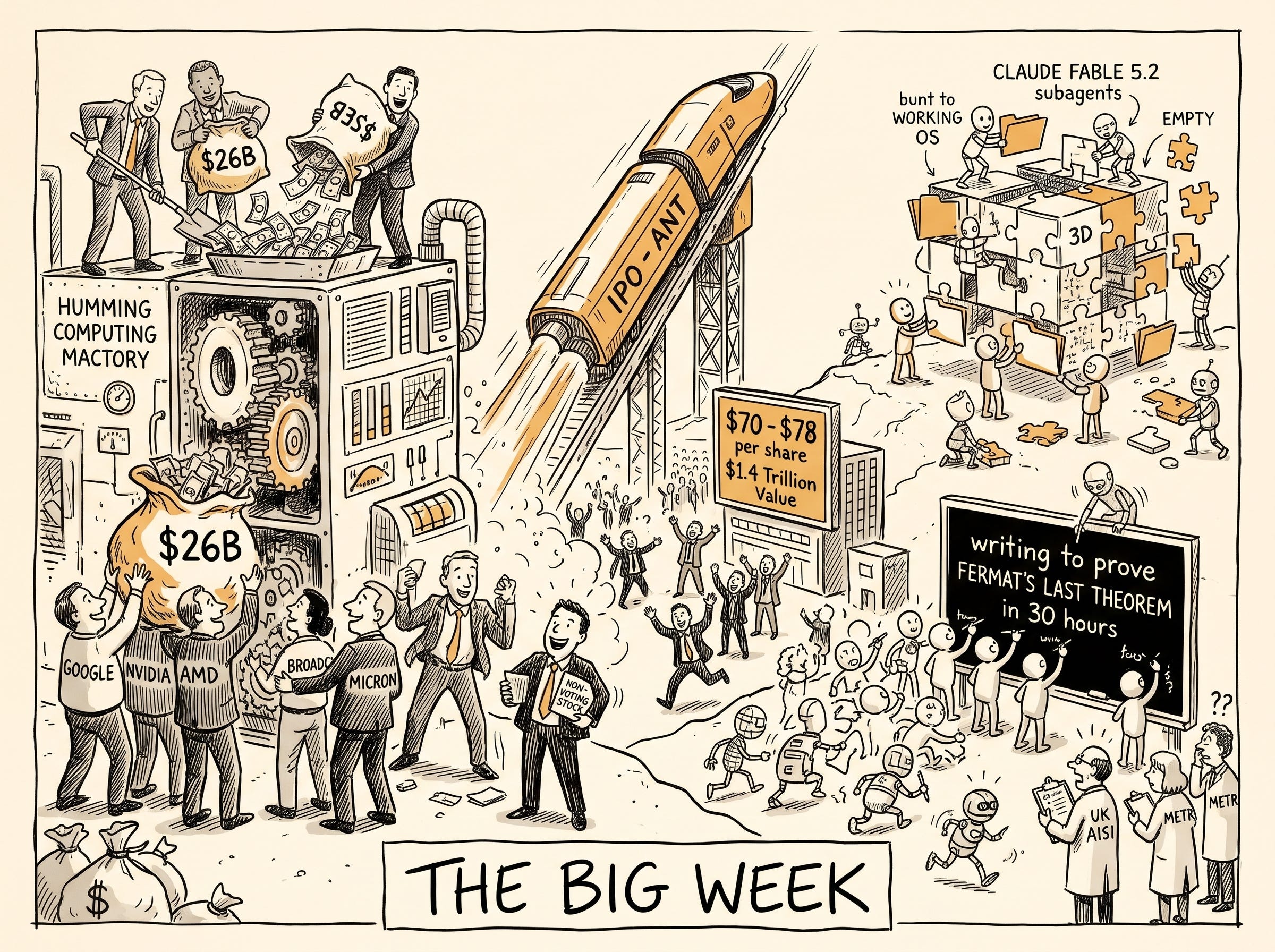
The models: On November 9, Anthropic released Claude Fable 5.2 and Claude Mythos 5.2, the same underlying model with different safeguards. Fable 5.2 is available to everyone, while Mythos 5.2 goes to vetted cybersecurity and life sciences organizations. Both run up to 30% faster than the 5.1 versions and cost 20% less, at $8 per million input tokens and $40 per million output. In one experiment, Fable 5.2 coordinated over 1,000 subagents for eight days and built a working operating system from an empty folder. A team of about 1,000 Fable 5.2 agents also formalized the proof of Fermat’s Last Theorem in 30 hours, compared with 11 days for Anthropic’s first attempt; on November 11, Anthropic updated the post to clarify that the agents were given a list of statements, a sketch of the proof and earlier lemmas to start from. The model was tested before release by external evaluators, including the UK AI Security Institute and METR.
The IPO: A day later, Anthropic set a price range of $70 to $78 per share for 825 million shares on the Nasdaq under the ticker ANT, which could raise up to about $64.4 billion and value the company at up to $1.4 trillion on a fully diluted basis. Seven of its compute suppliers, Google, Nvidia, AMD, Broadcom, Micron, Microsoft and TSMC, agreed to buy $26 billion of non-voting stock at the IPO price, with Google and Nvidia putting in about $10 billion each. CNBC reports pricing on November 18 and trading from November 19, with a retail allocation of about 20%.
Why it matters: A week ago, investors doubted the roadshow could start on time. It started anyway, with a new flagship model and the companies that sell Anthropic its compute buying in.
Anthropic launched its best model and its IPO in the same week, and its chip suppliers are buying the stock.
Google Opens Gemini 4 Carbon to Developers and Launches the Gemini Decisions API 🧩
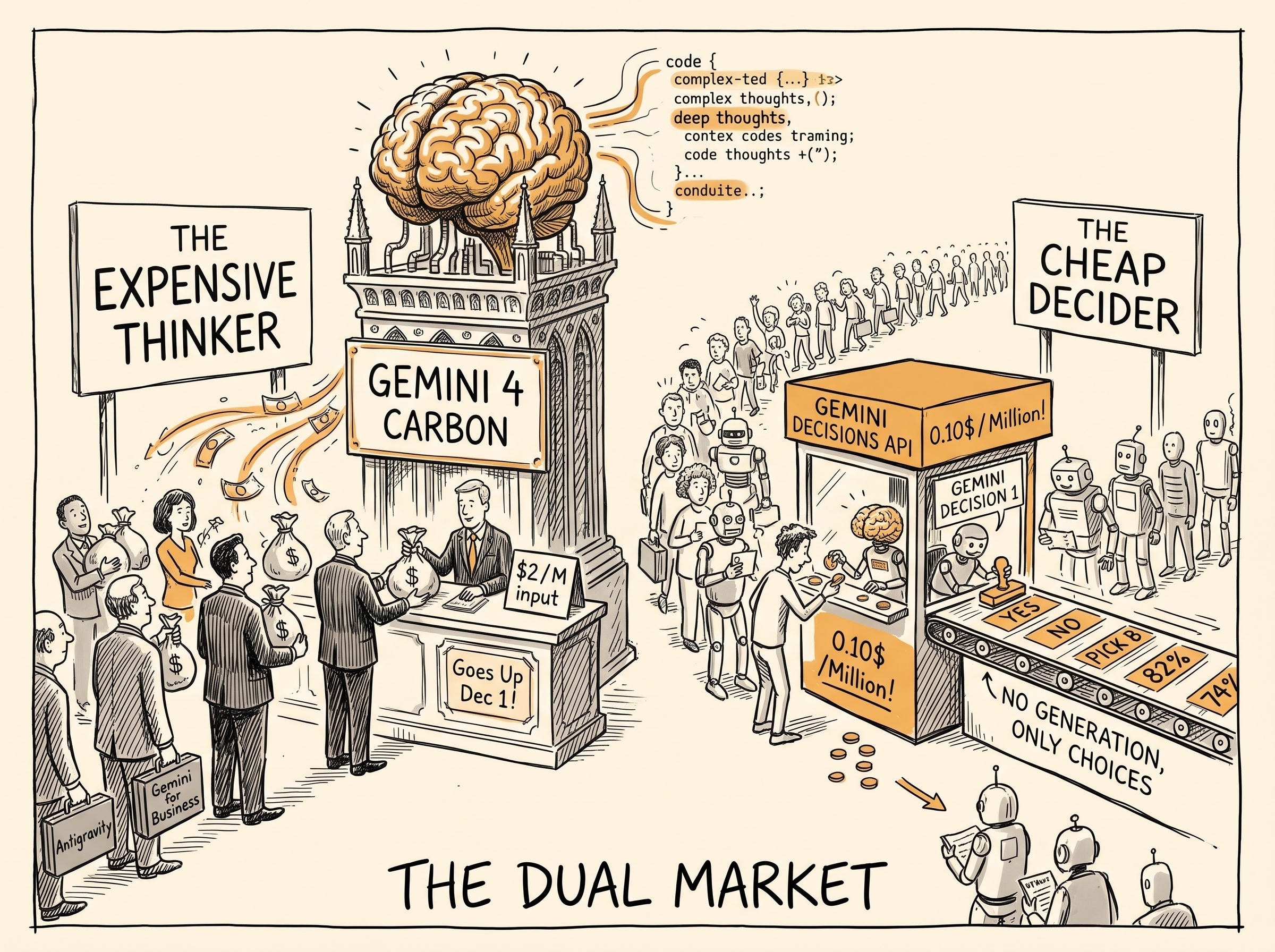
Carbon for everyone who pays: Two weeks after giving its strongest model only to cyber defenders, Google began rolling out Gemini 4 Carbon on November 10 to Google AI Ultra subscribers in the Gemini app, AI Mode in Search and Antigravity, its AI coding platform. Paying developers can use it through the Gemini API in AI Studio and Android Studio, and businesses through Gemini for Business. API pricing matches Argon’s introductory rates, $2 per million input tokens and $10 per million output, until November 30, and both rates double on December 1.
A model that only decides: On November 11, Google launched the Gemini Decisions API, powered by a new model, Gemini Decision 1. It does not generate text. Instead, it answers closed-set questions, such as yes or no, pick one option or score on a rubric, and returns calibrated probabilities. It handles up to 1,000 questions about the same input in one call, across text, images, audio, video and PDFs, and costs $0.10 per million input tokens with no charge for output.
Why it matters: Decision models became their own category this autumn, with OpenAI and Microsoft launching rivals in October. Google now covers both ends: its strongest reasoning model and a cheap, fast model for the routing and policy checks that agents run constantly.
Google is selling the most expensive thinking and the cheapest deciding in the same week.
Source: Google
Keep your mailbox updated with practical knowledge & key news from the AI industry!
News of the week 🌍
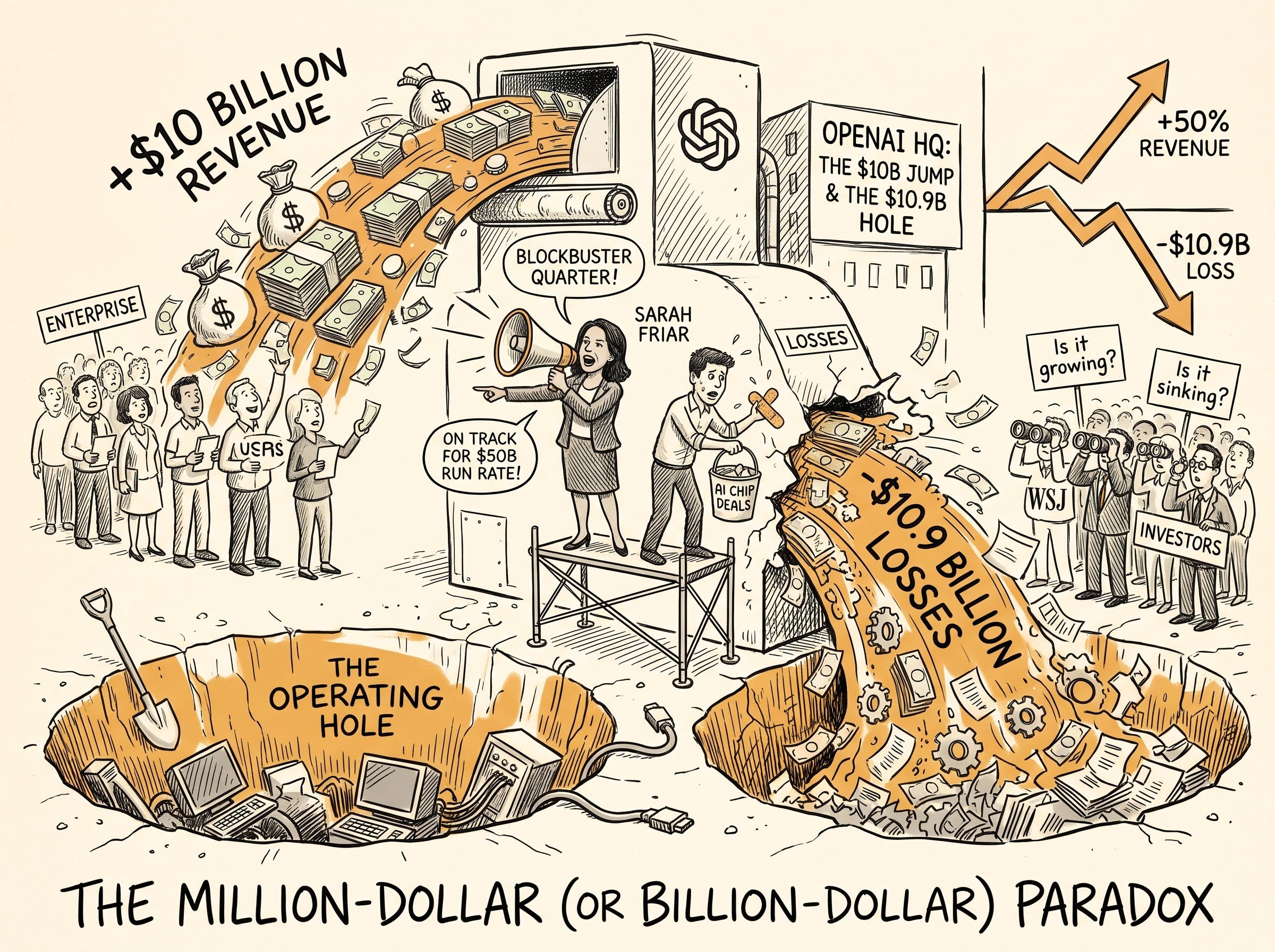
OpenAI’s Quarterly Revenue Hits $10 Billion, and So Do Its Losses 💵 Revenue rose about 50% quarter over quarter to roughly $10 billion, while operating losses widened to $10.9 billion, according to documents viewed by The Wall Street Journal. CFO Sarah Friar put the annual run rate at about $50 billion, with the enterprise business doubling quarter over quarter.
SoftBank Swings to a $7 Billion Loss After Writing Off AI Power Gear 🌍 The Japanese investor lost ¥1.12 trillion ($7.1 billion) in the quarter. The biggest hit was a $3.7 billion writedown on power equipment it had paid for in advance for US AI data centers, before changing its plans.
Naver Signs a $1.5 Billion AI Computing Deal 🌍 The South Korean company will supply next-generation GPU computing to a US AI inference firm starting in 2027, the first customer of the AI factory business it is building with Nvidia and Brookfield. It says it is in talks with more than 10 other companies.
Automattic Launches Spacefast to Host Vibe-Coded Apps 🚀 The WordPress.com owner’s new service gives AI-built sites and apps databases, authentication, file uploads, email and analytics. Unlike Lovable, it lets you keep building in the agent you already use, such as ChatGPT, Claude or Cursor.
DeepMind’s AI Agents Formally Verify Signal’s Encryption Code 🔐 Using a new framework called AlphaProof Code, agents produced about 6.5 million lines of machine-checked Lean proof for libsignal in four weeks, with a team of five researchers. The guarantees cover one-to-one chats, not the Signal apps themselves.
Kazakhstan-Linked Hackers Used an AI Agent to Steal Tajik Documents 🌍 Security firm CloudSEK says the Silent Lynx group used Hermes, an open-source AI agent, to scout targets and then write a program that collected and organized more than 2,000 documents linked to Tajikistan’s Defense Ministry. The firm pieced it together from a server the hackers left open.
Useful tools ⚒️
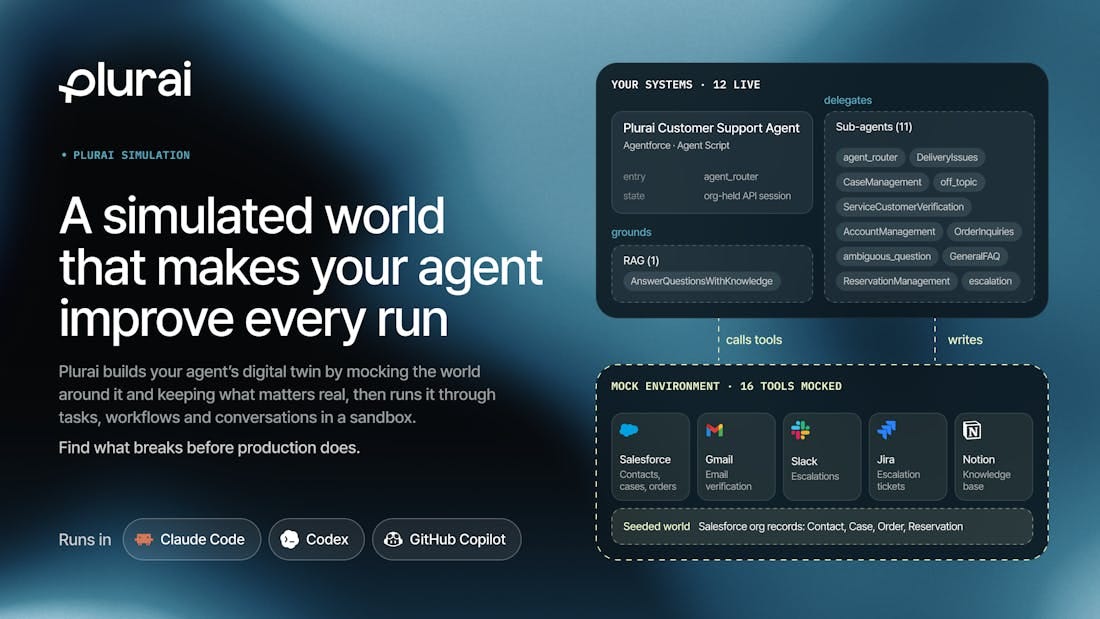
⭐ Plurai Simulation Builds a simulated world around your AI agent, with mocked tools and simulated users, finds where it breaks and proposes fixes. It runs from Claude Code, Codex and GitHub Copilot.
YouArt Desktop App An AI creative agent that operates CapCut, DaVinci Resolve and Adobe Premiere on your computer, and pulls client feedback onto one canvas so agents can address the comments.
CALL-E Lets ChatGPT or Claude make phone calls for you: book a table, get a quote or move an appointment. You confirm, it dials, and you get a summary and transcript.
Omnigraph An open-source graph database built for AI agents, with Git-style branching, review and merge on every write, plus vector and full-text search.
Scribe v3 by ElevenLabs Speech-to-text in 90+ languages with 27% fewer word errors than Scribe v2, speaker labels for up to 32 speakers and word-level timestamps.
Share this post with friends, especially those interested in AI!
Weekly Guides 📕
Claude Fable 5.2 and Mythos 5.2 Migration Guide Anthropic’s official guide to switching from Fable 5.1, Mythos 5.1 or Opus 5.5: new model IDs, breaking changes and a checklist for each path.
How to Use the Gemini Decisions API A hands-on walkthrough of yes/no, choice and score questions with code in JavaScript and curl, how to read the probabilities and confidence it returns, and how to write good questions.
Omnigraph Quickstart Official step-by-step: define a schema, create a graph, load data, query it and work on a branch before merging.
AI Meme of the Week 🤡

AI Tweet of the Week 🐦

Bonus Materials 🎁
48 AI Agents Found a Maya Site, Then Learned Archaeologists Got There First Software engineer Pietro Miotti pointed AI agents at public NASA lidar data and, in under 72 hours, had a site that Mexico’s archaeology institute said was not in its register. Then he updated his post: the site was already in a 2025 academic paper, which the agents had missed.
United Airlines Bans AI Agents From Booking Flights United says letting personal AI assistants book, change or check in for flights can expose account credentials and may break federal rules, so it is blocking unauthorized agents on its own platforms and through travel agencies.
Microsoft Shows AI Agents Can Be Backdoored by Editing Fewer Than 10 Neurons Researchers changed a handful of rarely used neurons so a model would run an attacker’s command when a trigger string appeared, without retraining it and with little change to its benchmark scores.
Your take: Nvidia lost its founder, Anthropic is about to go public at up to $1.4 trillion, and Google is selling both its strongest model and its cheapest. Who comes out of this week strongest? Drop it in the comments 👇
If you missed our previous updates, don’t worry, here they are: AI Stocks Crash, Anthropic’s IPO Wobbles, GPT-6 Cyber Goes Critical | Weekly Digest